

























































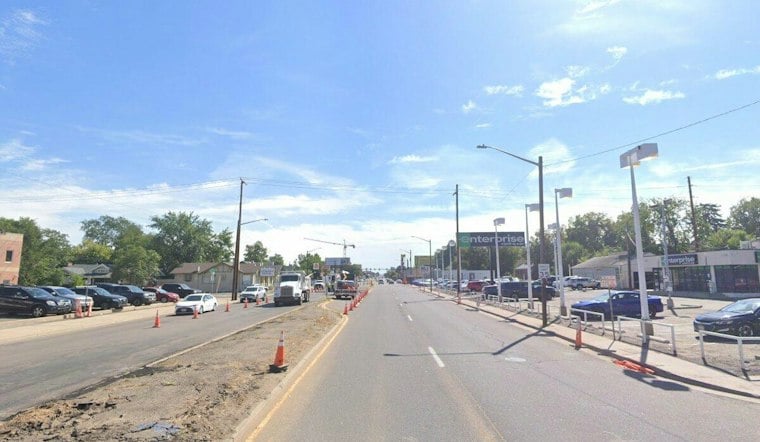
Denver City Council gave initial approval Monday to a plan that would let the city use eminent domain to seek easements at up to 39 properties near East Colfax Avenue, clearing the way for sidewalks that voters mandated nearly four years ago but that still don't exist along stretches of one of the city's busiest corridors.
The vote, reported by 9News, marks a significant escalation in how the city plans to finish a sidewalk network that voters first ordered built in November 2022. That's when Denver residents approved Initiated Ordinance 307, also known as Denver Deserves Sidewalks, with 56% of the vote, shifting the cost and responsibility of sidewalk construction and repair from individual property owners to the city itself through a new enterprise fund, according to the Denver Streets Partnership.
The city's plan would allow it to seek property or right-of-way easements for the sidewalk project.
Why East Colfax, and Why Now
East Colfax has become ground zero for the sidewalk push, with the city's East Colfax sidewalk project addressing missing links along the corridor.
The city has also put real money behind the work. For 2026, Denver budgeted $40 million specifically for sidewalk repairs and upgrades, designating East Colfax as one of the primary neighborhoods for early construction deployment, according to the outlet Front Porch.
That local spending builds on a broader financial commitment. In July 2025, Denver's mayor announced two multi-year sidewalk construction and repair contracts totaling $75 million, which were under review by City Council, as detailed by CBS News Denver. The proposed contracts cover sidewalk work citywide.
A Network With Hundreds of Miles Still Missing
The scale of what's left to build helps explain why the city is turning to condemnation powers. Denver's sidewalk network spans 3,110 miles, with 1,235 miles deficient and another 358 miles missing. The completed network is projected to stretch nearly 3,500 miles once finished.
That gap looked even more daunting before the 2022 vote. An official city analysis prepared ahead of the ballot measure estimated that building and repairing the full sidewalk network would actually take 27.5 years and face a $2.8 billion budget shortfall, far beyond ballot advocates' original nine-year target, Denverite reported at the time.
Paying for all of this has also required some political maneuvering. Starting in 2025, Denver began charging about 95% of properties a flat annual sidewalk service charge of $150 via semi-annual stormwater bills. Properties with more than 230 feet of frontage are charged an additional $3.50 per foot.
What Comes Next for the Sidewalk Plan
The eminent domain vote lands as Denver's Department of Transportation and Infrastructure develops the city's first Sidewalk Implementation Plan, intended to guide the program over the next five years. Public engagement is part of developing the plan.
Denver isn't alone in pushing to remake East Colfax. In November 2025, voters in neighboring Aurora approved creating a Downtown Development Authority along East Colfax Avenue between Yosemite and Peoria streets, mirroring Denver's own corridor improvement efforts, according to Colorado Politics. Aurora's authority will use tax increment financing, and possible projects include business and public-space improvements along its stretch of the corridor.
For now, the question hanging over the up to 39 East Colfax properties that may require easements is whether any condemnation actions will face legal pushback under the state's eminent domain statutes. How quickly DOTI can turn City Council's initial approval into finished concrete remains to be seen.




