

























































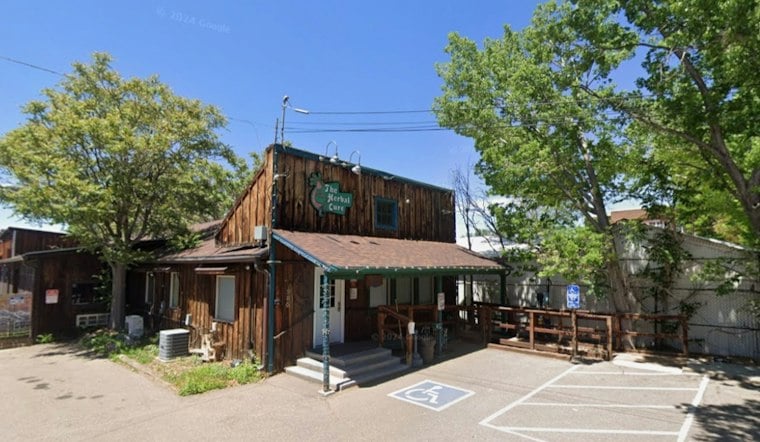
One of Denver's oldest surviving marijuana dispensaries is staring down a public trustee auction over a late fee that started at just $2,100. Jula Burnham and Brandon Burnham, who own both the real estate and The Herbal Cure business at 985 S. Logan St., have asked a Denver District Court judge to stop the sale of their building, arguing the entire foreclosure traces back to a February banking error rather than any genuine default.
The Herbal Cure has sold marijuana for 16 years in Denver's West Washington Park neighborhood, near the corner of South Logan Street and East Mississippi Avenue, according to property records reviewed by Zillow. Brandon Burnham officially opened the shop on April 1, 2010, after registering the business the year prior, making it one of the city's earliest mom-and-pop operations to survive the leap into full recreational legalization, per historical background published by Culture Magazine. As first reported by The Denver Post, the dispute now threatens to take the property to auction on October 22.
A Banking Error Sets Off the Dispute
According to the Post's reporting, the Burnhams borrowed from PB and J LLC at 10% interest, refinancing a 2020 loan originally extended by William Vassil, with the new note not due until August 2028. The Herbal Cure operates as an all-cash business and depends on credit-union processing of its cash receipts to make its first-of-the-month loan payments, the Post reports. The Burnhams made regular monthly payments of $21,000, but the Post notes that because the February 1 payment fell on a Sunday, closing weekend receipts collected the following Monday are normally credited by Tuesday — a timing quirk that proved costly.
Per the Post's account, Partner Colorado Credit Union provided an invalid check to PB and J that month, prompting Brandon Burnham to contact several PB and J owners about the payment problem. PB and J then demanded the $21,000 payment plus a 10% late charge of $2,100 by February 13, 2026, the outlet reports. The Burnhams wired the $21,000 that day, according to the same account, but PB and J came back three days later demanding immediate payment of the entire $2.6 million balance, along with 18% annual interest if that sum remained unpaid.
Escalation to a $2.6 Million Default Claim
The Burnhams have disputed the $2,101.28 charge itself and did not pay it, the Post's reporting indicates, even as they continued wiring their regular $21,000 monthly payments after February. PB and J kept those payments, the outlet reports, and treated some of the roughly $170,000 collected between February and September as partial payments of principal carrying the 18% interest rate rather than the original 10% rate. The lender filed to foreclose in June 2026, and as of early that month none of the 2025 loan's principal had been repaid, according to the Post.
Colorado foreclosure procedure complicates PB and J's position on that interest-rate dispute. Under state rules governing procedural delays, if a lender fails to timely submit a cure statement by the stated deadlines and a sale is postponed as a result, statutory loan interest must be calculated at the standard loan rate rather than a penalty default rate, according to guidance published by LTGC. Colorado law also gives property owners facing a public trustee foreclosure the ability to stop an auction by filing a written Notice of Intent to Cure at least 15 calendar days before the sale and paying the cure amount by the applicable deadline, per statutory provisions cited by Justia Law.
Why the Burnhams Went to District Court
Before a public trustee foreclosure can proceed to auction, a lender must first obtain an Order Authorizing Sale from a district court judge through a Rule 120 process, which may proceed without a hearing if the borrower does not respond, as explained by GeniusLaw. The Rule 120 process is a limited inquiry into whether a default exists — it does not resolve contractual counterclaims or fraud allegations, according to the Colorado Judicial Branch. That is why the Burnhams filed a separate district court lawsuit seeking an injunction rather than relying solely on the Rule 120 process. As of October 1, 2026, no judge-scheduled hearing had been set on that request, the Post reports.
Paul Hamann, the registered agent for PB and J LLC — whose members include Joel Russman and William Vassil — told Brandon Burnham that the late and nonpayment penalties were intended to enforce timely payments, according to the Post's reporting. Jula Burnham, for her part, said the dispute is not expected to affect The Herbal Cure's operation or future.
A Rough Stretch for Colorado's Cannabis Industry
The foreclosure fight lands during a brutal stretch for Colorado dispensaries broadly. Legal marijuana sales statewide fell to $1.315 billion in 2025, a 41% decline from the state's 2021 peak of $2.228 billion, according to data from the Colorado Department of Revenue. Sales have kept sliding into 2026, with dispensaries recording $629.7 million in total sales from January through June of this year, the department's figures show.
The Herbal Cure has also weathered its own recent setbacks. In February 2025, Colorado's Cannabis Business Office awarded the dispensary a $50,000 state grant to help it recover after a series of break-ins in 2024 left the shop with extensive physical damage, according to Denver Westword. The building itself has changed hands and financing structures over the years — Sterling Real Estate LLC bought the property in 2014 for $1.7 million, and the Burnhams later refinanced their loans into new ones.
Whether a Denver District Court judge will grant a temporary injunction before the scheduled October 22 auction remains unresolved. For now, the Burnhams are betting that a dispute born from a Sunday payment date and a credit union's invalid check won't be enough to cost them a business they've run for 16 years.





