

























































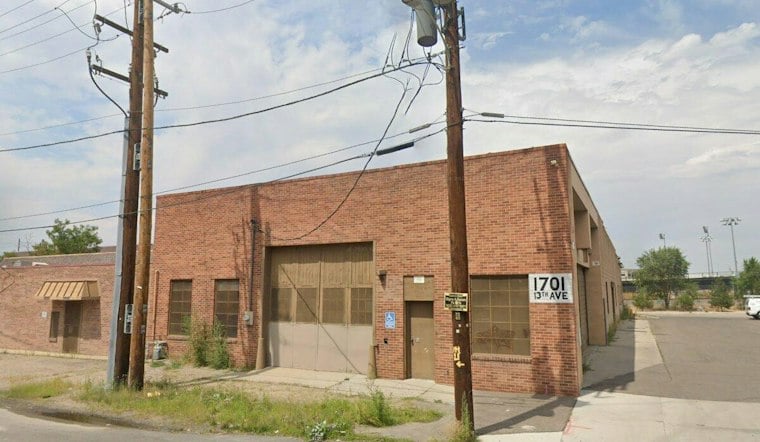
An industrial stretch of Denver's Lincoln Park neighborhood is slated for a major transformation under a plan from Thrive Development Co., which wants to turn the site at 1701 W. 13th Ave. into Lincoln Station, a mixed-use destination anchored by a food hall, bar, coworking space and outdoor gathering areas.
A 14,700-Square-Foot Food Hall With a 36-Tap Pour Wall
At the center of the plan is a 14,700-square-foot food hall, according to Mile High CRE. The outlet reports the food hall is planned to include three food vendors and a sushi counter, along with a central bar featuring a 36-tap self-service pour wall serving local beer, cocktails and nonalcoholic beverages. That vendor count differs from earlier reporting: in November 2024, the Denver Post described a plan with space for four indoor food vendors plus one additional outdoor barbecue vendor, rather than three vendors and a sushi counter.
Beyond the counters and taps, Mile High CRE's reporting describes a reservable lounge, a stage for live music and other programming, and both indoor and outdoor dining areas. Plans also call for a seasonal barbecue shack, and a converted loading dock is set to double as a dining patio and game yard. Outdoor spaces across the property are planned to include a beer garden, fire pits, turf games and additional patio seating.
The Engine Coworking Hub Next Door
Connected to the food hall will be The Engine, a coworking project planned for 1350 Shoshone St. in the second building on the property. Per the same account, The Engine is designed to offer 14,900 square feet of space across two floors, featuring 50 enclosed private offices alongside shared and drop-in work areas, meeting rooms, an artist studio, a wellness room and a social café. The coworking space is planned to be anchored by a two-story atrium and will connect directly to the food hall and courtyard, with the two buildings intended to create a flexible destination for working, dining and community events throughout the day and evening.
The Denver Post's November 2024 reporting put the overall project at roughly 29,000 square feet across the two buildings, noting that Thrive Development Co. had submitted plans to the city in early November of that year to convert the two existing structures into the food hall and coworking concept. That earlier report also said construction was expected to begin in the middle of 2026 with an opening targeted for 2027, though the dossier underlying this account does not confirm whether construction has begun or whether the project has since secured final city approvals.
Burnham Yard and Broncos Stadium Plans
The 58-acre Burnham Yard parcel has been identified as the preferred site for a new Denver Broncos stadium.
Thrive Development Co. has described the surrounding neighborhood as underserved by food and gathering places, and the company has said the project is intended to honor the historic site's architecture while creating amenities and spaces for businesses, nonprofits, residents and visitors to connect. Thrive's own website frames the Lincoln Park project simply as an industrial site reimagined into a food hall, bar and coworking hub, per Thrive Development Co.
Joining a Crowded Front Range Food Hall Market
Lincoln Station would enter a Front Range market with a history of food halls. A November 2018 Eater Denver roundup counted 12 food and market halls and reported that a developer had announced that week a 10-stall hall near Interstate 25 and Colorado Boulevard. Nearby examples include Broadway Market in Denver's Golden Triangle, which closed permanently in 2022, and Stanley Marketplace in Aurora, an airplane-hangar-turned-marketplace combining Annette, Comida Cantina, a beer hall and brewery and other operators.
The format has had a bumpy run locally. Denver's food hall concept expanded rapidly before the pandemic, but shared-space concerns, restaurant restrictions, rising costs and labor-market challenges created significant hurdles for operators, according to Bisnow. Stanley Marketplace, which opened in late 2016 in the former Stanley Aviation manufacturing building, weathered the pandemic in part because its tenant mix extended beyond restaurants to include a daycare, a yoga studio, an Apple service provider and even a dentist, with diversity of tenants described as a contributing factor to its resilience. Other projects have followed different timelines, including Avanti's second location, which opened in Boulder in October 2021, and Edgewater Public Market, which opened just months before the onset of COVID-19 with food, baking-class and yarn-retail tenants alongside its restaurants.



