

























































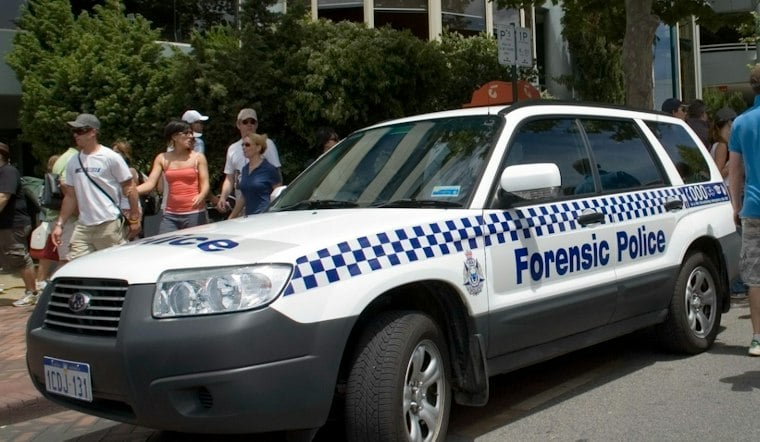
Detroit police forensic technicians say the conditions they work in — a garage beside the department's tow yard, vans reused across multiple crime scenes, and gloves too thin to avoid leaving fingerprints — are putting both their health and the integrity of criminal investigations at risk. Current and former staffers describe a unit so strained that evidence meant to help convict the guilty or clear the innocent may already be compromised by the time it reaches a lab.
The technicians, who handle scene photography, evidence documentation and collection, sketches, reports, and coordination with investigators, told the Detroit Free Press that dysfunction within Crime Scene Services has become a daily hazard. Detroit forensic technicians processed evidence from more than 5,000 crime scenes last year alone, according to the newspaper's reporting. Defense attorneys, forensic experts, and Michigan's state crime lab have said they cannot know whether evidence they receive has already been compromised, the Free Press reported, and a defense lawyer cited two recent criminal cases involving problems with the department's evidence chain-of-custody.
A Garage Beside the Tow Yard
The department's forensic facility sits in a garage at 11631 Mt. Elliott, next to the department's tow yard, where current and former employees describe potential contamination, no sterile space for packaging evidence, frequent maggot infestations, and cats and rabbits breeding inside, per the Free Press's reporting. Technicians still report daily to the Mt. Elliott garage for equipment and supplies, and current staffers say evidence is still processed in unsterile settings including that garage, their own cars, and a second office.
Technicians say they processed evidence at the Mt. Elliott location and sometimes still do. They provided photos and videos documenting pooling water, thick dust, an unclean shower used to dry wet evidence, and non-sterile cotton swabs. One technician shared photos showing underwear stained with feces left in a bag for weeks at the garage because red biohazard bags were rarely collected. Evidence from different scenes, technicians said, was routinely packaged in the same often-filthy forensic vans.
Former Staffers Describe the Toll
Three former technicians — Cecilia Leskun, Margaret Lovallo, and Teron Haynes — were identified in the Free Press's reporting alongside six additional technicians interviewed by the paper, five of whom were current staffers. Leskun left the department in 2023 after a little over a year, saying her mental health declined to the gutter. Lovallo, who left in 2024 after about six years, said technicians were told their job was to pick things up and not ask questions.
Haynes, who left in January after about four years, said he worked that entire stretch as a technician without ever receiving a mask, and said there was no reason for the conditions. Technicians reported several respiratory attacks after responding to teargas scenes, saying the department lacked gas masks for scenes involving teargas during home raids. Kermit Channell, reacting to the described conditions, said they sounded very helter-skelter.
Chain-of-Custody Concerns at Scenes
Nine technicians described detectives allowing civilians to walk and drive through active crime scenes over evidence, and said officers routinely violated evidence chain-of-custody procedures. Department policy states that if an officer collects evidence, it cannot be returned to the scene for a technician to collect — the officer must record and process it instead. Leskun said she was once told to collect a firearm that had already been handled by detectives, and current and former employees said officers handled suspects' guns at crime scenes with bare hands.
The forensic unit has consistently depleted supplies, with technicians borrowing hospital gloves and often using thin food-handling gloves that leave fingerprints, according to the Free Press. Nine technicians said these failures could jeopardize serious criminal investigations and deprive victims and families of justice. Detroit police did not answer the paper's questions about supplies, training, maggots, safety hazards, or retaliation, and declined to make Chief Todd Bettison or any police leader available for an interview about the allegations.
State Citations and a Disputed Fine
One state workplace-safety inspection resulted in citations to the department. MIOSHA cited the department for issues involving bloodborne-pathogens training, protective gear, and leakproof blood-specimen containers. The department was fined $10,000 over inadequate training, protective gear, and leakproof blood-specimen containers.
According to an appeal letter cited by the Free Press, the department argued the state improperly applied healthcare rules to the practice of preserving bloody evidence in breathable packaging needed for prosecutions. The department also used ChatGPT to write its bloodborne infectious disease plan after the complaints surfaced, the paper reported.
Detroit police disputed claims about missing protective gear and training, and said remaining record-keeping and supply issues had been fixed. The department said technicians moved in August to a new facility that better supports operational needs — a room in an old school on Sherwood Street — and said no criminal cases or evidence were impacted because evidence was not processed at the former location, except for vehicles. Before the Sherwood assignment, the department provided no showers for technicians despite their contact with biohazardous substances, technicians said.
A Unit Still Recovering From a 2008 Collapse
This is not the first time Detroit's forensic work has come under scrutiny. The Michigan State Police lab took over the Detroit Police Department's crime lab in 2008 after widespread problems, including high firearms-testing error rates. Events leading to the lab's closure began in spring 2008, amid those problems, according to a Michigan Senate report from senate.michigan.gov.
Earlier this year, former forensic technicians also came forward to describe conditions within Crime Scene Services at Board of Police Commissioners meetings, as WDET reported, around the same time the department was pursuing accreditation from the Michigan Association of Chiefs of Police. That reporting came as Detroit's homicide rate in 2025 hit its lowest point since 1965 and carjackings dropped by nearly half — a trend that makes the reliability of the evidence now being collected all the more consequential.
Forensic Failures Elsewhere
Detroit's troubles echo a wider pattern. Forensic services nationwide face limited regulatory oversight. Some forensic standards and accreditation remain voluntary.
Other jurisdictions have faced their own breakdowns. A Colorado Bureau of Investigation analyst manipulated hundreds of DNA test results, including those tied to the 2017 killings of Kathy Eppler's family.
A Stalled Push for Statewide Reform
Michigan Governor Gretchen Whitmer created a statewide forensic science task force in 2021. The task force found that, as of 2022, no one tracked the number of forensic providers operating in Michigan and that many smaller units were not accredited; it also reported that some providers prioritized speed over quality while public lab managers said demand had risen without matching funding.
The task force proposed an independent statewide forensic science body operating outside the state police, which would require agencies — including Detroit Crime Scene Services — to become accredited within three years, allow employees, attorneys, and the public to file complaints about negligence or misconduct, and require labs to report their own problems. Prosecutors and the state police lab director have argued the proposed body should advise rather than investigate complaints, saying existing accreditation already provides enough oversight. Chu countered that when labs pay for their own accreditation, it gives accreditors reason to be lenient. Jonathan Sacks, an attorney who served on the task force, said none of its recommendations had been adopted and that legislative action was needed, adding that he did not know whether the recommendation would advance.
Houston offers one example of what independence can look like. The city transferred management of its crime lab from the police department to the newly established Houston Forensic Science Center in 2014, a government corporation that could hire out its services elsewhere, giving it financial independence, according to Houstonia Magazine. The center's CEO at the time said colleagues around the country were watching it as a model. Whether Michigan or Detroit moves toward anything similar remains an open question, with the task force's recommendations still sitting unadopted years after they were proposed.





