

























































A 55-year-old Detroit man tried to walk straight into Mayor Mary Sheffield's office Monday morning, and when security turned him away, prosecutors say he threatened to shoot up the building — then showed up at police headquarters a short time later and threatened the mayor again. Sterling Anthony Peters now faces a felony charge of making a false report or threat of terrorism, one of the most serious threat charges on the books in Michigan.
A Morning That Started at the Mayor's Door
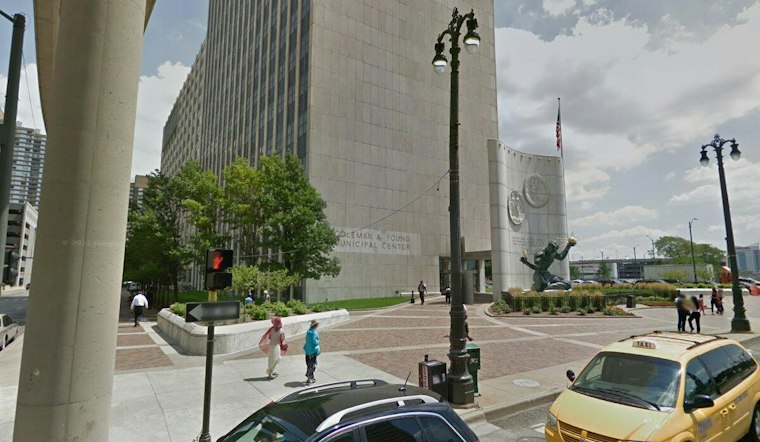
According to the Wayne County Prosecutor's Office, the incident began around 9:06 a.m. on October 5 when Peters entered the Coleman A. Young Municipal Center in downtown Detroit and attempted to walk directly into Sheffield's office, as reported by CBS News. The municipal center, located on Woodward Avenue, is the primary seat of Detroit's government, housing the mayor's office, City Council chambers, and the Third Judicial Circuit Court, according to the City of Detroit. The 20-story complex sees heavy daily foot traffic from residents and city employees alike, which may have made it possible for Peters to get as far as he reportedly did before being stopped.
As security escorted him out of the building, Peters allegedly threatened to shoot up the municipal center, per the prosecutor's statement. The Detroit News reports that Peters, a 55-year-old Detroit resident, did not stop there. He traveled to the Detroit Public Safety Headquarters on Third Avenue, where he issued additional verbal threats of physical harm against Sheffield while officers were escorting him out of that building as well.
A Second Threat at Police Headquarters
The Detroit Public Safety Headquarters, a 465,000-square-foot complex at 1301 Third Avenue, opened in June 2013 following a $60 million redevelopment of a former casino site, according to the entry on Wikipedia. It now consolidates operations for the Detroit Police Department, the Detroit Fire Department, and Michigan State Police forensics under one roof. That Peters allegedly repeated his threats there, inside a facility built specifically to house the city's law enforcement leadership, underscores how the confrontation escalated across two of downtown Detroit's most secure government buildings before any charges were filed.
Peters was arraigned in 36th District Court on Thursday, where he pleaded not guilty, the court-entered plea shows. Magistrate Delphia Burton set his bond at $50,000 and ordered house arrest with electronic GPS monitoring and a strict no-contact order barring any contact with the mayor, conditions the prosecutor's office says were imposed to protect Sheffield while the case proceeds.
What Michigan's Terrorism Threat Law Requires
Under Michigan Compiled Laws Section 750.543m, making a false report or threat of terrorism is a felony punishable by up to 20 years in prison and a fine of up to $20,000. The statute, enacted in 2002, explicitly states that a defendant's lack of intent or capability to carry out a threat is not a valid legal defense, according to the Michigan Legislature.
That said, prosecutors still face a meaningful legal hurdle. Following the U.S. Supreme Court's 2023 decision in Counterman v. Colorado, the Michigan Court of Appeals ruled in the 2025 case People v. Kvasnicka that prosecutors must prove a defendant acted recklessly by consciously disregarding a substantial risk that their statements would be understood as a threat of violence, per Dickstein & Amberg. That standard requires establishing the defendant's subjective awareness that his words would be taken as threatening — a higher bar than simply showing the words were spoken.
A Pattern of Threats Against Michigan Officials
Peters' case lands amid what Hoodline has reported as a broader pattern of threats against the state's elected leaders. In September, Michigan authorities charged two individuals in separate cases with the same false report or threat of terrorism statute for allegedly making death threats against public figures including Dearborn Mayor Abdullah Hammoud and Governor Gretchen Whitmer. Prosecutors across the state have increasingly turned to the anti-terrorism statute to address violent rhetoric directed at local and state leaders.
The alleged threats also arrive during a high-profile stretch for Sheffield, who took office January 1 as Detroit's 76th mayor and the first woman elected to lead the city, according to Ballotpedia. Just two days before Peters' arraignment, Sheffield announced that Detroit saw a steep drop in summer youth violence, with juvenile homicides falling from nine in summer 2025 to one this past summer under her administration's Occupy the Summer initiative, as reported by WDET 101.9 FM. The announcement had cast her first year in office as one defined by public safety gains — a backdrop now shadowed by the threats against her.
Wayne County Prosecutor Kym Worthy's office has not detailed what motivated Peters to try to reach the mayor's office that morning, and it remains unclear whether the incident will prompt a review of security protocols at either building.





