

























































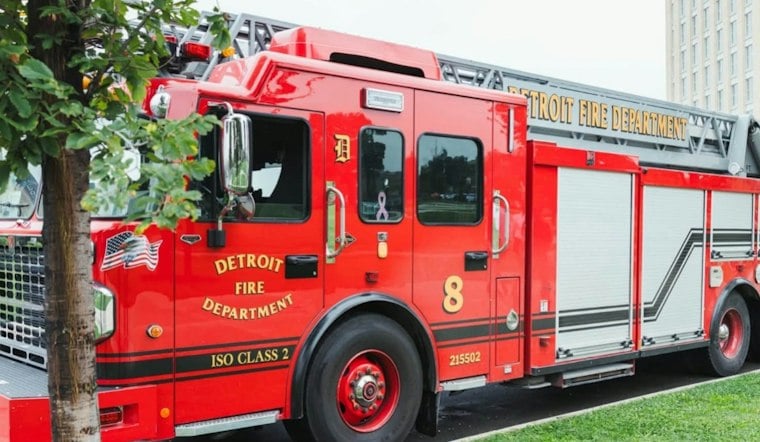
A 69-year-old man died in a house fire in Detroit on Sunday, and city fire officials are now using the tragedy to push a broader warning about the dangers of portable space heaters as cold weather settles in. Detroit Fire Department leaders say they are working to raise awareness about the hazards heaters pose inside homes across the city.
The fatal fire, reported on Sunday, is according to FOX 2 Detroit. The station reports that Detroit Fire Department officials are working to raise awareness about space heater hazards in the wake of the man's death. As part of that outreach, the department's Community Relations team is offering free smoke detectors to residents who request one, and people can get one by emailing [email protected], the outlet notes.
A Recurring, Deadly Pattern in Detroit
This is not the first time Detroit has grappled with fatal fires tied to space heaters during cold-weather months. In February 2021, fire officials investigated two separate fatal house fires within days of each other, according to CBS Detroit — one at a westside group home that killed two men, and another on the city's east side that killed one person. The recurrence underscores a seasonal hazard that fire crews say they see again and again once temperatures drop.
Economic pressure plays a role in why so many residents turn to space heaters in the first place. The City of Detroit noted in October 2025 that residents trying to cut winter energy bills often dial down their central thermostats and lean on alternative heat sources like space heaters, which remains a primary driver of home heating fires in the city.
National Numbers Show Why Heaters Are So Risky
The danger isn't unique to Detroit. The U.S. Consumer Product Safety Commission estimates that portable space heaters are involved in an average of 1,600 home fires nationally every year, causing roughly 70 deaths and 160 injuries. Despite making up just 3% of residential heating fires nationwide, portable heaters are involved in 41% of fatal residential heating fires, according to the U.S. Fire Administration — a disproportionate toll federal officials attribute to how close the units often sit to flammable materials.
Nearly half of all home heating fires strike during December, January, and February, per National Fire Protection Association statistics. Space heaters and heating stoves account for only 29% of home heating equipment fires but are responsible for 77% of the deaths tied to those fires nationwide.
Where and How These Fires Start
Federal fire data breaks down exactly how these blazes typically ignite. Placing a space heater too close to combustible objects accounts for 48% of heater-related ignitions, the U.S. Fire Administration reports, and 34% of portable heater fires start in bedrooms, with bedding serving as the first item to catch fire in 16% of cases.
To prevent that outcome, the Consumer Product Safety Commission advises keeping heaters at least three feet away from bedding, furniture, and curtains, and plugging electric units directly into wall outlets rather than extension cords or power strips, which can overheat under heavy current loads.
Legal Heating Requirements and Local Resources
Detroit landlords and property owners who provide heat are legally required to maintain minimum indoor temperatures of at least 68°F during the day and 60°F overnight between October 1 and May 1, whenever outdoor temperatures fall below 55°F, under Detroit Municipal Code § 9-1-465. Inadequate heat in rental housing is one reason tenants often turn to space heaters as a supplement or substitute.
The Detroit Fire Department also runs a Community Risk Reduction program aimed at high-risk neighborhoods, offering fire prevention education, safety presentations at senior centers, and free smoke detector distribution. Residents struggling to afford heat or pay utility bills can also seek help through nonprofit programs such as The Heat and Warmth Fund, known as THAW, which has historically helped Detroiters avoid relying on unsafe heating alternatives during winter months.





