

























































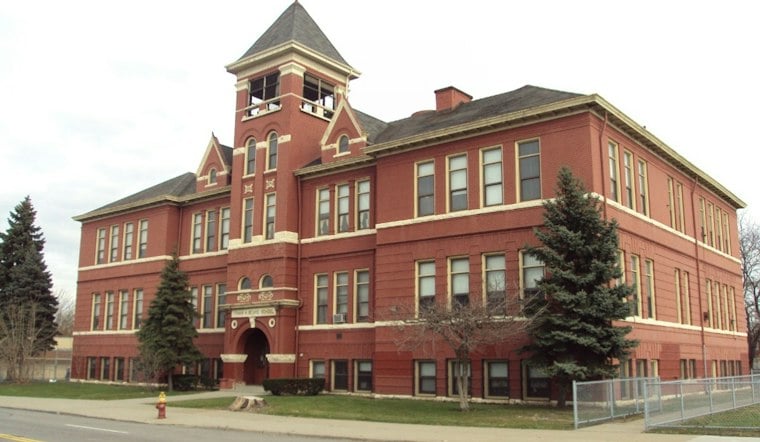
Detroit Public Schools Community District is considering a plan to restore libraries in 89 schools, a proposal that would pump $8.7 million in one-time funding into books, furniture, staffing and a new cataloging system for buildings that have gone without library spaces for years. The district's school board has not yet voted on the idea, but if it moves forward, libraries could be partially open by fall 2027.
The proposal, first reported by Chalkbeat, would equip each of the 89 schools with up to 4,000 books, along with furniture, displays, initial staffing and a library management system the district currently lacks. Superintendent Nikolai Vitti is behind the push, according to the outlet. Keeping those libraries staffed for three periods a day would cost roughly $5 million annually once the one-time setup money is spent, Chalkbeat reports, and the board is expected to weigh in at a meeting in November or December.
As first reported by ClickOnDetroit, a district official said all 89 libraries could potentially be open by fall 2027 or 2028, and the proposal could come to a board vote before the end of the year. The stakes are high in a district where school libraries have essentially disappeared: Detroit had just two certified librarians in 2020 and no cataloging system to speak of, the same Chalkbeat report notes, with closures tied over the years to budget constraints and shrinking enrollment that left many former library rooms dormant or repurposed for other uses.
A District Still Searching For Reading Gains
The push to reopen libraries comes as Detroit students continue to post some of the lowest reading scores in Michigan, even as the district points to pockets of improvement. On the 2026 M-STEP, Detroit third graders reached 14.1% reading proficiency, with 8.3% landing in the proficient category and 5.8% reaching advanced, according to ClickOnDetroit. Statewide, just 38.2% of third graders tested at least proficient, a figure that has slipped from 38.9% the year before and 45% back in the 2018-19 school year, per The Detroit News.
Detroit's third-grade proficiency climbing from 12.9% to 14.1% actually outpaces the district's pre-pandemic rate of 11.9% from 2018-19, The Detroit News reports, and the district saw gains in 13 of 16 tested M-STEP categories across grades 3 through 8. Still, Michigan's 2026 third-grade proficiency rate was the lowest recorded in the 12-year history of the state exam, according to the Detroit Free Press, which also found only 44% of Michigan students in grades 3 through 8 proficient in reading this year. A district presentation cited by ClickOnDetroit put the decline in even starker terms, saying Michigan third-grade literacy rates have fallen 50% since 2015.
Younger Grades Show Mixed Momentum
Progress among the district's youngest readers has been uneven. Only 27.3% of DPSCD students in kindergarten through second grade were proficient in reading during the 2025-26 school year, an increase of less than one percentage point from the year before, according to a separate Chalkbeat analysis. The share of K-2 students hitting the typical one-year reading-growth benchmark actually fell 6 percentage points to about 50.5% that same year, the outlet reports.
The comparison with similar districts cuts both ways. About 31.4% of K-2 students in a dozen comparison districts were reading on grade level in 2025-26, versus 27.2% in DPSCD, per Chalkbeat's data. But stretched over a longer period, Detroit's gains look stronger: the share of Detroit students reading on grade level rose 7.7 percentage points between 2022-23 and 2025-26, compared with a 2.6 percentage point increase in those comparison districts. Nationally, reading scores on the National Assessment of Educational Progress have been sliding for eighth graders since 2013 and for fourth graders since 2015, according to WBUR's Here & Now.
Interventionists And Donated Books Already In Schools
The library proposal would add to a set of literacy investments already underway in Detroit classrooms. Using literacy settlement funds, the district hired 267 additional literacy academic interventionists to work in small groups with K-2 students, Chalkbeat reports. More than 70 DPSCD schools have also received boxes of new books through a partnership between General Motors and First Book valued at nearly $500,000, with about 500 books slated for each participating school, according to ClickOnDetroit's earlier coverage of that effort — enough for students to take copies home or read them at school.
Michigan's broader library landscape underscores how far behind Detroit schools have fallen. In the 2020-21 school year, only 74.6% of Michigan public schools had library media centers at all, compared with 87.6% nationally, Chalkbeat notes.
Community Voices Weigh In
Detroit resident Monica Lindsey said she supports adding more libraries across the district's schools if it helps students build stronger reading habits, though she noted that many children today are more drawn to phones than books. Grace Irwin, executive director of All Saints Literacy, said access to reading materials and opportunities to read are essential, drawing on her work with adults learning English as a second language to argue that everyone should know how to read. Irwin said she believes reestablishing school libraries could benefit students and the district over the long term.
Whether the board ultimately approves the $8.7 million package, and how the plan would be funded beyond that initial investment, remains to be settled. For now, the proposal represents one of the clearest signals yet that Detroit's school system is trying to rebuild infrastructure that disappeared over years of tight budgets, even as the data shows the district still has considerable ground to make up.




