

























































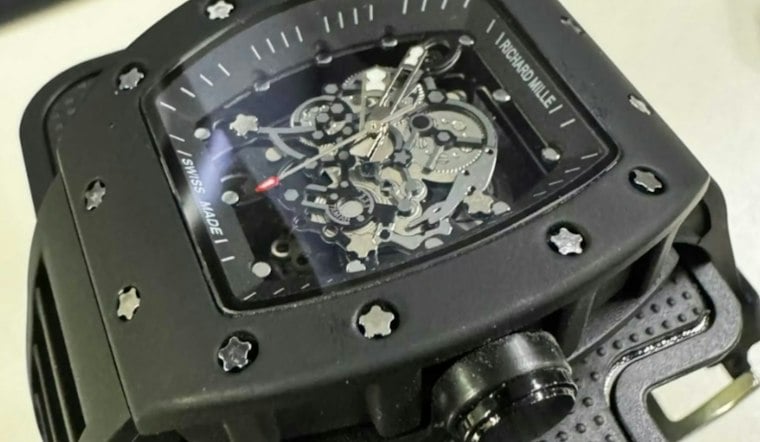
According to CultureMap Fort Worth, Eleven fake Richard Mille watches bound for buyers across the southeastern United States never made it past Dallas Fort Worth International Airport, where U.S. Customs and Border Protection officers intercepted the shipment and determined every piece was a knockoff. The timepieces bore the Swiss luxury watchmaker's trademarks, but CBP trade experts quickly flagged them as inauthentic.
The shipment originated in China and was bound for buyers across the southeastern United States, according to CultureMap Fort Worth. If genuine, the watches would have had a combined retail value of $2.6 million. That figure is the hypothetical manufacturer's suggested retail price for authentic Richard Mille watches, not the actual worth of the counterfeit pieces.
Fakes Tied to Bigger Criminal Operations, CBP Says
CBP Area Port Director Jayson Ahern said the sale of counterfeit goods often does more than rip off unsuspecting buyers. The money generated, he said, often funds criminal organizations engaged in money laundering, drug trafficking and other illicit trade. Ahern also said CBP officers work to guard against defrauders and protect legitimate American businesses from the damage counterfeit sales cause, as reported by CultureMap Fort Worth.
CBP officers at an Indianapolis express-consignment facility intercepted a shipment of 96 counterfeit watches in late July, as noted by U.S. Customs and Border Protection. And in a separate case, U.S. Customs and Border Protection reported seizing 3,229 counterfeit watches bearing the names of Rolex, Audemars Piguet, Cartier, Gucci and Richard Mille, with shipments mostly originating in China and destined for addresses all over the U.S.
Watches a Major Target in Counterfeit Crackdowns
Watches have become one of the most frequently seized counterfeit categories nationwide. Per CBP data, watches ranked second among goods seized for intellectual-property-rights violations, with an estimated value of more than $1.4 billion, accounting for roughly 27% of the total value of goods seized for such violations. The agency says it specifically targets counterfeit watches, handbags, wallets, apparel, footwear, jewelry and consumer electronics as part of its broader enforcement priorities.
The scale of the challenge is enormous. CBP processed more than 1.3 billion de minimis shipments — packages valued under $800 — in fiscal year 2024 alone, a volume that makes spotting fakes like the DFW shipment a persistent needle-in-a-haystack effort. CBP has said counterfeiters often sell inauthentic versions of popular products in response to trends, frequently marketing them online, and that illegitimate sales rank among the most profitable transnational crimes.
What De Minimis Screening Can—and Can't—Tell Us
In a separate policy context, CBP said in a Federal Register rule that bad actors have attempted to import counterfeit merchandise by claiming the de minimis exemption, along with firearms, illicit fentanyl and other illicit drugs. The rule identifies that attempted route but does not quantify agencies' ability to screen low-value imports or identify audit findings about screening gaps. It also does not establish that the DFW watch shipment used the exemption.
How to Spot a Fake Before You Buy
Counterfeit products aren't limited to watches and handbags. CBP says the category includes fake medications, perfumes, cosmetics, children's toys and costumes, fashion, jewelry, other luxury products, unsafe electronics and automotive parts. The agency warns that some of these items can pose serious health and safety risks because they may be made with substandard or harmful materials.
Telltale signs of a fake can include peeling labels, low-quality ink, printing errors or poor packaging, according to CBP. Counterfeit apparel and handbags may show poor or uneven stitching, incorrect sizing, or designs the actual designer brand never produced, while counterfeit electronics may suffer from short battery life and regular overheating. CBP recommends buying directly from brand owners or authorized retailers, checking online sellers' reviews and contact information before purchasing, and remembering a simple rule: a price that seems too good to be true probably is. The agency promotes its Truth Behind Counterfeits campaign to help consumers identify fake merchandise and understand the risks involved.





