

























































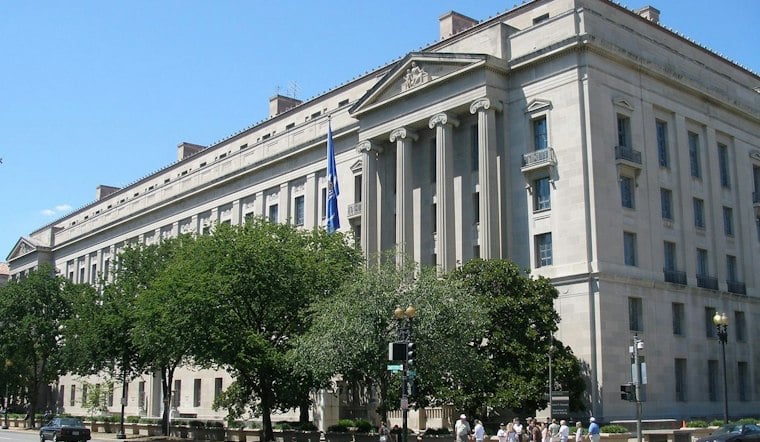
New Haven is bracing for an unusual guest list at its polling places on Nov. 3: federal election monitors from the U.S. Department of Justice's Civil Rights Division, whom city officials say simply are not allowed inside. The city's two registrars of voters have told the DOJ in writing that Connecticut law restricts who may enter a polling location, and federal monitors are not on that list.
According to NBC Connecticut, the DOJ informed the city that it intends to send election monitors from its Civil Rights Division on Election Day, with the stated purpose of observing the election and monitoring compliance with federal voting-rights statutes. New Haven Democratic Registrar Shannel Evans and Republican Registrar Lisa Milone responded with a joint letter to DOJ officials, arguing that under state statutes, federal election monitors cannot enter any polling locations in the city. The two registrars said Connecticut law permits only a specific set of people inside polling places — local election officials, municipal clerks and registrars of voters, voters themselves, and news media — and that federal monitors are not among the statute's limited exceptions.
Why New Haven Is on the List
The Connecticut Secretary of the State's Office told the station that the DOJ plans to send two teams of two people, focusing on polling locations covered by the federal Voting Rights Act's mandatory language-assistance requirement. Under federal law, that standard applies to all of New Haven, which helps explain why the city — rather than every Connecticut town — has landed on the DOJ's radar. The department has said its monitors will only observe and will not intrude or interfere in the voting process, and will remain outside the 75-foot buffer zone that surrounds polling entrances under state law.
Mayor Justin Elicker, who according to the registrars’ joint position has aligned the city with both party registrars, said the DOJ has indicated that none of the monitors will have powers to arrest, detain, search or seize anyone. Still, he urged residents not to be deterred. “This is an important election, and I urge all New Haven voters to cast their ballot and make their voice heard,” Elicker said, per the NBC Connecticut report.
A Nationwide Push With Local Friction
New Haven's standoff is one piece of a much larger push. The Justice Department began notifying counties it wants to monitor on Election Day this week, according to NPR, and has said it plans to send roughly 1,000 observers nationwide — a sharp jump from the 64 jurisdictions across 24 states the department monitored during the 2022 midterms. USA Today reports that the department's monitors are being prioritized for jurisdictions required to provide language assistance, areas lacking past election-observation data, and places covered by consent decrees tied to earlier election problems.
The department has also moved to tamp down one specific fear. In a Wednesday declaration reported by Bloomberg Law, the DOJ said no FBI or U.S. Immigration and Customs Enforcement employees are serving as election monitors for this year's midterms. Instead, agents pulled from the Bureau of Alcohol, Tobacco, Firearms and Explosives, the Drug Enforcement Administration and the Bureau of Prisons will fill those roles. All monitors, the department said, are prohibited from carrying any firearms and are trained not to interfere in any way with voters or election officials at the polls. The DOJ has also said it is still identifying all the polling locations it will send monitors to, and that releasing that list could undermine its efforts and put monitors at risk.
Pushback From Colorado to Minnesota
New Haven isn't alone in pushing back on where federal monitors can stand. In Colorado, federal monitors plan to stay outside Adams County voting centers on Election Day after the DOJ rejected the state's terms for access, according to Axios Denver. Colorado Secretary of State Jena Griswold had said her office would allow DOJ monitors into Adams County voting centers only if they were accompanied by state-appointed observers, with conditions that would have also barred federal monitors from speaking with voters, accessing voting equipment or interfering with election operations. The DOJ declined those terms.
Minnesota officials denied DOJ monitors close access to polling locations during the state's primary in August, the same NPR report notes, while Texas blocked the Biden-era Justice Department from election monitoring altogether in 2024, including access to polling and counting locations. Civil-rights advocates, including the NAACP, have raised concerns that this year's expanded monitoring could create fear, confusion or intimidation around the vote, per the same NPR account.
Where the Legal Fight Stands
The Justice Department's own description of its election-monitoring program, published by the U.S. Department of Justice, states that Civil Rights Division monitors are meant to observe election-day activities to help assess compliance with federal voting-rights laws. Connecticut's own election code, in a chapter maintained by the Connecticut General Assembly, includes Section 9-236, which addresses activities prohibited in and near polling places, distance markers, and restricted entry — though the statute's application specifically to DOJ monitors has not been settled by any court ruling cited in available records.
Connecticut has already tangled with the DOJ once this year over voter data. A federal judge dismissed a department lawsuit seeking the state's unredacted voter-registration list, with the Connecticut Office of the Attorney General saying Judge Kari A. Dooley concluded the DOJ had no authority under the Civil Rights Act of 1960 to compel the state to turn over the records. With Election Day approaching, New Haven's registrars have made their position just as clear on the question of polling-place access — even as the department moves ahead with plans to post its monitors somewhere nearby.





