

























































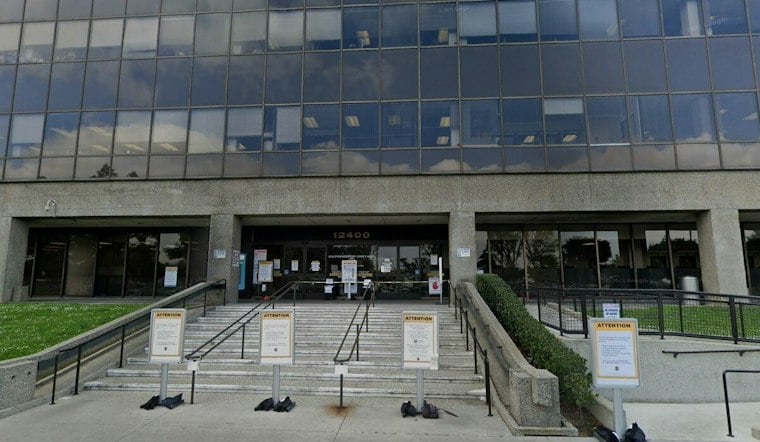
The U.S. Department of Justice sued California and Los Angeles County on Thursday, asking a federal judge to block election officials from counting mail-in ballots cast by roughly 20,000 flagged voters until their citizenship can be verified. The lawsuit landed just 19 days before California voters decide a new governor, 14 statewide ballot measures and several competitive congressional races on November 3.
Filed in the U.S. District Court for the Central District of California, the suit names Secretary of State Shirley Weber and L.A. County Registrar-Recorder Dean Logan as defendants, according to CBS News. The filing follows letters that Acting Deputy Attorney General R. Trent McCotter sent to Weber and L.A. County on October 13, giving officials just 48 hours to review a federal list and set aside the ballots before the Justice Department sued two days later, as reported by Axios.
How that list arrived has become its own flashpoint. Federal prosecutors delivered the names of the 20,000 flagged voters to Los Angeles County on a password-protected USB thumb drive — with the access password written on a sticky note stuck to the device, according to Mountain View Voice, citing CalMatters. Logan said he had not reviewed the drive because it arrived in an unsecure format, a decision he attributed to county data privacy protocols.
DOJ Admits Its Own Timeline Doesn't Work
Buried in the Justice Department's own complaint is an admission that undercuts its urgency: federal prosecutors wrote that investigating “thousands, let alone tens of thousands” of suspected noncitizen voters before the 2026 election concludes is “not practicable or feasible,” according to Democracy Docket. That concession sits awkwardly alongside the 48-hour compliance window prosecutors demanded of California officials just two days earlier.
Legal scholars have taken notice. Notre Dame Law School professor Derek Muller called the lawsuit a “long shot,” while Justin Levitt called it “a press release masquerading as litigation,” according to CNN. The Constitution assigns election administration primarily to the states, even as the DOJ relies on the Supremacy Clause to argue otherwise.
Governor Gavin Newsom, who signed the California Voting Rights Act of 2026 and the Protect Our Polls Act into law last month, criticized the lawsuit as an attempt to suppress California voters. He said the demand to throw out ballots should alarm Americans and asks local elections officials to violate federal law, adding that California would continue to conduct free and fair elections.
A Familiar Pattern of False Positives
The DOJ's push relies on database matching through federal systems like the Systematic Alien Verification for Entitlements, or SAVE, database — access to which the U.S. Supreme Court restored for screening state voter rolls in a September ruling in Department of Homeland Security v. League of Women Voters, as Hoodline previously reported. But state officials and legal scholars say these automated cross-checks frequently flag naturalized citizens or rely on outdated records.
That pattern already played out in Nevada. A Department of Homeland Security review earlier in 2026 claimed nearly 16,000 noncitizens were registered to vote there; federal officials ultimately turned over only 185 names, and Nevada election officials confirmed every one of them was a legally registered U.S. citizen, according to The Guardian. DHS also refused to share its methodology with Nevada officials, the paper noted.
Secretary Weber had already asked federal officials in July for the data and methodology behind an earlier claim that 190,000 California voters might be noncitizens, per the seed reporting — a request federal officials never fulfilled. California's voter-registration process includes DMV-related procedures, while citizenship is affirmed through sworn attestation under penalty of perjury. Unlawful voting by a noncitizen is a federal crime, as described in Hoodline's coverage of a Ventura voter fraud case.
State Leaders Call It Voter Intimidation
California state leaders have described the administration's actions as amounting to voter intimidation. State Senator Monique Limon said in Los Angeles that the action is concerning because many perceive it as an effort to deter voting, adding that California would defend election integrity through a robust system of checks, verification and follow-up.
Democratic gubernatorial candidate Xavier Becerra promised to fight the Trump administration during remarks at El Pueblo de Los Angeles Historical Monument, urging people to turn out and understand that their power lies in voting. The National Voter Registration Act generally prohibits purging voter rolls within 90 days of an election, and numerous studies have found voter fraud to be extremely rare.
The lawsuit follows a broader pattern of federal subpoenas targeting California voter files. Federal investigators issued grand jury subpoenas to Los Angeles elections officials in September seeking information on registered voters, while federal prosecutors also sought voter records in San Diego and Orange counties. Orange County's registrar of voters, Bob Page, received three subpoenas on September 10 requested by Acting U.S. Attorney Bill Essayli and Assistant U.S. Attorney Michael Wheat, directing local officials to deliver information to a Department of Homeland Security investigator.
One of those subpoenas sought a full voter file for a redacted list of what appeared to be 18 registered Orange County voters, including their citizenship attestations, while two others sought detailed records on two individual voters, including address or party-affiliation changes. Page said his office produced the subpoenaed records, received no further requests from the Trump administration, and does not know why the grand jury sought the registration records in the first place. He added that the request had no impact on administration of the 2026 general election.
Courts Have Rejected Similar Federal Demands Before
Federal courts have dismissed or ruled for states in multiple voter-data lawsuits, as Hoodline has reported previously.
County registrars across California began mailing ballots to voters starting October 5 ahead of the November 3 election, since the state sends a ballot by mail to every registered voter. Whether a judge will intervene before ballots are tabulated remains an open question as both sides prepare for a rapid court fight with Election Day fast approaching.





