

























































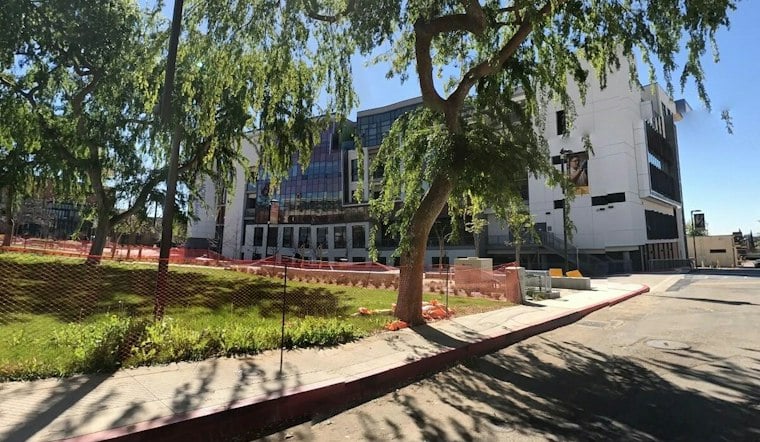
Roughly 300 prospective volunteers showed up at East Los Angeles College Saturday to learn how to watch for voter intimidation, respond to possible immigration raids near polling sites, and keep calm if disruptors show up at the ballot box come November 3. The training was organized by Love Powers L.A., a coalition representing dozens of community groups and labor unions across the county, and it doubled as a rehearsal for a Neighborhood Vote Protection Program that plans to station observers at 650 polling places throughout the county's 11-day voting period.
The event followed a City Hall press conference earlier in the week where coalition members warned of potential federal voter intimidation, according to the Los Angeles Times. Organizers say the goal is to turn the fear and confusion sought by election deniers into what one speaker called a celebration of the right to vote. Jeremy Payne, affiliated with Catalyst California, told the crowd, “We want to make it a season of excitement.”
Training Scenarios Included ICE Raids and Proud Boys Intimidation
Trainers walked volunteers through scenarios involving both ICE raids and intimidation from groups like the Proud Boys, detailing strategies for countering possible election threats without escalating them. Poll watchers were instructed to observe and report attempts to intimidate voters or poll workers but not to directly engage with any incidents themselves. The Political Law Group provided an online form for reporting incidents, and Emma Olson Sharkey, a partner at the firm, outlined what poll watchers should look for and do.
John Kim, also affiliated with Catalyst California, framed the stakes bluntly, saying Los Angeles is a target for retribution and spectacle. Event organizers said they deliberately avoided endorsements and political messages aimed at the coming election, keeping the training focused on nonpartisan observation rather than campaign advocacy. That distinction matters given the tone struck by some speakers — Jung Hee Choi, affiliated with We Are California, described Trump as a chicken and a loser while urging volunteers to hold ballot parties in their homes, arguing that people are the greatest tool to fight back and grow the movement.
Beyond Training: Music, Block Parties and Street Activations
The gathering wasn't all logistics. It included multicultural music from Native American, Korean and West African drum ensembles, plus breakout sessions on ballot parties, activist dances and street activations. Joe Pugh, who works for ATAP, said she plans to host a block party promoting voting in South-Central. Groups including Can't Stop California, Inner City Struggle and SCOPE each presented their own response programs for handling election threats.
That local mobilization sits inside a much larger statewide push. The Can't Stop California campaign, organized by We Are California, announced this week that it aims to contact at least 300,000 voters and train more than 6,000 volunteers statewide to monitor vote centers, according to Patch. The campaign is built on door-to-door canvassing, digital outreach and roughly 500 neighborhood events across the state.
State Lawmakers Respond With New Election Protections
California has moved on the legislative front too. Governor Gavin Newsom signed the California Voting Rights Act of 2026 and the Protect Our Polls Act in September, creating state-level protections against voter suppression and limiting police arrests near voting locations to specified cases involving crimes against people or property or disruptions of voting, per reporting cited by the state senate. The new laws also let election officials extend polling hours if immigration enforcement disrupts voting.
Those measures follow Assembly Bill 282, which Hoodline previously reported made ballot seizure a felony punishable by up to four years in prison, and Senate Bill 259, which addresses interference with a mail ballot in transit or orders to seize ballots being delivered. The bills followed the Riverside dispute over ballot custody in the November 2025 special election. Coercing someone to vote or refrain from voting is a felony under California Elections Code Section 18540; recording voters within 100 feet of a polling place to dissuade them remains illegal.
Supreme Court Ruling Adds Federal Wrinkle
A day before the East L.A. training, the U.S. Supreme Court ruled 6-3 in Department of Homeland Security v. League of Women Voters to let the federal government resume using its expanded Systematic Alien Verification for Entitlements database to check state voter rolls for noncitizens, as reported by the Los Angeles Times. Trump has made unproven claims that a large number of illegal voters are casting ballots, a claim central to the administration's push for the expanded checks.
Los Angeles County officials, meanwhile, have positioned themselves as partners rather than obstacles to the volunteer effort. Registrar-Recorder Dean C. Logan and Supervisor Holly Mitchell joined grassroots organizers at Grand Park earlier in the week to back the outreach, with Logan emphasizing that election officials invite public observation to maintain transparency, the Patch report noted. The county's Vote Center model allows registered voters to cast a ballot or drop off a vote-by-mail ballot at any of more than 600 locations across an 11-day window ending on Election Day.
Trust in Elections Has Slipped Since 2024
The anxiety animating Saturday's training reflects a broader erosion in public confidence. A nationwide survey conducted September 1 through 9 by UC San Diego found only 49 percent of Americans expect the 2026 midterms to be free and fair; after the November 2024 election, 77 percent expressed confidence that votes would be counted accurately — a finding Hoodline covered in mid-September. Trust among independent voters alone dropped from 73 percent to 49 percent over that same span.
Local memory of physical disruption is fresh, too. During the June 2026 primary, Los Angeles County saw ballots burned in a drop box and vandalism at a Long Beach vote center, incidents Hoodline detailed in its report on the Belmont vote center left open before the primary. Local authorities confirmed that while few ballots were actually affected, the incidents rattled voter confidence heading into the general election.


