

























































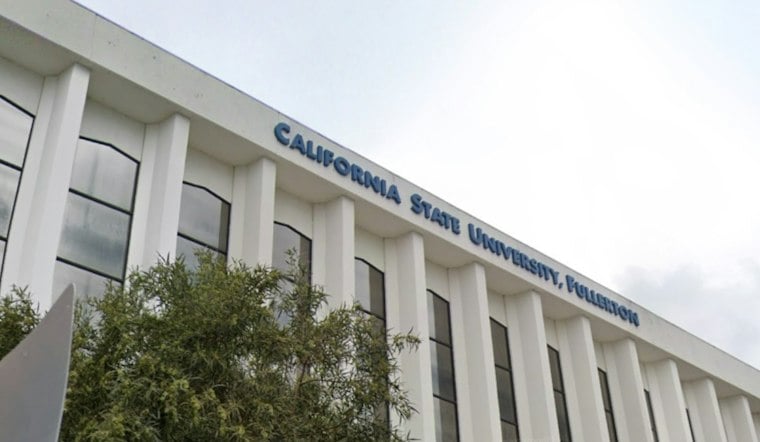
Orange County workers shouldn't expect much relief on the job front anytime soon. Cal State Fullerton economists say artificial intelligence investment is now powering more than a third of California's economic growth, even as payrolls across the county sit essentially flat heading into 2026, with only a modest 0.44% bump forecast for 2027.
The projections come from economists Anil Puri and Mira Farka, who presented CSUF's 32nd annual economic forecast in Irvine, according to mynewsla.com. Puri serves as director of the Woods Center for Economic Analysis and Forecasting at Cal State Fullerton, while Farka is a professor of economics and the center's co-director, per news.fullerton.edu. Their headline conclusion, as reported by the Press Telegram: the broader U.S. economy is expected to avoid a recession in 2027, with growth fueled largely by artificial intelligence investment.
AI's Outsized Role in California's Growth
That AI effect is striking in scale. The mynewsla.com report states that AI investment accounted for an estimated 37% of California's real GDP growth in 2026, compared with roughly 27% of national economic growth attributable to the technology. Nationally, AI investment is estimated to contribute between 0.9 and 1.1 percentage points to real GDP growth, the outlet reports.
The technology's effect on employment is more complicated. The forecast estimates AI has generated about 845,000 jobs nationally while displacing approximately 380,000 workers, according to the same mynewsla.com account. Farka has characterized the Orange County picture specifically as a shift in jobs rather than outright replacement, with professional services, information technology, finance and insurance identified as the sectors most exposed to AI's effects.
Orange County's Hiring Slump Persists
The job numbers tell a sobering story on their own. Southern California added 43,400 jobs year over year in March 2026, compared with an average annual increase of 126,500 since 2010 — a pace 66% below historic norms, per the Orange County Register. Orange County itself counted 1.69 million workers in March 2026, down 3,800 from a year earlier and marking its seventh consecutive annual decline, the Register reported.
Despite the sluggish hiring, business sentiment in the county has been climbing. The Orange County Business Journal reports that the CSUF Orange County Business Expectations Index rose to 72% for the current quarter, up from nearly 69% in the prior quarter — its third straight quarterly increase. Yet just 17% of Orange County firms planned to increase their workforces in the third quarter of 2026, down from 20% the quarter before, according to ocbj.com.
Businesses Embrace AI, Mostly Without Layoffs
Orange County companies appear to be adopting AI tools broadly. The same business journal account notes that nineteen percent of surveyed firms reported productivity increases of at least 20% from AI, while more than 70% said the technology had not significantly affected their workforces by causing layoffs. CSUF economists have separately noted that workers with bachelor's and graduate degrees are the ones most exposed to AI-related disruptions, per a related ocbj.com report.
Defense and Aerospace Fill Some of the Gap
One bright spot for regional job growth has come from an unexpected corner: defense technology. More than $4 billion in venture capital has flowed into Los Angeles-area defense technology companies, mynewsla.com reports, with defense-tech and space startups clustered in coastal communities across Los Angeles and Orange counties. Southern California's aerospace and defense sector, which lost roughly half its jobs following an early-1990s peak, is now growing quickly on the strength of that venture-backed activity.
Housing Still Squeezed, Inflation Set to Ease
Housing remains one of the tightest constraints on the regional economy. Orange County housing inventory sat about 33% below pre-pandemic levels, with roughly 4,900 homes listed for sale, according to mynewsla.com's reporting. Home prices have also climbed faster locally than in neighboring markets — since 2023, median single-family prices in Orange County have risen at an average annual rate of 4.6%, compared with just 1.5% in Los Angeles County and 1.9% statewide, the outlet reports.
There is a modest silver lining on prices more broadly. Orange County's consumer-price inflation is expected to slow to 2.8% in 2027 from an anticipated 3.5% rise in 2026, per the Orange County Business Journal's forecast coverage. Disruptions to global diesel supplies could still contribute to continued inflation in transportation and consumer goods, mynewsla.com notes.
California Still Outpacing the Nation, With Caveats
Zooming out, California's growth trajectory has cooled from its pre-pandemic highs even as it continues to outperform the country as a whole. The Public Policy Institute of California reports that the state's economic growth slowed to an annual average of 3.0% from 2020 to 2025, down from 4.1% annually between 2015 and 2019, according to ppic.org. The same analysis found California's average annual unemployment rate over the past two years ran at 5.4%, compared with 4.1% nationally.
California's dominance in attracting AI investment dollars is not in dispute, even if that capital isn't translating evenly into jobs or infrastructure. The state received 51% of national AI venture capital funding but represented only 1.2% of the nation's planned data-center construction pipeline, with just nine data centers under construction in California compared with 184 in Texas and 135 in Virginia, per mynewsla.com. By comparison, second-ranked New York attracted about one-thirteenth of California's venture capital haul, with $27 billion in deals announced, according to the Los Angeles Times.
For now, the Fullerton forecasters' bottom line is one of cautious stability rather than a dramatic turnaround. California's economy remains fueled by multibillion-dollar AI investments and defense spending even as weak hiring, a constrained housing market and uneven consumer sentiment continue to weigh on everyday Orange County workers and employers alike.


