

























































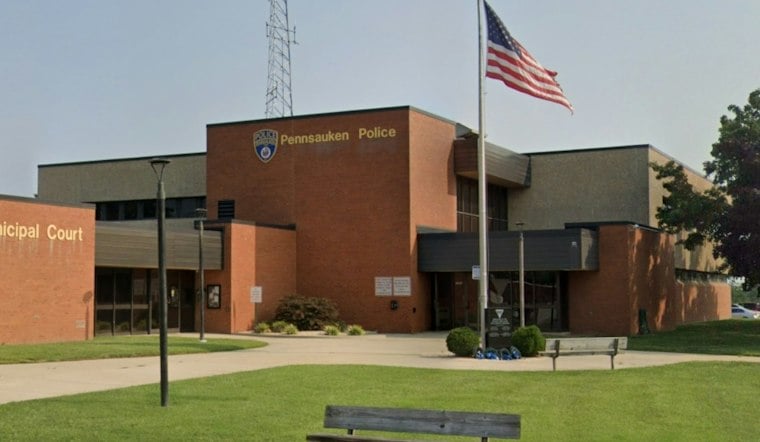
The U.S. Department of Justice announced Wednesday that it has opened an investigation into Pennsauken Township's firearm licensing system, examining whether the Pennsauken Township Police Department's permit delays unconstitutionally deprive residents of their right to bear arms. Assistant Attorney General Harmeet K. Dhillon confirmed the probe will be run through the department's Civil Rights Division.
The investigation is being handled specifically by the division's Second Amendment Section, according to Justice News. Federal investigators are scrutinizing Pennsauken Township Police Department's permitting system to determine whether processing delays have functioned as a barrier to lawful gun ownership for township residents.
At the heart of the probe is a legal standard set by the U.S. Supreme Court in its 2022 ruling in New York State Rifle & Pistol Ass'n, Inc. v. Bruen. The Court warned that licensing schemes can cross into unconstitutional territory when lengthy wait times or steep fees effectively deny ordinary citizens their right to carry. The DOJ referenced Bruen's warning in connection with the alleged Pennsauken delays.
New Jersey's 30-Day Rule
Under New Jersey law, specifically N.J.S.A. 2C:58-3, local police chiefs and the Superintendent of State Police are required to approve or deny applications for Firearms Purchaser Identification Cards and handgun purchase permits within 30 days of submission, according to the New Jersey Department of Law & Public Safety. That statutory clock applies to the state's dual permitting structure, which separately requires a Firearms Purchaser Identification Card for rifles and shotguns and individual handgun purchase permits, with purchases of handguns capped at one every 30 days under N.J.S.A. 2C:58-3(i), according to attorneys at Roberts & Teeter, LLC.
Pennsauken's police department has already faced legal pressure over this exact issue. In June 2024, the Coalition of New Jersey Firearm Owners, Gun Owners of America, and a private resident filed a federal lawsuit naming Pennsauken Police Chief Phil Olivo, alleging permit delays that exceeded the 30-day statutory limit, as reported by Courthouse News Service.
Administrative delays of this kind are not new to New Jersey. A 2016 Law Enforcement Directive issued by the state Attorney General's Office acknowledged that police departments across the state frequently exceeded the 30-day window for reviewing firearm permit applications, according to NJ.gov, pointing to a long-standing compliance problem that predates the current federal probe.
Part of a Wider Federal Push
Pennsauken Township, a suburban Camden County municipality of roughly 37,000 residents sitting directly across the Delaware River from Philadelphia, now finds itself at the center of a national enforcement campaign. The DOJ's Civil Rights Division created its dedicated Second Amendment Section in December 2025 specifically to pursue pattern-or-practice investigations and civil actions over gun owners' rights, according to the Duke Center for Firearms Law.
By September 2026, that section had already launched more than 10 lawsuits and investigations nationwide targeting state and local gun regulations, including permit processing delays in Los Angeles County, Minnesota, and the U.S. Virgin Islands, The Trace reported.
Gun rights advocates have framed these federal interventions as necessary enforcement against bureaucratic obstruction, while state and local officials have generally pointed to administrative resource constraints and the complexity of background checks as the primary drivers behind processing delays. It remains unresolved what Pennsauken's specific current average delay times are, whether local staffing shortages have contributed to the backlog, or whether the township will pursue a negotiated consent decree rather than face federal litigation.





