

























































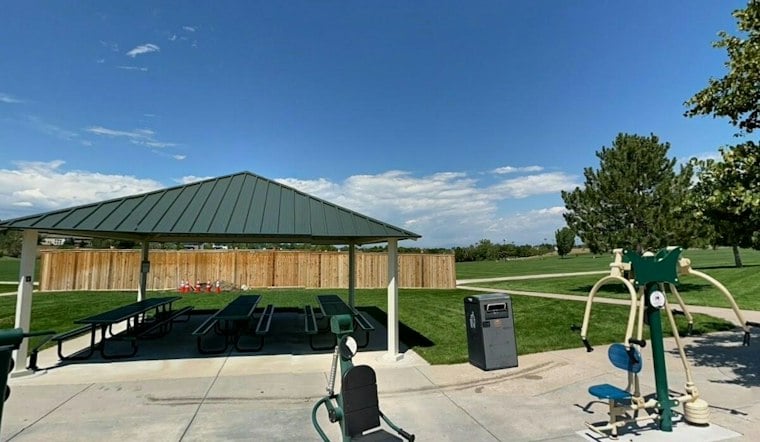
Four automated external defibrillators are now available to anyone who needs them at Highland Heritage Regional Park, tucked into outdoor stations near the ballfields, the picnic shelter and the amphitheater. Douglas County announced the devices this week, and they're accessible 24 hours a day, no medical training required.
The AEDs were donated by the Ed Walsh Memorial Foundation, according to the Denver Gazette. The devices are housed in outdoor SaveStations positioned near the west fields drop-off zone, the group picnic shelter and playground, and the east entrance to the amphitheater and synthetic soccer field — spots chosen to put a defibrillator within reach no matter where someone is in the park.
The foundation's founder, Kara Baker, started the organization after her father, Ed Walsh, died of sudden cardiac arrest while watching his granddaughter play soccer in Highlands Ranch. The nearest AED that day was locked inside a school building, out of reach during a weekend game, according to SaveStation. Walsh died in 2018.
A Mission Built on a Locked Door
Baker has said the foundation's purpose is to bring AEDs outside schools, parks and athletic fields so they're accessible at any hour — the same access her father didn't have. By this past July, the organization had installed 18 outdoor AED SaveStations across schools and parks in the Littleton area, the site's report notes, with three of those added at Gallup Park and the South Park Pickleball Complex. The foundation also hosts community heart-screening events, with proceeds funding additional outdoor AED installations throughout Colorado.
Douglas County Commissioner Kevin Van Winkle said AEDs can save lives when used in an emergency and that knowing where to find one can make the difference. Van Winkle expressed gratitude to Baker and the Ed Walsh Memorial Foundation for making the devices accessible to park visitors, per the Denver Gazette's reporting.
What To Do in an Emergency
County officials emphasized that anyone can use an AED in an emergency, even without medical training. The process is straightforward: call 911, turn the device on, and follow its voice prompts. The AED itself guides users through each step and determines whether a shock is actually needed, removing the guesswork for a bystander who has never touched one before.
Highland Heritage Regional Park's new stations fit into a broader trend of cities and counties installing climate-controlled, always-open AED cabinets in public parks. In Leawood, Kansas, the fire department expanded its own SaveStation network after the city approved funding in 2024 for five more cabinets, bringing its total to six — enough, officials there said, to cover every major city park, according to FireRescue1. Those cabinets are built to be alarmed, climate-controlled and lit for visibility, and some can alert officials by text or email if they're opened or an AED is removed, the outlet reported. Nearby Johnson County logged a jump in public AED use from 7.1% in 2024 to 14.7% in 2025, per the same report.
Similar donation-driven installations have popped up elsewhere, including two SaveStations funded by a Rotary Club at Edina, Minnesota's Centennial Lakes Park and Courtney Fields, and AEDs donated by a firefighters' association for public parks in Gig Harbor, Washington. Colorado law defines an AED simply as a device approved for sale by the federal Food and Drug Administration, according to state legislative records.


