

























































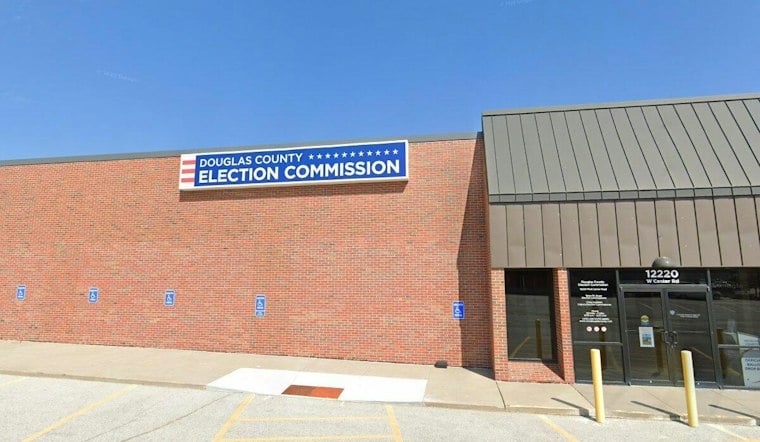
With Nebraska's general election just days away, some Douglas County voters say they are leaning on artificial intelligence chatbots alongside social media and traditional research sites to figure out who deserves their vote. The approach reflects a small but growing national trend, as more Americans experiment with tools like ChatGPT to sort through candidates and ballot measures before heading to the polls.
Douglas County voters are using AI tools, social media and online resources to research candidates and ballot measures ahead of the Nov. 3 vote, according to KETV, which spoke with several local residents about how they prepare to cast their ballots. Virgil Jackson, who has lived in Nebraska for three years, told the station he used ChatGPT to get a rundown of candidates' policies and priorities. Jackson said the information he researched independently largely matched what the chatbot produced, though he added that he still needs to examine candidates' past actions because he does not know everyone's history.
Other voters described more familiar methods. Doreen Whithorn said she used social media to research candidates, while her husband, Dan Whithorn, said the people he trusts are his best source of information. Michael Swartz said he relied on online resources including Vote411 and Ballotpedia rather than AI chatbots, and he warned that complex wording on state ballot issues can be misinterpreted without careful reading. Swartz added that staying informed is how voters can prepare for their vote and accept its outcome, per the station's report.
A National Shift Toward Chatbots, Still a Minority Habit
Jackson's experience fits into a broader pattern documented by Pew Research Center, which surveyed 5,273 U.S. adults from Oct. 12 through Oct. 18 and found that 8% of Americans are using AI chatbots to find election-related information this year. Among those users, 76% said they asked about where candidates stand on the issues, and 71% used chatbots to check the accuracy of things they had heard or read elsewhere. Forty percent sought suggestions for how to make their vote choices, a figure that aligns with the roughly 40% share cited in Pew's broader findings on voters asking chatbots how they should vote.
Pew also found a generational divide: 11% of adults under 50 reported using chatbots for election information, compared with just 4% of those 50 and older. That usage sits within a larger shift in how Americans search for information generally. Almost half of U.S. adults now use chatbots to find information of any kind, up from about one-third during the 2024 presidential-election year, according to SciLine. The same report notes that about 16% of local election officials said they used AI in their own work in 2026, mostly to draft social media posts and create graphics.
Errors and Manipulation Risks Documented Elsewhere
Chatbot-generated voter guides have not always held up to scrutiny. The Washington Post tested six popular chatbots by asking them to build voter guides for addresses in every U.S. county and found serious errors, including a Missouri Senate race that does not exist and a Washington House candidate who is not actually on the ballot. SciLine separately cited a NewsGuard audit finding that chatbots spread falsehoods 35% of the time, nearly double the rate recorded a year earlier, and pointed to a 2024 stress test in which 61% of chatbot responses about voting with a disability contained at least one insufficiency, with a third of answers factually wrong.
Foreign influence groups are now targeting AI systems directly, flooding the web with inaccurate information aimed at corrupting chatbot answers ahead of the midterms, according to a Washington State University report. Researchers have also identified at least 164 political ads generated or enhanced with AI during the 2026 election cycle, with spending approaching $80 million, per the same SciLine account. Not every voter experimenting with AI has run into trouble, though: NPR reported that voters elsewhere used chatbots to research down-ballot races, compare candidates and check viral claims, including one Wisconsin voter who prompted Gemini to build a comparison table of two gubernatorial candidates and a Pennsylvania resident who used Claude to help build a volunteer ballot-lookup website.
What's Actually on Nebraska's Ballot
The stakes for getting the research right are significant. Nebraska's Nov. 3 general election will fill or confirm representatives in four federal and 39 state-level races, according to the Nebraska Examiner, which invited all 92 federal and state-level candidates on the ballot to take part in its voter guide. Voters will also weigh in on three proposed constitutional amendments, one proposed state law, and retention votes for 48 Nebraska judges. The Flatwater Free Press has compiled its own statewide voter guide covering the races and ballot issues set to appear this fall.
For Douglas County voters still deciding how to sort fact from error, the range of tools on display — chatbots, Ballotpedia, Vote411, social media and trusted friends — underscores that no single source has become the default. Swartz's warning about dense ballot-measure language may be the most universal advice on offer: in a year when even automated research tools are producing nonexistent races and misidentified candidates, careful reading still carries real weight.





