

























































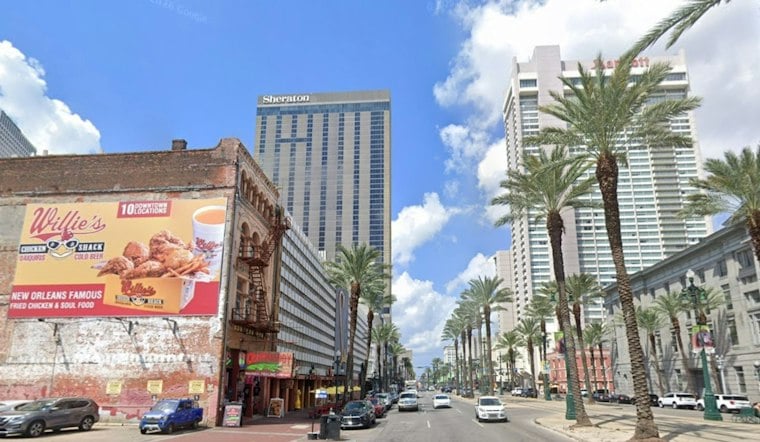
Downtown New Orleans has a new five-year game plan, and it centers on filling empty storefronts, fixing up Canal Street, and finding money that doesn't come solely from property owners' tax bills. The Downtown Development District unveiled its 2027-2031 strategic plan, titled “Leveraging Opportunity,” along with a new visual identity, at the Board of Trade on October 15.
According to New Orleans CityBusiness, the plan prioritizes vacant property redevelopment, public safety, infrastructure improvements, and economic growth paired with revenue diversification. The announcement came during The Future of Downtown New Orleans, a half-day event that drew business leaders, developers, civic organizations and community stakeholders, and featured a keynote address from Tracy Hadden Loh of the Brookings Institution along with panel discussions on investment and development opportunities, the outlet reports.
A Corridor-Wide Push for Canal Street
One of the plan's cross-priority initiatives zeroes in on Canal Street, coordinating economic development, property redevelopment and public-space improvements along the commercial corridor, per the same CityBusiness account. That work builds on groundwork City Hall already laid: Mayor Helena Moreno issued Executive Order HM-26-22 in July establishing the Canal Street Renaissance Initiative, a cross-agency push on public safety, infrastructure and economic development along the corridor, according to the City of New Orleans, with Moreno appointing Sayde Finkel to lead the effort across municipal departments and partner organizations.
The district has already put money behind the corridor. In September, the Downtown Development District began construction on Phase II infrastructure enhancements along Canal Street, committing more than $150,000 in district funds to lighting and streetscape upgrades. The strategic plan itself calls for improvements to sidewalks, curbs, crosswalks, lighting, signage and green spaces, alongside stronger cleaning operations and coordinated public safety initiatives, the CityBusiness report states.
Chasing Vacant Buildings and New Tenants
Filling empty ground-floor space is a recurring theme. The district also plans to work with public officials and private-sector partners on vacant properties and quality-of-life policies, and to support zoning and regulatory changes that encourage redevelopment and ground-floor commercial occupancy, per CityBusiness's reporting on the plan.
That ambition already has a funding vehicle attached to it. The Downtown Development District launched its “Activate Downtown” grant program in July, offering matching grants of up to $20,000 per project to cover half of tenant build-out costs for ground-floor commercial spaces that have sat vacant for a year or longer, according to the Downtown Development District. Applications for the program's initial cycle closed on October 15.
Leadership and a New Look
Seth Knudsen, president and CEO of the district, said the organization should intentionally invest resources where they can make the greatest difference, CityBusiness reports. Knudsen took the top job in May 2025 after a national search, having previously served as Chief of Strategy, Programs, and Projects at the New Orleans Redevelopment Authority, and he brought more than two decades of local government and urban planning experience to the role, the district notes on its staff page.
Chris R. Ross, chair of the district's Board of Commissioners, said the plan sets direction and supports downtown's long-term growth and vitality, per the CityBusiness account. The district also introduced a new visual identity meant to reflect its history and evolving economic-development role, which it plans to incorporate into its communications, programs and initiatives going forward.
Diversifying Beyond Property Taxes
The plan proposes exploring property acquisitions, equity investments and financial incentives, along with strategic planning initiatives to encourage housing and commercial development, the outlet reports. It also calls for expanding use of data analysis and collaboration with enforcement agencies and service providers.
On the money side, the district plans to diversify funding sources to reduce reliance on property tax revenue, potentially pursuing state and federal grants, bonding authority, philanthropic contributions, revenue-generating real estate investments, and project and program management services done in partnership with other organizations, according to CityBusiness. That pivot matters because the district has historically leaned on property tax millages, and board leadership under Knudsen has been exploring bonding, equity investments and public-private partnerships to cushion against shifts in commercial real estate valuations.
Why the Stakes Are So High Downtown
The numbers explain the urgency. Properties within the Downtown Development District generate roughly 30% of all sales tax revenue collected in Orleans Parish and account for about 14% of the city's total taxable real estate property value, per the district's 2026 State of Downtown report. The same report recorded 39.6 million visits to downtown in 2025, alongside a 7% year-over-year increase in the district's residential population and an 8% rise in median household income among downtown residents — findings Hoodline detailed in its earlier scorecard coverage.
Those visitor and residential gains arrive even as the commercial office sector faces ongoing structural shifts, which helps explain why the new plan leans so heavily on redevelopment and diversified funding rather than office-space demand alone. The district's 1.2-square-mile footprint — bounded by Iberville Street, the Pontchartrain Expressway, Claiborne Avenue and the Mississippi River — contains 8.9 million square feet of Class A office space, more than 6,300 apartment and condo units, and over 22,000 hotel rooms, with nearly $1 billion in real estate development activity recorded across the footprint in 2026, per the district.
Anchored by Institutional Investment
The strategic plan's bet on mixed-use growth is already visible in major projects elsewhere downtown. Tulane University executed a purchase agreement in June to lead a $500 million transformation of the historic, 1-million-square-foot Charity Hospital building into a bioscience innovation and research center targeted for completion in 2029, according to WWL-TV. The building had sat empty for more than two decades.
The plan also includes strategic initiatives to encourage housing and commercial development.
Background on the District
The Downtown Development District traces back to 1974, when the Louisiana Legislature created it as the nation's first assessment-based business improvement district, per CityBusiness. It provides economic development services, public safety programs, sanitation operations and other initiatives to downtown property owners, businesses and residents, with operations that include public safety rangers, sanitation crews, grant programs, homeless outreach funding, and support for additional police patrols and private security.
The district is governed by an 11-member Board of Commissioners; Act 520 reduced the number of mayoral appointees from nine to five. The new five-year plan, with its focus on vacant buildings, Canal Street and funding beyond the tax rolls, aims to strengthen downtown's image as a business, residential and visitor destination for the years ahead.





