

























































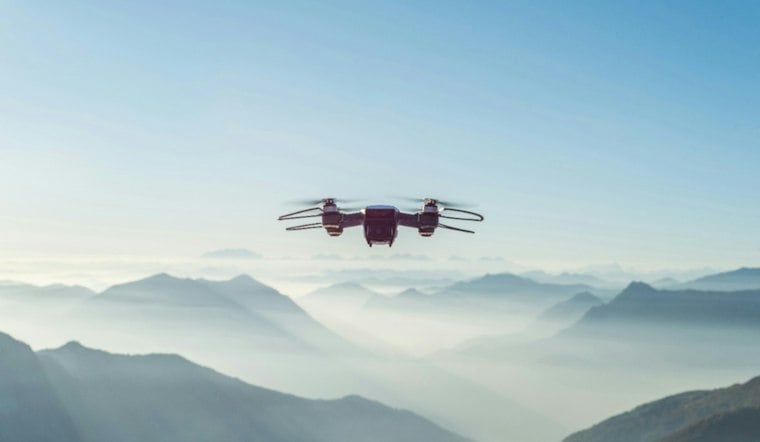
An 89-year-old man went missing in the Las Vegas Valley on May 1, and when traditional ground searches failed to find him, it was a police drone pilot who spotted him lying alone in the middle of the desert. Officers raced to the scene to render aid, and medical personnel arrived soon after, according to the Las Vegas Metropolitan Police Department.
The department recounted the rescue in a post this week marking the case with the event identifier LLV260500002172, describing how “traditional efforts were unable to locate him” before a drone was sent to search additional ground, according to LVMPD
. The agency credited persistence for the outcome, noting the pilot kept working the search until the man was found. LVMPD has not released further details on the man's identity or his current condition.
The case lands squarely within the kind of race-against-time search that has become common in Clark County, where officers field roughly 683 missing person reports every month, according to the Nevada Department of Public Safety as relayed in earlier Hoodline reporting on a separate search for a missing 68-year-old near M Resort. Clinical research cited by public health sources found that 82.3 percent of memory-impaired wanderers are located within the first 12 hours, but that survival and injury risks climb sharply once someone remains missing beyond 24 hours, per the same research relayed by Hoodline.
Desert Heat Raises the Stakes for Ground Searches
Southern Nevada's climate makes open-desert disappearances especially dangerous. The region recorded its fifth warmest year in 2025, with 77 days at or above 100 degrees, and early 2026 set record average temperatures, according to Southern Nevada Health District. Mojave Desert temperatures routinely climb to between 100 and 110 degrees during warmer months, compounding dehydration and heat exhaustion risks for seniors caught outdoors.
That urgency is part of why LVMPD's Air Support unit, responsible for patrolling more than 8,000 square miles of residential, desert, and mountain terrain across Clark County, leans on aerial tools to cover ground that patrol cars simply cannot reach quickly. The department's unmanned aerial fleet includes thermal imaging equipment and models such as the Skydio X2, Autel Evo, and Brinc Lemur, built for search-and-rescue work and hasty searches over large tracts of open terrain, per Altitude University. Detective Steven Oscar has noted that thermal technology allows rapid aerial searches across sprawling desert areas.
A Program Born Out of Tragedy, Now Expanding Fast
LVMPD's drone program traces back to the October 2017 mass shooting in Las Vegas, when officers first deployed drones to map and document the crime scene at the FBI's request. That initial deployment convinced department leadership to build a permanent drone unit, a history the agency itself lays out on its website.
Since then the program has scaled up considerably. In January, LVMPD unveiled a new Drone Operations Center at Metro headquarters, expanding its Mobile Drone as a First Responder program across the valley, with Sheriff Kevin McMahill saying the department wants to become the most technologically advanced law enforcement agency in the nation, according to KSNV NBC News 3 Las Vegas. During May, an LVMPD drone was used in the desert search.
Funding and Oversight Questions Still Linger
Much of that expansion has been fueled by private money. Major additions to LVMPD's technology fleet, including drones and automated license-plate tracking hardware, have been funded in part through grants routed via the non-profit Friends of Metro, with support from the Horowitz Family Foundation helping accelerate adoption, Hoodline has previously reported. That funding arrangement has kept privacy considerations part of the public conversation even as the technology demonstrates life-saving results.
In this case, a drone helped locate the missing man.





