

























































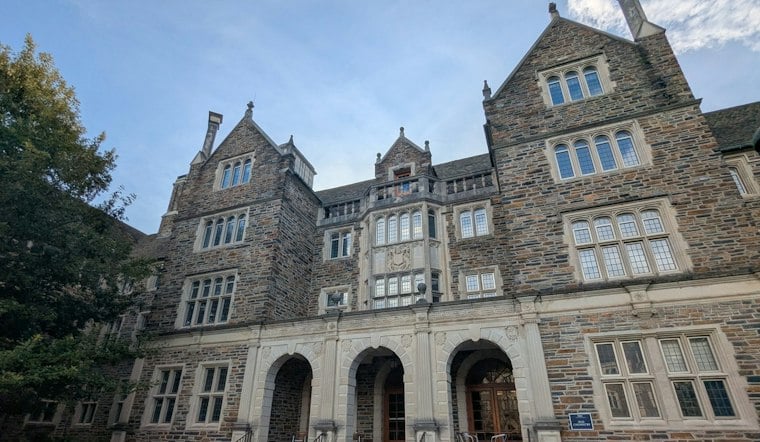
A fast-growing AI startup with deep Duke University roots is eyeing the Triangle as a potential new home base, even as it already races to fill 100 new jobs over the next six to 12 months. Serval, the company founded in 2024 that builds AI tools to automate corporate IT departments, has grown from 20 to 200 employees over the past year and is now hunting for a new wave of hires it calls automation engineers.
From Duke Dorm Rooms to a Billion-Dollar Valuation
Serval is led by married couple Jake Stauch and Tatiana Birgisson, who met at Duke more than a decade ago, according to Axios, which first reported the company's interest in North Carolina. Stauch studied neuroscience at Duke before dropping out to found NeuroPlus, a Durham-based startup that built brain-controlled video games, according to wral.com. Birgisson, meanwhile, built her own Durham venture, MATI Energy, brewing teas out of her dorm room while participating in Duke entrepreneurship programs, per Duke Today.
After leaving their respective startups, Stauch and Birgisson worked at other tech companies for several years before co-founding Serval in 2024, per the Axios report. Accounts differ on the founding team's exact makeup: Axios describes Serval as led by the couple, while Forbes reports that Stauch launched the company in April 2024 alongside former Verkada employee Alex McLeod, and the Post and Courier likewise describes Stauch leading Serval alongside co-founder McLeod and COO Birgisson. Many of Serval's earliest employees were fellow Duke alumni, according to Axios.
What Serval's Software Actually Does
Serval's platform automates companies' IT support systems, handling tasks like help desk requests such as password resets and onboarding new employees, per the Axios report. The system lets companies build those automations by describing problems in natural language — a process sometimes informally called vibe coding, Axios notes. postandcourier.com similarly describes the platform as enabling organizations to build and deploy automations using natural language, and the company has increased revenue more than fivefold since August, per that same outlet.
Forbes reports that Serval's existing platform handles employee support across IT and other business functions, reaching workers through Slack, Microsoft Teams, email and web portals. The company's customers now include Spotify, Fox and Live Nation, according to computerworld.com, which describes Serval as positioning itself as an AI-native alternative to incumbent IT service management vendors. The same outlet notes Serval can also operate initially as an automation and orchestration layer sitting on top of ServiceNow or another legacy system rather than replacing it outright.
Chasing ServiceNow's Territory
Axios reports that Serval aims to rival ServiceNow with more agile AI. The ambition is a tall order: ServiceNow posted $3.88 billion in subscription revenue in the second quarter of 2026, up 24.5% year over year, with its AI business crossing $1 billion in annual contract value, according to Forbes. Despite that scale, Forbes reports Stauch has said the company intends to go direct and fully replace ServiceNow rather than sell alongside it or chase smaller businesses. Serval is positioning itself as a challenger to ServiceNow.
Serval has raised $127 million from investors, according to the Axios report, pushing its valuation to $1 billion per the article. Forbes breaks that funding down into a $47 million Series A in October 2025 followed by a $75 million Series B led by Sequoia. Finsmes reports the company's revenue grew 500% and its headcount more than tripled since the Series A, while Upstarts Media reports Serval already has a 2026 customer pipeline bigger than it can currently handle.
Why the Triangle Is on the Table
Serval currently has offices in San Francisco and New York and plans to open offices in additional cities, including Austin, according to Axios. Stauch and Birgisson said the company is also considering the Triangle as a location for an office, per the same report. Stauch has said young talent coming out of Triangle universities is a reason to consider the region for automation engineering roles.
Those automation engineering roles are the company's most urgent hiring priority as it looks to add 100 employees over the next six to 12 months, according to Axios. The positions would have engineers embed directly with large companies' IT, HR, legal and finance departments to identify tasks worth automating and problems worth fixing, per the report. Stauch has said candidates for these roles may or may not hold computer science degrees, so long as they understand everyday AI use.
Stauch has also said that customer insight is increasingly becoming Serval's competitive advantage, telling Axios that companies need to know things about their customers that competitors do not know. Separately, Upstarts Media reports Serval launched its Serval Start program with a dozen members, eight of those slots reserved for new hires, and that Serval plans to use its funding to accelerate hiring across go-to-market and engineering teams ahead of product launches planned for 2026, according to Finsmes.





