

























































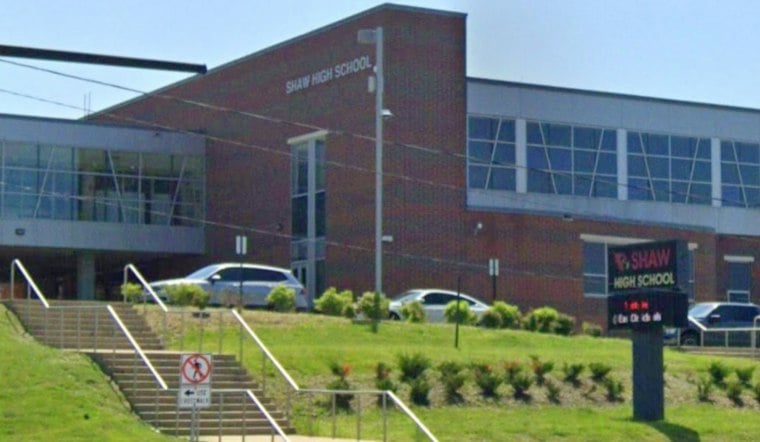
A student at Shaw High School missed nearly a month of class in September, and instead of a truancy letter, the response came from school social worker Erin Drakeley, who dug into what was keeping the teen home. That kind of individual follow-up has become the backbone of East Cleveland City Schools' strategy against chronic absenteeism, a problem that still touches more than half the district's students even as officials say the approach is working.
As reported by Signal Cleveland, Drakeley is one of several staffers at Shaw High who track individual students rather than treating absenteeism as a single districtwide number. Chronic absenteeism, defined as missing 10% of the school year or about 20 school days, has long been one of the most stubborn obstacles facing a district built largely on students from low-income households. Official Ohio Department of Education and Workforce data for the 2025–2026 school year puts East Cleveland's rate at 54.2%, even as the district serves 1,140 students across six schools, according to the Ohio Department of Education and Workforce.
The district's response starts with people, not paperwork. State-appointed Superintendent Dr. Henry Pettiegrew II assigned attendance oversight to Terrence Roscoe, the former ninth-grade principal at Shaw High, who now manages attendance, open enrollment and athletics across all of East Cleveland's schools, per the same Signal Cleveland account. Under Roscoe, each school holds weekly attendance meetings built around color-coded student data, and staff conduct home visits when families don't respond to outreach.
Bus Tickets, Uber Rides and a Store Called Kirkmart
Much of the intervention targets transportation, long cited as a leading barrier to attendance in a city where many families don't have reliable access to a car. The district offers a $12.50 seven-day unlimited RTA pass to help families get kids to school, and it hands out a two-way bus ticket for every day a student attends, letting students bank unused tickets for the following week, the report notes. Roscoe has overseen the purchase of thousands of bus tickets as part of that effort, and in some cases the district will even arrange an Uber ride for a parent who needs to get to an important school meeting.
Beyond transportation, the district has built out physical spaces meant to remove everyday obstacles that keep kids from walking through the door. Resource centers now operate at both Shaw High School and Kirk Middle School; the one at Kirk, nicknamed Kirkmart, occupies an empty first-floor classroom stocked with clothes, shoes and hygiene supplies, the same account describes. Shaw High's own care closet holds hygiene kits alongside prom dresses and other formal wear, and the school has added an exercise room for students as well.
Jobs, Incentives and a New Kind of Front Door
The district has also leaned into incentives rather than punishment. Roscoe told Signal Cleveland the goal is to assist families, not penalize them, and the district now offers paid student ambassador jobs specifically designed to discourage teens from skipping class to work outside jobs. Shaw High is piloting a parent check-in process that lets parents check in at a separate office before passing through the building's metal detector, and the school has added a senior social room with comfortable seating and natural light, access to which is restricted to students who maintain decent grades and good attendance.
Pettiegrew believes those welcoming touches can shift student motivation in ways punitive measures never did. “We want to partner with parents,” Pettiegrew said, according to the Signal Cleveland report, framing the overhaul as part of a broader cultural shift rather than a single policy tweak.
Measurable Gains After Years of State Control
The numbers suggest the approach is gaining traction, even if the baseline remains difficult. East Cleveland reduced the share of chronically absent students by 10 percentage points between the 2023-2024 and 2024-2025 school years, the outlet reports, and the district posted double-digit gains in the share of students scoring proficient on third-grade reading tests. Education researchers have pointed to those gains alongside the district's broader turnaround plan as evidence that the strategy is producing results.
Those academic gains followed a formal exit from state control. The Ohio Department of Education and Workforce released East Cleveland City Schools from its Academic Distress Commission oversight in December 2025, after the district met 16 of 20 benchmarks under its state-approved Revitalization Plan and raised its Performance Index by more than 12 points, according to WKYC. State control had begun in 2018 following three consecutive failing “F” grades on Ohio's report cards. East Cleveland achieved a three-star rating for the first time that year and reproduced the same three-star mark on its 2025–2026 Ohio School Report Card, while also earning a four-star rating in Progress, the measure of academic growth over time, per East Cleveland City Schools.
State Pressure Keeps Rising as Rules Tighten
The district's progress still sits well behind statewide benchmarks. Ohio's chronic absenteeism rate stood at 25% entering the 2026–2027 school year, with state leaders aiming to cut that figure in half over three years and setting an interim target of 14.5% for 2025–2026, according to WSYX ABC 6. Governor Mike DeWine ordered the creation of a statewide Attendance Dashboard, launched in April 2026, that publishes weekly, district-by-district attendance data meant to encourage earlier local intervention, per the Buckeye Community Hope Foundation.
New state rules arriving for the 2026–2027 school year raise the stakes further. Under House Bill 96, both excused and unexcused absences now count toward a student's chronic absenteeism total, and schools must notify families once a student has missed 5% of instructional hours, according to WTOL 11. That follows an earlier reform under House Bill 410 that decriminalized truancy statewide and shifted the emphasis toward hours-based tracking and supportive intervention teams rather than legal penalties.
The academic stakes attached to attendance are stark. A 2024–2025 analysis found that students with attendance above 90% reached an 82.4% proficiency rate in English Language Arts, compared with 51.5% for chronically absent students, and a 63.9% to 29.8% gap in math, per the Buckeye Community Hope Foundation. District leaders continue to cite math as East Cleveland's most urgent academic challenge.
A City Still Defined by Deep Poverty
East Cleveland's attendance fight unfolds against the backdrop of one of the region's most economically strained cities. The city has operated under a state fiscal emergency for nearly 13 consecutive years, with a median household income of $22,883 and a poverty rate of 44.3%, Hoodline has previously reported. Transportation costs and broader family economic stress are cited as leading causes of missed school days in the district.
Shaw High School, founded in 1838 and operating today out of a building constructed around 2007, remains the only high school in the district and enrolls between 440 and 630 students, according to Wikipedia. The school has expanded career-technical pathways in fields like automotive technology, cosmetology and culinary arts during the turnaround, and it now houses much of the district's attendance and care infrastructure, from the senior social room to the care closet stocked with hygiene kits and formal wear.
Pettiegrew's turnaround framework has also drawn national attention. The American Association of School Administrators featured him in its School Administrator magazine in October 2026, spotlighting the district's 20-measure scorecard and data-driven approach, East Cleveland City Schools announced. Pettiegrew has since codified the district's operating system in a 2026 field manual titled Turnaround Blueprint.





