

























































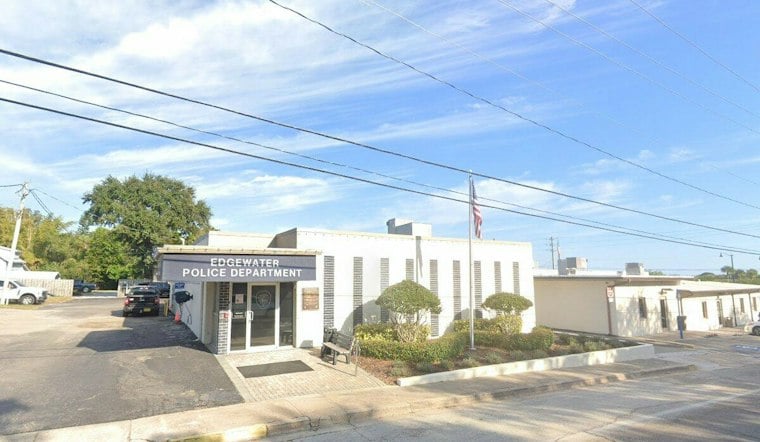
A passerby walking near Palmetto Street and 10th Street in Edgewater on Sunday morning spotted a man's body floating in a retention pond, setting off a police response that drew investigators to the quiet residential corner around 10 a.m. The man was later identified as 48-year-old Jonathan R. Lyon. Edgewater police say preliminary findings suggest he may have slipped into the water sometime during the early morning hours and simply could not get back out.
According to WFTV, Lyon's body was recovered from the pond after officers responded to the passerby's report. The Edgewater Police Department opened an investigation into the death, and as Orlando-News.com reports, investigators have so far found no indication of foul play and no ongoing threat to public safety tied to the incident. The department's working theory, laid out in a media release, is that Lyon accidentally entered the water and was unable to exit for reasons that remain undetermined.
Lyon's official cause and manner of death are still under active investigation in coordination with the medical examiner's office, the department said. That determination has not yet been finalized, and police have not offered further detail on what led Lyon to the pond in the first place.
A Second Volusia County Pond Tragedy in Two Weeks
Lyon's death comes just a week after a far more devastating case shook the county. On October 11, Volusia Sheriff's Office divers recovered two young brothers, ages 3 and 5, who drowned in a Daytona Beach retention pond shortly after slipping out of their home, according to Local 10 News. The back-to-back incidents have put a spotlight on the hundreds of stormwater retention ponds scattered across Volusia County's neighborhoods.
Those ponds are not decorative features. Per the St. Johns River Water Management District, they're engineered to hold permanent pools of water that filter runoff and prevent local flooding, with upkeep typically falling to homeowners associations or municipalities after construction wraps up. Whether the pond at Palmetto and 10th Street met state slope standards has not been addressed by investigators.
What State Rules Require of Retention Pond Design
What State Rules Require of Retention Pond Design A 2024 analysis reviewed by the Florida Senate describes 4:1 slopes extending to two feet below the control elevation and discusses a bill that would require barriers to prevent accidental entry at certain stormwater systems. Whether the pond at Palmetto and 10th Street had those slopes or barriers designed to prevent accidental entry remains an open question.
National research underscores why that engineering detail matters. A study published in PubMed Central examining U.S. child and adolescent drowning data from 2004 to 2020 found that 66.1% of retention ponds where fatal drownings occurred lacked physical barriers or fencing, while 82.0% had no warning signs at all. The same dynamics that trap children can trap adults, particularly in the dark or in unfamiliar terrain.
Volusia's Drowning Numbers and a Costly Legal Precedent
The county's drowning toll is not new territory. Florida Health CHARTS data from 2024 shows Volusia County recorded 27 unintentional drowning deaths that year, an age-adjusted rate of 5.7 per 100,000 residents. Researchers from the University of Central Florida and Nemours Children's Hospital found in a Summer 2023 study that Central Florida sees elevated drowning rates compared to national averages, driven by its dense concentration of water bodies and year-round outdoor activity.
Legal consequences for pond design failures have also surfaced recently. Earlier this month, a Florida personal injury firm secured a $1.5 million settlement in a St. Johns County retention pond drowning case after The Haggard Law Firm proved the pond's steep side slopes violated state water management safety codes. That case illustrates how slope violations can translate into real accountability when an investigation digs into the engineering behind a drowning.
Hoodline reported on three child drownings across Central Florida earlier this month, as safety experts pushed for broader water safety awareness in the region. Lyon's death adds an adult case to a string of recent local tragedies playing out in the same type of stormwater infrastructure. The Edgewater Police Department, headquartered at 135 East Park Avenue and led by Chief Charles “Chas” Geiger, continues to oversee the investigation into Lyon's death alongside the medical examiner's office.





