

























































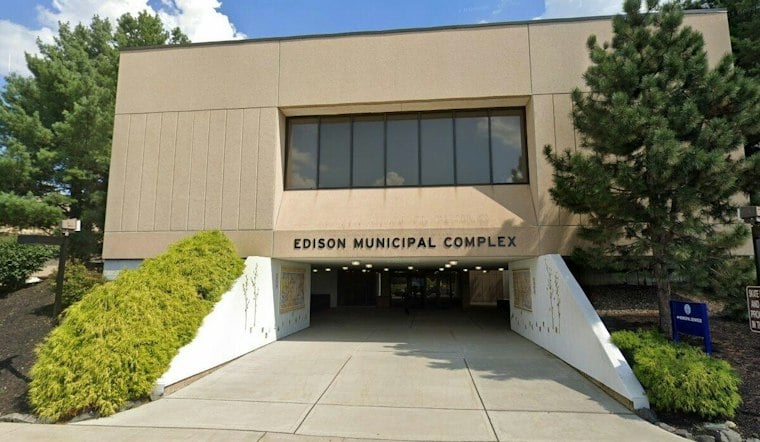
Edison Township Council approved a sweeping expansion of its Flock surveillance network by a 6-1 vote in September, adding license-plate readers at every entrance and exit point in town along with a thermal-imaging drone. Nearly a month later, residents are still showing up to council meetings demanding the township pause or cancel the deal, calling it an expensive overreach that was never put to a public vote.
According to TAPinto Edison, the council's resolution authorized the purchase of 97 new Flock cameras and a thermal drone, a figure echoed by MyCentralJersey, though other outlets have reported different totals — ABC7 cited 90 license-plate readers, while NewsNation and PIX11 each reported 92 cameras being installed. The price tag has been similarly muddled across coverage, with reports citing roughly $589,000, $590,000 or nearly $600,000 for the three-year equipment contract, which includes access to Flock's national database.
Cameras Will Ring the Township's Borders
Under the approved plan, license-plate readers will go up at every entrance and exit in Edison, part of a buildout meant to surround the township's perimeter. Police Chief Thomas Bryan told reporters the equipment would increase safety and bring Edison's technology in line with neighboring Perth Amboy and Elizabeth, and said Flock tools are intended to help police locate stolen vehicles and wanted suspects. Speaking to ABC7, Bryan said, “It has worked tremendously for us in crime fighting.”
Mayor Sam Joshi has also backed the expansion, saying the purchase reaffirms his commitment to public safety and follows his record of hiring the state's largest police force and championing New Jersey's 2024 crime bill into law. Joshi said the new thermal drone could reach any location in 45 seconds and could assist with missing-person, missing-pet and fire calls.
Lone No Vote Wants Stronger Safeguards
Councilman Richard Brescher cast the only vote against the purchase, and he hasn't softened his objections since. Brescher has argued that Flock cameras do not actually deter criminals and only help solve crimes after the fact, and he said the camera purchase should have gone before voters as a public ballot question rather than being decided solely by the council. He also called for Edison to pass a local law criminalizing misuse of the collected information, going so far as to say the Flock president should go to jail in Edison.
Edison residents voiced many of the same worries, raising concerns about privacy, surveillance, racial profiling, errors from the underlying artificial intelligence, and the possibility that captured data could be shared with agencies including ICE and DHS. One resident pointed to a lack of public input, saying they were never asked whether they supported installing the cameras or spending roughly $600,000. Another resident framed the stakes bluntly, saying, “We are not North Korea.”
Police Say Oversight Checks Are in Place
An Edison police officer said the department performs due diligence and treats Flock as just one investigative tool used to keep residents safe, adding that the department verifies Flock camera information before making any arrests and does not pair the system with facial recognition. Edison police have said data collected by the cameras is retained for seven days, though separate reporting from NewsNation notes that license-plate data in New Jersey can be retained for up to three years, a discrepancy that remains unresolved in public reporting. A spokesperson for the township said asset-forfeiture funds will cover $589,503.20 for the first contract year, meaning taxpayers won't see an added expense, a point Bryan also stressed when he said the program would be paid for with asset-forfeiture money rather than taxpayer dollars.
Council President Joseph Coyle has signaled he's open to compromise, saying he would consider setting up a three-member council committee to hear residents' concerns about the cameras. Edison has used Flock license-plate readers since 2022, but this expansion marks a significant leap in scale for the township.
A National Pattern of Pushback and Misuse
Edison's fight mirrors a wider reckoning playing out across the country. Flock Safety says its network includes more than 120,000 cameras across 49 states serving more than 5,000 law-enforcement agencies, according to CNN, which also reported at least two dozen cases of officers resigning or being arrested for allegedly abusing Flock systems to stalk romantic interests. The New York Times has reported that officers have used Flock cameras to stalk former partners, and that Flock camera data has been shared with DHS and ICE in recorded instances across the country.
Separately, NPR reported that at least 30 localities had deactivated their Flock cameras or canceled contracts since the beginning of 2025, including Flagstaff, Arizona, where the city council voted to end its contract and the police department cut data retention from 30 days to 14. Santa Cruz also voted to end its Flock contract, per the same NPR report, and Ypsilanti, Michigan banned automatic license-plate readers outright. A broader opposition movement has reportedly led to contracts being canceled or rejected and cameras deactivated in Austin, Kent, Cambridge, Santa Cruz, Eugene, Knoxville and Ypsilanti.
Not all the data on license-plate readers points one direction. An Atlantic City study covering 2022 to 2024, cited by CNN, found the technology did not reduce violent crime but was linked to reductions in shootings, vehicle thefts and property crime. New Jersey's 2020 attorney general guardrails on automated license-plate recognition technology require safeguards and privacy protections — the same state framework Edison's police department now operates under as its camera network grows.


