

























































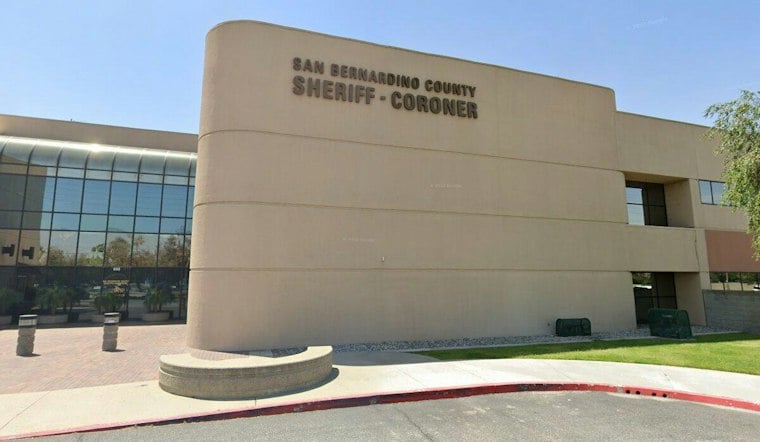
San Bernardino County enforcement teams served a warrant on a vacant parcel in El Mirage and walked away with an estimated 85,632 pounds of processed cannabis, a haul officers discovered packed into the property before crews hauled it all out for destruction in a single day. The removal, completed earlier this month, eliminated the need for overnight security and cut down on broader operational impacts tied to the site.
According to a county statement cited by VVNG, the San Bernardino County Sheriff's Department and San Bernardino County Code Enforcement jointly served the warrant at the El Mirage property. Additional staff, trucks and trailers were brought in to assist, allowing crews to finish removing the processed cannabis in one day rather than stretching the operation over multiple shifts. Code enforcement had requested help from its rapid response program, which provides extra resources for complex cases, the outlet reported.
A Unit Built Over a Decade of Desert Raids
The county's cannabis unit sits inside its Land Use Services division and works directly with the sheriff's department's Marijuana Enforcement Team to investigate illegal cultivation across unincorporated San Bernardino County, per the same account. That partnership has developed over roughly the past decade, with enforcement teams adapting as illegal growers shift their methods. The cannabis unit alone has investigated more than 1,550 cannabis-related cases during that span, the report notes.
Investigators identify suspected illegal operations through public tips, information shared by other agencies, and direct scouting of unincorporated desert land, the station's report states. Residents can submit information through the sheriff's department's WeTip program. When investigations demand more resources, code enforcement and the sheriff's department coordinate with the California Department of Cannabis Control, the California Department of Fish and Wildlife, and the San Bernardino County Fire Protection District's hazmat team.
The entire El Mirage operation unfolded under a legal backdrop that makes commercial cannabis activity off-limits countywide outside incorporated cities. San Bernardino County Ordinance Chapter 84.34 bans all commercial cannabis cultivation, processing, distribution, and sales in unincorporated areas, according to San Bernardino County Land Use Services, even though Proposition 64 legalized recreational cannabis statewide. That law preserves local governments' authority to prohibit commercial operations within their own borders, which is exactly what the county has done.
Steep Fines and a Dedicated Strike Force
The county backed that ban with teeth in August 2021, when the Board of Supervisors passed an urgency ordinance charging up to $10,000 per day for non-compliant farms with more than 200 plants, as reported by CBS Los Angeles. That same month, the sheriff's department launched Operation Hammer Strike, expanding its Marijuana Enforcement Team from a single unit to five dedicated teams funded by the Board of Supervisors. In its first 10 weeks, that expanded operation seized an estimated $177 million in illegal cannabis across rural parts of the county, according to KVCR.
Illegal grows on abandoned or noncompliant parcels frequently leave behind more than plants. The nuisance abatement program within Land Use Services' code enforcement division addresses properties that can contain remnants of grow structures, unpermitted construction, hazardous electrical or plumbing work, and debris, per the VVNG account. Abatement efforts can include inspections, notices, contractor coordination, warrants, and cleanup, and the costs of that work are billed directly to the property owner. San Bernardino County Land Use Services confirms that unpaid abatement fees can result in liens or special assessments against the land.
Desert Grows Carry a Darker Track Record
The stakes around illegal High Desert cultivation go beyond fines and cleanup bills. In January 2024, six men were found shot to death along an isolated dirt road in a remote desert area near El Mirage, in a killing that county prosecutors and sheriff's investigators confirmed was triggered by a dispute over an illegal marijuana transaction, according to the Los Angeles Times. Five suspects were charged in those killings, and Hoodline has reported on pretrial fights over confessions in that death penalty case.
Illicit grows also strain the desert environment that unincorporated High Desert communities depend on. Unlicensed operations near El Mirage rely on extensive unmetered water theft from local aquifers and fire hydrants, according to the office of U.S. Representative Jay Obernolte, with illegal California grows collectively consuming an estimated 11.4 to 36.3 million liters of water daily. Those same operations often contaminate land with hazardous waste, unpermitted construction, and banned pesticides such as carbofuran, which the congressman's office says pose serious risks to desert wildlife, including the endangered desert tortoise.
Part of a Much Larger Statewide Fight
The El Mirage bust is one piece of a much bigger enforcement picture across California. The state's Unified Cannabis Enforcement Task Force, created in 2022, has seized and destroyed more than 841,000 pounds of illicit cannabis valued at over $1.3 billion across 29 counties through mid-2026, according to the California Department of Cannabis Control. Separately, the state's Eradication and Prevention of Illicit Cannabis program destroyed 774,829 illegal plants and 106,141 pounds of processed marijuana while making 282 arrests across 36 counties in 2024, per the California Attorney General's office.
State regulatory data from 2026 shows that 53% of California's 540 cities and counties prohibit all commercial cannabis activity within their borders, the Department of Cannabis Control reports, creating a patchwork of legal and illegal jurisdictions statewide. San Bernardino County's outright ban places it squarely among that majority, even as unlicensed operators continue testing the county's remote desert parcels. Whether billing cleanup costs to absentee landowners actually deters future illegal grows on their land remains an open question for county officials still refining their enforcement approach.





