

























































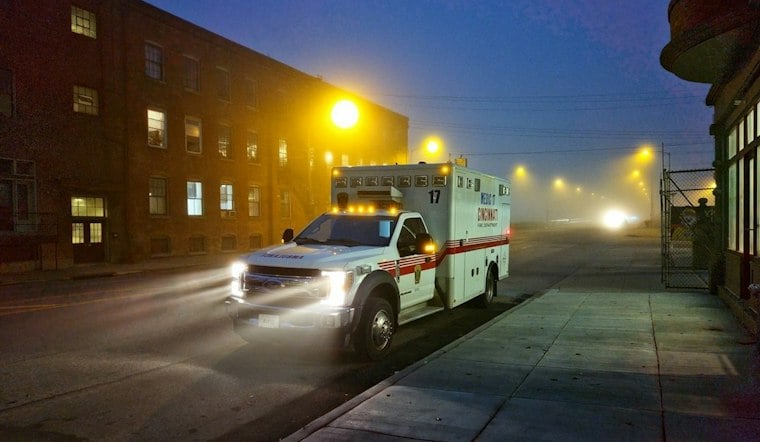
An elderly woman died after a house fire broke out on Patterson Avenue in Lockland, Ohio, Sunday morning, and a stopped train blocking the tracks delayed firefighters on their way to the scene. Crews pulled the woman from the home, but she was later pronounced dead. Her identity has not been released, and the cause of the fire remains under investigation.
Reports differ on exactly when the call came in. According to WKRC, fire crews were called to the 400 block of Patterson Avenue around 9:30 a.m. Sunday, while WLWT reported firefighters were called just after 9:30 a.m. WLWT also reported that a Norfolk Southern train was found stopped on the tracks, slowing the response.
That delay, according to Fox19, added about seven minutes to firefighters' arrival. WKRC reported that a trip that normally takes about 30 seconds took seven minutes because of the train crossing. Crews from St. Bernard and Lockland responded to the fire scene, per WKRC, and an elderly woman was pulled from the home before later being pronounced dead, the station's report noted.
Scene Remained Active Into Late Morning
Crews continued to work the scene as of 11 a.m., per the same account from WLWT. Firefighters had not identified the woman at the time of publication, and the cause of the fire had not been determined, Fox19 reported. Lockland Fire Chief Doug Wehmeyer, named in WKRC's report, has previously spoken about how stopped trains disrupt emergency response in the small Hamilton County community.
A Recurring Problem for Lockland Crews
This is not the first time a stopped train has slowed Lockland firefighters on their way to a fire. Wehmeyer told WCPO that crews responding to a house fire on Central Avenue should have reached the scene in 59 seconds, but instead spent 15 minutes detouring around a stopped train blocking all five crossings in town. Lockland officials told WCPO that 85 citations had been issued to stopped trains in the area over the previous 90 days.
The problem extends well beyond Lockland. In Sebring, stopped trains occur about once a week and can force responders onto detours spanning several miles because the tracks divide the community, Fire Department Chief Mike Springer told WFMJ. In one case, a blocked crossing delayed Sebring firefighters responding to a house fire by about 15 minutes, and the man who was trapped inside later died, according to the same report. On average, a stopped train in Sebring adds five to 10 minutes to response times, while in nearby Salem a stopped train causes a five- to six-minute delay, WFMJ reported.
A Nationwide Issue Tied to Longer Trains
The scope of the problem has drawn national attention. The Federal Railroad Administration received more than 1,400 reports in a single year of trains blocking first responders, according to the Washington Post, which also reported that freight trains have grown longer over the past decade, with some stretching three miles. The Post described cases in Tennessee and Oklahoma in which people died after first responders were held up by trains, including one instance in which a man died of a medical emergency after an ambulance crew was delayed at a crossing.
Under Ohio law, railroads cannot block crossings indefinitely. The Ohio Revised Code states that at the end of each five-minute period of obstruction, a railroad company must clear the crossing for at least three minutes to allow waiting people and vehicles to pass. It remains unclear whether that statute applies to the train involved in Sunday's incident. Firefighters continue to investigate the cause of the Patterson Avenue fire, and the identity of the woman who died has not been released.





