

























































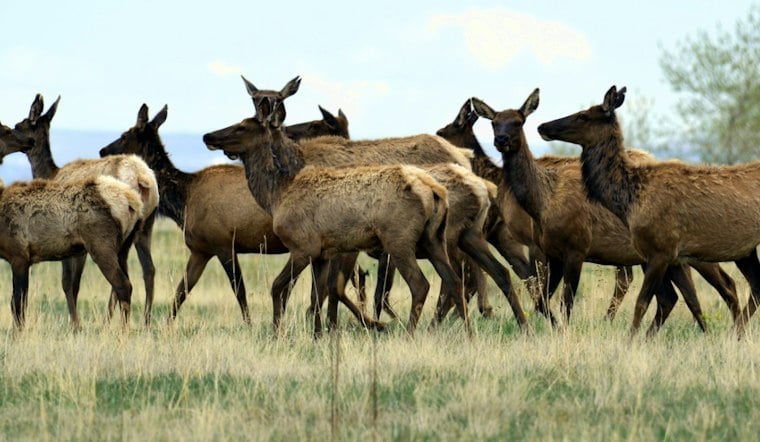
Elk hunting has opened for the first time at Rocky Flats National Wildlife Refuge, a former Cold War nuclear weapons site sitting about 16 miles northwest of Denver. The federal government says the hunt is meant to bring down a herd that has swelled far beyond what the more than 5,000-acre refuge can support.
The U.S. Fish and Wildlife Service said the hunt is intended to reduce the refuge's elk herd, according to the Denver Gazette. A 2024 survey by Colorado Parks and Wildlife and the federal agency counted 405 elk on the refuge, while a more recent estimate put the 2026 population at about 700, according to Wyoming Public Media. Either figure dwarfs the herd's carrying capacity, which the Denver Gazette reports sits between just 200 and 250 animals.
A Pilot Season With Strict Limits
Archery season ran from Sept. 17 through Sept. 28, and firearm season runs from Oct. 1 through Dec. 14, per the Denver Gazette's reporting. Hunting is prohibited on Tuesdays and Wednesdays, and hunters must apply for a permit through the Colorado Parks and Wildlife lottery system. Wyoming Public Media's report notes the agency handed out 50 tags through that lottery and required hunters to attend a mandatory orientation session before heading into the field.
The pilot program also comes with equipment restrictions. Per the same report, the refuge prohibits center-fire rifles, handguns, lead ammunition and hunting dogs during the elk hunt — rules that reflect the site's unusual history as much as typical wildlife management practice.
Eating the Elk, With One Caution
The U.S. Fish and Wildlife Service has said there are no restrictions on eating wildlife taken at the refuge, per its draft hunt plan dated January 2026. That same draft plan, however, recommends hunters not eat elk liver because of chemical findings in testing, the Denver Gazette reported.
From Weapons Plant to Wildlife Refuge
Rocky Flats produced nuclear weapons during the Cold War before the facility stopped manufacturing weapons in 1989, according to High Country News. Congress passed the Rocky Flats National Wildlife Refuge Act in 2001, and the federal and state cleanup of the area concluded in 2005, according to NPR, which first reported on the refuge's creation around the old nuclear reservation. Even back in 2007, the possibility of eventual hunting at the site was already on the radar, with one report describing plans for what it called “even limited hunting” once the refuge was established.
The U.S. Fish and Wildlife Service says elk numbers at Rocky Flats have more than doubled since 2019, a trend that outpaced the refuge's ability to sustain the herd long before this fall's hunt began. Wyoming Public Media described the September hunt as a limited pilot program, a cautious first step for a refuge still defined by its nuclear past even as it settles into its new role as public wildlife habitat.


