

























































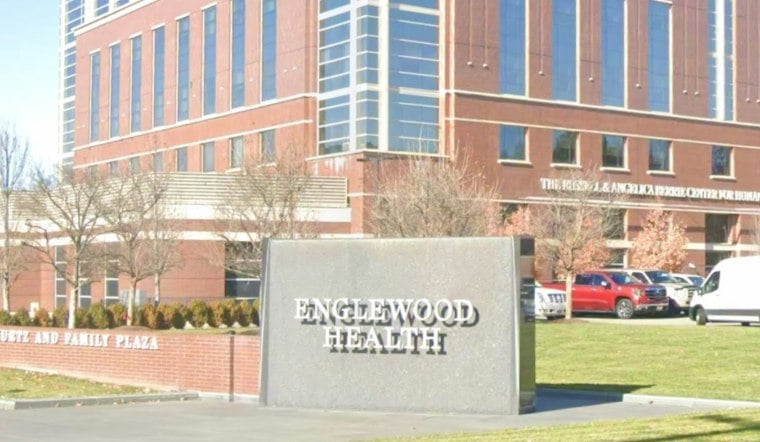
Englewood Health gathered state and community leaders at its Asian Health and Wellness Center in Englewood Cliffs to mark a $500,000 state grant that is helping fuel a major expansion of culturally tailored care for Bergen County's Korean and Chinese communities. The center already blends bilingual primary care with specialists in cardiology, endocrinology, gastroenterology, and rheumatology, and it sits at the heart of a far larger construction push now underway at 930 Sylvan Avenue.
The grant, secured through the state budget with support from Senator Gordon Johnson and Assemblywoman Ellen J. Park, is part of a multi-year effort to expand access to language-accessible medical care, according to ROI-NJ. Englewood Health president and CEO Warren Geller said the investment is about ensuring patients can access exceptional care in an environment where they feel understood, welcomed and supported, adding that the health system is grateful to Johnson and state leaders for recognizing the importance of culturally responsive care and investing in community health, per the same report.
That state commitment traces back to November 2025, when Assembly Speaker Craig J. Coughlin and Assemblywoman Ellen Park joined Englewood Health leadership to highlight the initial $500,000 allocation. At that event, Geller announced plans to double the Englewood Cliffs campus footprint from 100,000 to 200,000 square feet, according to the New Jersey Legislative Assembly Democrats.
A $103 Million Bet on Outpatient Growth
The scale of that ambition became clearer in July, when real estate firm Andalex executed a $103 million recapitalization backing the Sylvan Avenue expansion, according to GlobeSt. The project adds 50,000 square feet of physician offices alongside a 50,000-square-foot outpatient imaging and therapeutics center, building on a complex that already housed an ambulatory surgery center and primary care practices, GlobeSt reported. The Asian Health and Wellness Center's multilingual team helps patients navigate their care and addresses language and cultural barriers that can otherwise obscure critical symptoms, per ROI-NJ.
Bergen County's Asian population stood at roughly 161,731 people as of U.S. Census Bureau ACS estimates cited by ROI-NJ, representing about 16.8% of the county's total population of 962,316 residents. That share is the fourth-highest among New Jersey counties and sits above the state average, the outlet reported, underscoring why Englewood Health built a center specifically aimed at the Korean and Chinese communities that make up much of that growth.
Competing With a Teaneck Rival
Englewood Health is not the first Bergen County hospital system to chase this demographic shift. Holy Name Medical Center in Teaneck launched its Korean Medical Program in January 2008, and it has since grown into an Asian Health Services initiative that treats more than 45,000 Asian American patients annually across the tri-state region, according to Holy Name Medical Center. Holy Name later added Chinese, Filipino, Indian, and Japanese medical programs, giving it nearly two decades of head start in the space Englewood Health is now entering at scale.
Holy Name's own materials point to the demographic forces driving the competition: New Jersey's Chinese population grew 34% between 2000 and 2010, part of a broader surge that has made Asian Americans one of the state's fastest-growing groups. A December 2025 report from the New Jersey Asian American and Pacific Islander Commission focused on civic participation, economic opportunity, language access and representation, according to the commission's findings posted on NJ.gov.
Safety Record Backs the Expansion
Englewood Health enters this buildout with a strong institutional track record. In May, Englewood Hospital earned its 26th “A” Hospital Safety Grade from The Leapfrog Group, following national recognition as a Top Teaching Hospital for the eighth time in December 2025, according to Englewood Health. Leapfrog evaluates hospitals twice annually across 22 evidence-based safety measures, a cadence that has now delivered more than two dozen consecutive top grades for the 294-bed hospital that anchors the system's inpatient and emergency care.
That main campus has not been without recent hiccups. Hoodline previously reported that Englewood Hospital temporarily placed its emergency department on divert status in August after a power failure investigated by PSE&G. The episode highlighted how much the system now relies on decentralized outpatient sites like the one taking shape in Englewood Cliffs, even as its main hospital keeps its safety accolades intact.
A Pattern of Specialized Care Models
The Asian Health and Wellness Center fits a pattern for Englewood Health, which has more than 100 physicians and clinical experts from Korean and Chinese backgrounds in its provider network as of November 2025, according to the Assembly Democrats. The health system previously pioneered the tri-state area's first comprehensive Institute for Patient Blood Management and Bloodless Medicine and Surgery back in the 1990s, a program that originally served Jehovah's Witness communities before broader clinical adoption, as Hoodline noted in its coverage of a similar bloodless surgery program launching at a Bronx hospital. The Asian Health and Wellness Center brings together primary and specialty care in one location, built around bilingual staff meant to help Bergen County's Korean and Chinese residents get care without the language barriers that have long complicated treatment for first-generation immigrant patients.



