

























































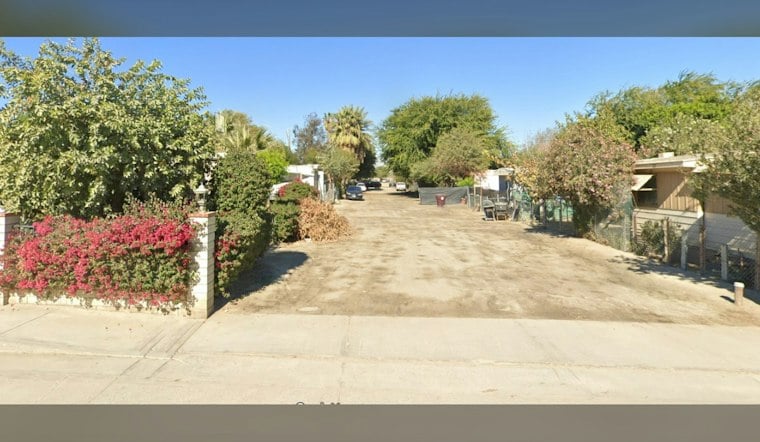
Bottled-water deliveries are expected to end at Oasis Mobile Home Park in Thermal, California, where residents received drinking-water deliveries after groundwater arsenic levels reached nearly ten times the federal safety limit. The EPA said it intended to lift its water-delivery requirement, following a saga that stretched back to 2019 and included three separate emergency orders, a lawsuit, and dozens of families who simply packed up and left.
The final scheduled shipment came through the California State Water Resources Control Board's Safe and Affordable Funding for Equity and Resilience Program, according to NBC Palm Springs. The move followed an EPA public notice issued two weeks earlier, on October 16, saying the agency was prepared to determine that arsenic levels in the park's drinking-water system no longer posed what it calls an imminent and substantial endangerment to public health. As reported by KESQ, samples taken at the Oasis water treatment facility since 2023 consistently showed arsenic at or below the federal maximum contaminant level of 10 parts per billion.
With those results in hand, the EPA said it was prepared to determine that residents may use the water for drinking, cooking, bathing and brushing their teeth. The agency also said it intended to lift the water-delivery requirement tied to its emergency administrative order, though it stressed that oversight of the park's drinking-water maintenance, operations and future improvements will continue, per the same KESQ account.
A Years-Long Fight Over Water That Wasn't Safe
Oasis Mobile Home Park sits at 88740 70th Avenue, within the Torres-Martinez Desert Cahuilla Indian Tribe's reservation. Its water troubles stretch back years: in 2019, groundwater arsenic levels at the park ranged from 16 to 97 parts per billion, the station reported, far above the 10 ppb federal limit. Between 2019 and 2021, the EPA issued three separate emergency administrative orders over the contamination, and the agency has described arsenic exposure as a carcinogen linked to lung, bladder and skin cancers, as well as heart disease, diabetes and neurological damage.
The arsenic occurred naturally in the park's groundwater, the report notes, though that didn't ease the burden on residents who lived with it for years. The park's operators also faced a lawsuit over the water issue, and more than dozens of residents moved out of Oasis in the years since the contamination first came to light, according to the same KESQ report.
The arsenic saga wasn't a one-time fix, either. The Desert Sun reported that the EPA first announced in August 2019 that arsenic concentrations were nearly ten times the safe drinking-water limit, then declared the problem resolved in May 2020 — only for the contamination to reemerge months later.
What It Took to Get the Water Clean
Getting Oasis to this point required a sustained overhaul of its infrastructure. Park operators upgraded the treatment system, adjusted the chemistry of treated water, installed new storage tanks, and maintained a consistent monthly flushing program through fire hydrants, according to KESQ's reporting. Those combined fixes are what ultimately brought arsenic readings down to safe levels by 2023.
Oasis is far from an isolated case. Manufactured housing communities like it provide affordable housing for an estimated 22 million Americans, but many run their own small water systems that are costly and difficult to maintain, according to MLive. The outlet found that nearly 70% of U.S. parks operating their own water systems violated safe drinking-water rules over a recent five-year stretch — and that Oasis itself agreed to upgrade its system and pay a $50,000 fine as part of that broader reckoning.
A similar fight has played out at Yankee Springs Meadows, a 284-unit manufactured housing community in Barry County, Michigan, first cited for arsenic violations in 2022. Levels there peaked at 22 parts per billion as recently as March, MLive reported, and while two new wells and a treatment system have since been installed, regulators said it could take several months before arsenic levels there fall to a healthy level.
Back in Thermal, state regulators note that arsenic is naturally occurring and commonly found in drinking-water sources across California, according to the California State Water Resources Control Board. For Oasis residents, that natural reality collided for years with a water system that has undergone upgrades; samples since 2023 have been at or below the federal limit, even as EPA oversight of the park continues.





