

























































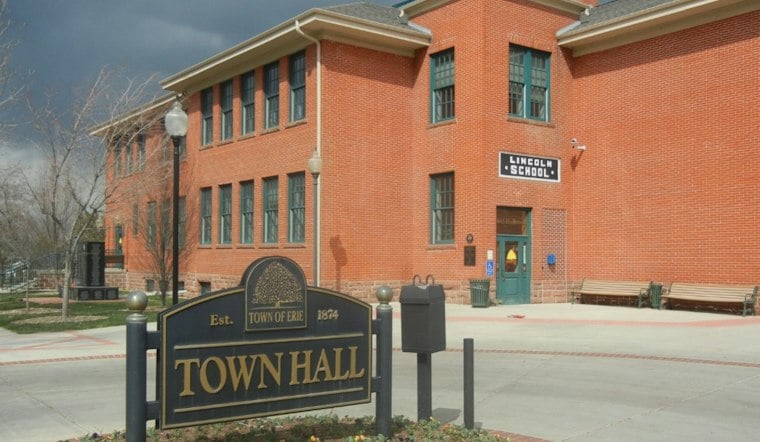
Erie's proposed 2027 budget totals roughly $190 million across 16 town funds, and it leans hard into one priority above nearly everything else: police staffing. The plan adds two new police officers even as town departments elsewhere brace for leaner years, reflecting a broader slowdown in the development and sales-tax growth that has fueled Erie's spending for the past decade.
Police Staffing Grows While Other Hiring Freezes
The proposed budget includes two additional police officers, part of a broader effort by the Town Council to prioritize police staffing even as it limits other hiring, according to Yellow Scene Magazine. General fund police spending is expected to increase 3.4% to $12.79 million next year. The budget also calls for a 2% salary adjustment meant to keep town salaries competitive, along with up to 3% set aside for merit-based raises — up from the 2% cap built into the 2026 budget.
Beyond the police department and a planned wastewater manager hire, the town is pulling back. Three vacant positions in planning and information technology are set to be eliminated, with outside contractors picking up some technology duties instead. Net staffing growth is expected to slow sharply, with three net positions added in 2027 compared with nine net positions added in 2026.
Sales Tax Growth Cools After Years of Expansion
The tighter approach comes as Erie's sales-tax revenue growth has fallen below 2% year-over-year, with a town memo warning that revenues may stagnate or even decline, according to the Daily Camera. That slowdown follows a period of rapid growth: Erie's population nearly doubled from about 22,400 in 2016 to 42,000 in 2025, and the newspaper's report notes that town expenditures rose by an average of 14.3% annually over that stretch, outpacing an 11.6% average rise in revenues.
To close the gap, departments were asked to reduce their proposed 2027 General Fund operating budgets by about 8% overall, the Daily Camera reports. Town staff ultimately trimmed department operating requests by $3.5 million and cut capital improvement requests by 21%, per the same account from Yellow Scene. The town says it has balanced its projected 2027 operating, personnel and capital improvement fund expenses, though current forecasts show the capital improvement fund beginning to run a deficit in 2028, according to the Daily Camera.
Permit Revenue and Developer Contributions Expected to Shrink
Two revenue streams tied to Erie's building boom are projected to shrink substantially next year. Permit and license revenue is expected to fall from $3.23 million in 2026 to $1.81 million in 2027, the Yellow Scene report notes, while developer contributions for town infrastructure are projected to decrease from $32.68 million to $21.10 million. Meanwhile overall tax revenue is still expected to rise, climbing from $43.18 million to $45.85 million.
Other budget lines show the uneven effects of slowing growth. Parks and recreation funding is expected to fall 3.5%, from $14.45 million to $13.95 million, though the budget does not specify whether that reduction will affect existing programs or services. Water fund spending, meanwhile, is projected to drop sharply — about 76%, from $201.1 million to $48.7 million — reflecting the completion of one-time construction costs for a new treatment facility. The water fund will still support storage tanks, pipelines and the Northern Integrated Supply Project in 2027. Planned capital improvements along Erie Parkway, County Line Road and 119th Street are set to move forward, and the budget retains a potential expansion of the Erie Community Center, though that project depends on future funding decisions.
A Road Fee Could Be Next
Perhaps the biggest open question hanging over Erie's finances involves how the town pays for road maintenance going forward. Town staff are expected to present a transportation fee proposal to the Town Council in early 2027, following a 2026 feasibility study, Yellow Scene reports. The fee has not been approved, and the exact amount residents or businesses would pay has not been specified — if adopted, it would be intended to help maintain roads.
Erie wouldn't be the first Front Range town to go this route. Boulder's City Council voted 6-3 to adopt its own transportation maintenance fee, which city officials expect to generate about $6.4 million annually for streets, sidewalks, multi-use paths and bridges, according to the Boulder Reporting Lab. Under Boulder's structure, a detached single-family home would pay $54 a year while a multi-unit dwelling would pay $42 per unit annually, with commercial properties charged at a rate of $160 per 1,000 square feet. The City of Boulder says it approved that fee for implementation in October 2025 and is targeting collection to begin in 2027.
Public Input Still to Come
Erie residents will have an opportunity to weigh in before the budget is finalized, according to the dossier's Yellow Scene reporting. The Town Council was expected to hold its final public hearing and potentially adopt the 2027 budget sometime in November, per the Daily Camera. A separate town notice posted on erieco.gov likewise describes the proposed budget as approximately $190 million across all 16 funds, though that municipal source was not treated as complete official budget documentation.





