

























































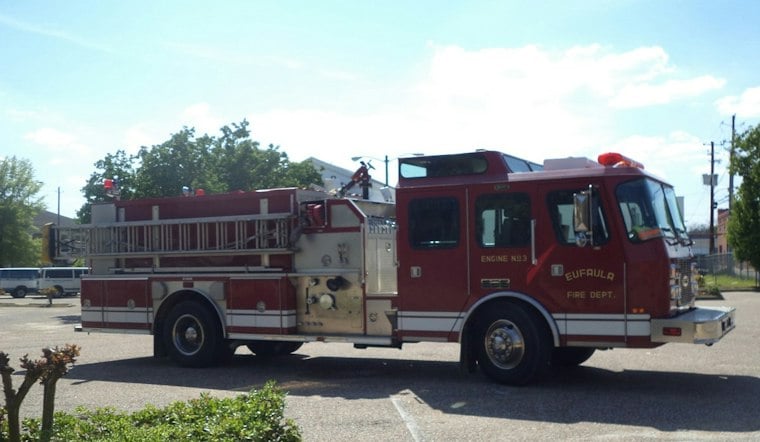
A fire tore through an old, unused warehouse at the end of Wilson Avenue in Eutaw, Alabama on Wednesday, damaging at least two buildings and sending crews scrambling without a hydrant close enough to tap. The blaze was reported around noon, and a police officer on scene said heavy smoke and flames were already visible by the time emergency services were notified.
The property had sat empty for decades, according to bystanders cited by the Tuscaloosa News, who said it was now owned by a local church. Eutaw sits about 35 miles southwest of Tuscaloosa, a small Greene County community where the fire response quickly became a test of resources as much as firefighting skill.
No Hydrant Meant a Constant Water Shuttle
With no fire hydrant close enough to the blaze, firefighters had to rely entirely on the water their pumpers carried in, according to the same report. Pumpers made repeated water runs each time their tanks ran dry, a slow and grinding process given that fire engines typically carry only 500 to 1,200 gallons of water at a time, per the outlet's reporting.
That kind of water shortfall is not unique to Eutaw. Firefighters reported similar water-supply problems during major fires at the 2700 Apartments in Homewood in August and October, according to ABC 3340. In Westminster, Maryland, a Carroll County fire report found several hydrants were not working during a May fire at a battery warehouse, as detailed by the Baltimore Sun. Even in a major city, water supply proved a challenge during a massive Staten Island warehouse fire that drew nearly 200 FDNY and EMS responders, according to NBC New York.
Greene County Volunteers Pitched In
Volunteer fire departments from around Greene County assisted Eutaw firefighters during the water-shuttle operation, the Tuscaloosa News reported. That kind of mutual aid is common in rural Alabama, where volunteer departments already operate under strain. Rising costs are hitting these departments hard, with crews often working aging trucks on tight budgets, according to a report from WSFA.
Staffing adds another layer of pressure. As one volunteer told the station, crews are “all getting too old to do it and we're not getting enough younger people in to take up the slack,” underscoring how thin rural fire coverage can stretch even before a hydrant gap enters the picture.
What Remains Unclear
The cause of the Eutaw fire has not been determined, and the warehouse's exact size, contents and the extent of the damage have not been detailed. It also remains unclear which other building was damaged beyond the warehouse itself, or how many structures in total were affected. For now, the fire stands as the latest reminder of how far apart hydrants can be in Alabama's smaller towns, and how much that distance can shape a response.



