

























































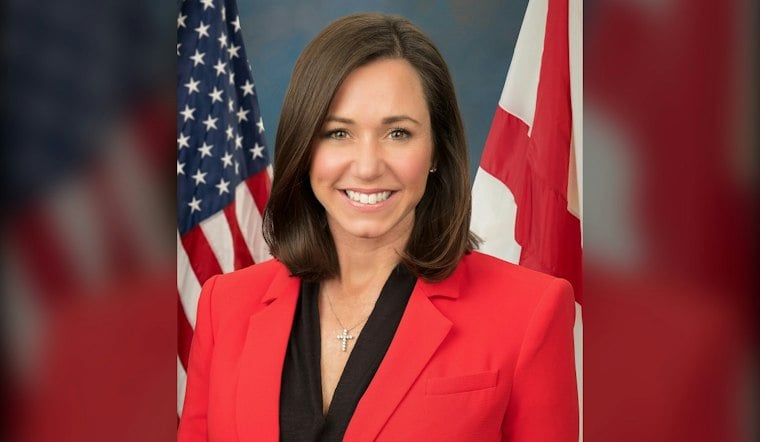
Katie Britt was reported to have directed more than $200 million in FY2026 earmarks to Alabama, placing her among the Senate’s top 25 for congressionally directed spending, according to AL.com’s review, which cited a CQ Roll Call analysis. The statewide figure is earmarked funding.
The Senate Appropriations Committee says it reviews senators’ requests and considers for funding only those that meet its requirements and are deemed appropriate for federal support. That review process does not, by itself, confirm that any particular request became an award. AL.com’s account, for example, says Enterprise Mayor Bill Cooper thanked Britt for helping secure $3 million for a local hospital; it also describes a $15 million road project there.
Transparency is not the same as confirmation
The Senate’s disclosure rules provide a way to inspect requests, not a guarantee of funding. For the FY2023 process, the committee required senators to post their requests and financial certifications on their official websites. Under the current FY2026 process, senators must certify that neither they nor immediate family members have a financial interest in a requested project, according to the committee’s guidance. These requirements make requests more visible; they do not establish that a request was approved or funded.
The reported Alabama projects span different purposes, including health care, transportation and university or research infrastructure. AL.com included, among other examples, $10 million requested for AI infrastructure at the University of Alabama in Huntsville and $5 million Tuskegee University is using to relaunch its historic aviation program. Together, the examples illustrate the range of reported requests and funding already in use.
A national scale check
The statewide figure sits within a much larger federal practice: The Washington Post reported that the 2026 federal funding package included nearly $15.5 billion in earmarks across more than 8,000 projects nationwide. That figure provides scale, but it is not a direct comparison with Britt’s reported Alabama total and does not resolve which of her listed requests were enacted.
Some of the Alabama requests involve universities and research. Nationally, academic-institution research and development spending rose 11.2% in FY2023, its largest increase in current dollars since FY2003, the National Center for Science and Engineering Statistics reported. That national trend is separate from congressionally directed spending and does not show whether Alabama institutions’ earmark requests were funded. For Britt’s reported total, the remaining question is therefore a records question: which listed requests can be matched to enacted appropriations?



