

























































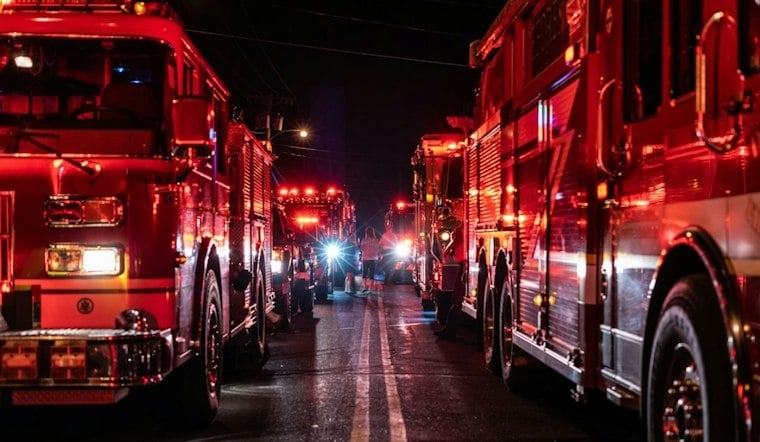
A house fire near Dunbar Avenue and Myrtle Avenue in Excelsior Springs left two residents without a home Saturday night, and several of their cats are still unaccounted for days later. One firefighter was treated on scene for heat exhaustion before being released, while the cause of the blaze remains under investigation.
Crews from the Excelsior Springs Fire Department responded to the fire just before 9:20 p.m. Saturday, according to FOX4KC. Firefighters encountered heavy fire conditions coming from a second-story bedroom, the fire department reported, and the house sustained significant damage. The department operates out of its headquarters at 1120 Tracy Avenue under Fire Chief Joe Maddick, according to the City of Excelsior Springs, and provides fire suppression, rescue, and emergency medical services.
Residents Got Out, But Cats Stayed Behind
Both residents confirmed everyone made it out safe, the outlet's report noted. But several cats remained inside the home as the fire spread, and fire department crews later located just one of them in an unaffected part of the house. The status of the remaining cats is unknown, and no additional human injuries were reported beyond the firefighter treated for heat exhaustion.
Finding the rest of the missing cats may prove difficult. Emergency medical experts and animal rescue specialists report that cats instinctively react to smoke and flames by hiding in dark, enclosed spaces such as deep closets, under beds, or inside hollow walls, according to the Journal of Emergency Medical Services. Unlike humans, who head straight for an exit, panicked felines retreat into tight hideaways to feel protected, which can draw out search efforts long after a fire is contained.
One Firefighter Treated for Heat Exhaustion
A firefighter was treated on scene for heat exhaustion during the response. Heat exhaustion among firefighters commonly occurs because heavy protective turnout gear limits sweat evaporation while crews operate in structure fires that can exceed 1,000 degrees Fahrenheit, according to the National Fire Protection Association.
The displaced residents now face a separate challenge: finding somewhere for their pets to go. While the American Red Cross offers emergency shelter to people displaced by home fires, the American Veterinary Medical Association says the Red Cross cannot provide pet housing. Displaced homeowners may need to make other arrangements for their pets in the meantime.
A Common but Devastating Risk
Pets are frequent casualties of home fires nationwide, according to the American Red Cross. The American Veterinary Medical Association and the Journal of Emergency Medical Services estimate that approximately 500,000 pets are affected by home structure fires every year, with most casualties resulting from toxic smoke inhalation rather than direct burns. Separate figures compiled by safety organizations put the annual pet death toll from residential fires at roughly 40,000.
Pet oxygen masks can help animals affected by smoke inhalation.
The cause of Saturday's fire remains under investigation, and the fate of the remaining missing cats has not yet been confirmed.





