

























































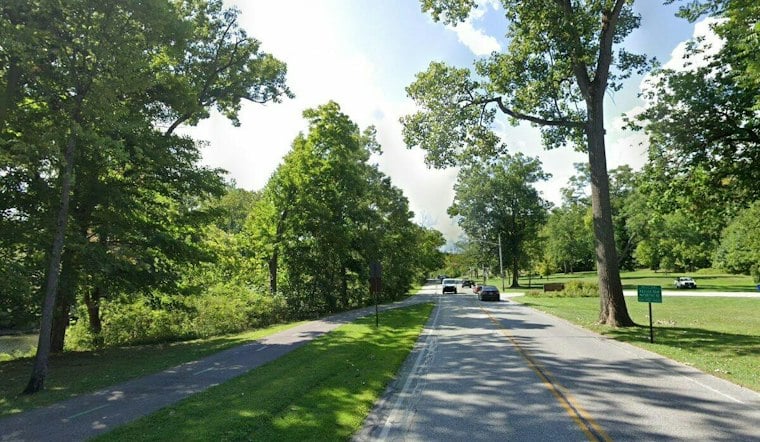
Fairview Park is laying the groundwork for a future white-tailed deer culling program, but city officials say residents should not expect gunfire in the neighborhood right away. The program is expected to start sometime within the next year or later, and the city says it will not be implemented immediately.
The push comes after Fairview Park City Council placed ordinance 26-46 on second and subsequent third readings, a move toward amending the city's hunting prohibition so a USDA wildlife-management operation can take place under limited circumstances, according to citizenportal.ai. The city's Local Government & Community Services committee had already moved unanimously to advance the ordinance. Under the proposed agreement, the USDA's Animal and Plant Health Inspection Service would be authorized to cull up to 100 deer between October 2026 and March 2027.
As Cleveland.com reports, the city has a need to reduce its white-tailed deer herd, and council is tweaking the ordinance to carve out a limited exception to its prohibition on hunting. Fairview Park's animal control officer and city administration have reportedly worked for two years on a deer management system, one that would bring in professional marksmen to help thin the herd.
Crashes, Injured Deer and Hundreds of Calls
Police Chief Paul Shepard has said the deer population has increased and that his department is fielding more calls involving injured animals, with deer getting hurt by cars and fences alike, per the same Cleveland.com report. The department reported 49 deer-related vehicle accidents and 332 calls to homes involving deer over the last five years.
Those numbers echo concerns Shepard raised back in November 2024, when he told cleveland.com that “our deer population has gone up greatly” and that the city had seen more accidents and property damage as a result. At that time, the city had opened a resident survey running through November 30, 2024, and Shepard confirmed that, as of that point, Fairview Park had not culled any deer. He noted that Valley Parkway forms seven miles of the city's eastern border, “where there are a lot of deer.”
The USDA's proposed involvement goes beyond headcounts. APHIS used heat mapping to estimate a minimum herd density of 25.8 deer per square mile in the area, according to the same citizenportal.ai report detailing the agreement, and the agency plans to coordinate with the state's Division of Wildlife on site designation, central processing and disposal plans. The operation would reportedly begin with baiting in late October before culling runs from November through March, in coordination with Cleveland Metroparks, whose land represents that same seven-mile border on the city's eastern edge.
How Other Northeast Ohio Communities Handle Their Herds
Fairview Park would not be the first Cuyahoga County community to turn to organized culling. North Olmsted has run its own deer culling program for roughly a decade, and last year's effort included 90 deer, according to cleveland.com. That city's program requires an annual resident survey mandated by the Ohio Department of Natural Resources' Division of Wildlife, and officials there say they “follow strict guidelines provided by the state and use only trained sharpshooters.” North Olmsted's culling happens on both city-owned and private land, with private-property work done only by request and with the owner's permission, and its police chief has credited the project with a decrease in deer-versus-auto accidents over its lifetime.
Cleveland Metroparks, meanwhile, has run its own culling program since 1998, following nearly two decades of monitoring the deer population that began in the early 1980s, according to the park district. Metroparks research has found that a balanced deer population sits between 10 and 20 deer per square mile, well below the 25.8 figure APHIS calculated for Fairview Park's area, and the agency has documented how high densities have essentially halted forest tree reproduction in some of its land. Between 2001 and 2006, Metroparks spent nearly $500,000 investigating immunocontraception as a non-lethal alternative before continuing its culling approach.
The Ohio Department of Natural Resources notes that its Deer Damage Control Permits are not intended as a population-control tool, even as it acknowledges that many municipalities and park districts across the state have identified a need to manage deer for public-safety reasons such as vehicle accidents. Statewide, Ohio has recorded 104,328 deer-related crashes since 2018, per a bulletin from the Ohio State Highway Patrol.
What Comes Next for Fairview Park
If the ordinance clears its remaining steps, the city plans to identify locations where culling can be conducted safely and humanely, with professional contractors carrying out the work and officers assigned to ensure compliance with the law. Fairview Park has said it intends to notify residents only after the deer management plan has actually been put into place, meaning further details on timing and specific sites are still to come.



