

























































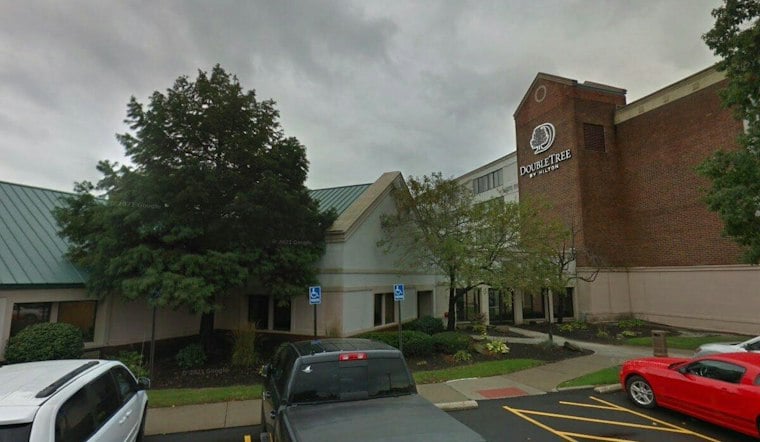
A hotel’s local-resident restriction was not visible to a Cleveland family when they booked a room online after a fire left their home without heat and electricity. At the front desk, Joanna Lopez Inman said, the family was told the hotel did not rent to Clevelanders.
An early-morning storm sparked a nearby power line fire, which caused a small, contained basement fire at Lopez Inman’s Ohio City home, according to Cleveland.com. Firefighters extinguished the blaze, but the home had no heat or electricity. Lopez Inman, a magistrate with Cleveland Housing Court, and her children, ages 5 and 8, spent the night at her mother’s home in Strongsville. Her husband then found a room at the Wyndham in Independence through Booking.com.
The hotel refused to honor the Booking.com reservation, Lopez Inman said. She recalled being told, “they don’t rent to Clevelanders.” A revised check-in sign stated: “per our hotel policy, we no longer rent rooms to guests who reside locally in Cuyahoga County and parts of the Summit area of the hotel.”
A Policy With No Warning on the Booking Site
Property records list Cleveland South Hospitality LLC as the owner of the Wyndham Independence. A Wyndham spokesperson said the property is independently owned and operated, and that Wyndham expects local-resident policies to comply with the law. The spokesperson said guests should be notified and refunded for prepaid charges where possible. A hotel desk clerk reportedly said the restriction is intended to keep local residents from hosting parties.
The family did not see the residency rule on Booking.com; the hotel’s own website discloses the policy, but third-party booking sites do not, according to the report. In Susan Glaser’s report for cleveland.com, attempts to reach the hotel’s operators by phone, email and in person went unanswered. Meg Davis, identified in the reporting, said some Wyndham franchise hotels set local-resident restrictions at the property level rather than as a brandwide rule.
After the refusal, the family returned to Lopez Inman’s mother’s home. Her home insurance later secured a reservation at the Residence Inn by Marriott in Independence, where the family was staying as of the report. Lopez Inman said she worries that others in similar circumstances, including women fleeing domestic violence, could be denied a room because of where they live.
Industry Says the Practice Is Legal, if Unusual
Joe Savarise, president and CEO of the Ohio Hotel & Lodging Association, described Wyndham’s local-resident policy as unusual but not unprecedented. He said hotels with such rules are typically economy or limited-service properties seeking to prevent parties, illegal transactions and other problems. Savarise said residency is not a protected class like race, religion or national origin, which he cited in explaining why the policy is legal.
Randall Carroll, an assistant professor of business law at the University of Mississippi, said hotels may restrict local residents to reduce the risk of damage and disruption from crowded parties. He suggested alternatives such as refundable damage deposits or accepting documentation of a legitimate reason for a local stay, including a fire or power outage.
Ohio law explicitly includes an inn in its definition of a place of public accommodation, according to the Ohio Revised Code. The code defines an unlawful discriminatory practice by reference to specified sections of state law.
What Ohio rules and local resources say
The Ohio Civil Rights Commission says a charge alleging discrimination in a place of public accommodation must be filed within six months of the incident. The information reviewed here does not establish whether an Ohio court or state agency has addressed a refusal based specifically on a guest’s local residence. Separately, Booking.com’s community guidelines list place of residence among characteristics relevant to unfair or unequal treatment on its platform; that is the platform’s stated standard, not a finding that the Independence hotel violated it. For residents seeking housing and other resource information after a disruption, Cuyahoga County’s 2024 power-outage advisory directed people to the United Way Help Center at 2-1-1, which the county said was free and available 24 hours a day.
A Pattern Playing Out Far Beyond Cleveland
Similar no-local policies have surfaced well outside Ohio. In Independence, Missouri, Jake Dresslaer said a Candlewood Suites turned him away as a hometown resident, telling him, “We're not serving Independence residents anymore,” according to kmbc.com. A hotel worker there reportedly added that local residents did not bring in the type of clientele the hotel wanted, and Dresslaer said he never saw any notice of the ban posted online or in the lobby. Jackson County property tax records identify that property’s owner as an independent franchisee, Tahoe Investments Inc.
In the Roanoke, Virginia area, a Holiday Inn Express told a guest its no-local policy covered any city within 50 miles of the hotel, turning her away even after she booked online during winter weather, per wsls.com. That hotel said it would make an exception for someone with a documented power outage. A separate report from the same outlet notes that hotels have long enforced these so-called no-local policies over concerns about parties, property damage and other disturbances.
In Asheville, North Carolina, one hotel manager said the property generally avoids renting to locals but makes exceptions for people burned out of a house or facing another pressing need, according to citizen-times.com. Another hotel group in that market said it reviews local bookings case by case, accommodating guests whose homes are under renovation or who have family visiting. A hospitality executive quoted in that report said such rules typically trace back to past incidents where a guest with a local address threw a party or violated hotel policy.





