

























































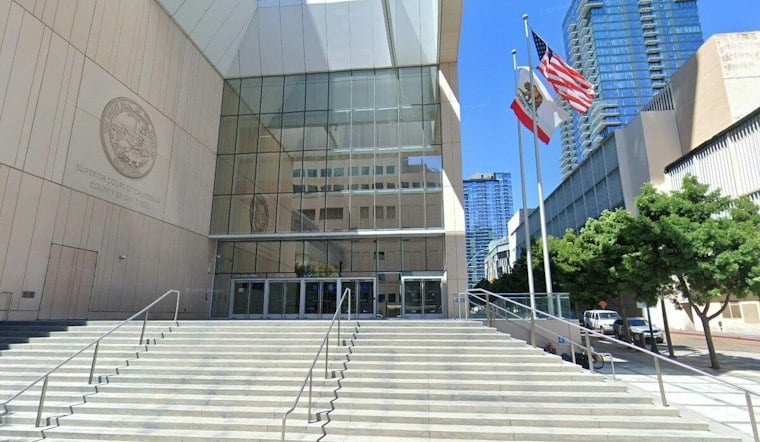
Actor Faizon Love will not stand trial next week on a felony assault charge after a San Diego Superior Court judge approved two years of mental health diversion for him instead, allowing the comedian known for roles in Friday, Elf and Couples Retreat to pursue treatment rather than prosecution. The decision cancels a jury trial that had been set to begin the following week.
Judge Albert T. Harutunian III approved the diversion after finding that Love had a qualifying mental health diagnosis and that his treatment plan could be adjusted as the two-year period unfolds, according to NBC 7 San Diego. Love was charged with felony assault after he allegedly ripped a credit card reader from its mount at a Mission Valley hotel in August 2024 and threw it at a clerk. San Diego police said at the time that the device struck the receptionist on the left side of her head and broke her glasses, according to The Source, which reported that Love pleaded not guilty to felony assault with a deadly weapon.
What the Diversion Requires
Under the terms Harutunian approved, Love must attend mental health counseling sessions at least twice a month, complete a 12-hour anger management course and consult a psychiatrist to determine whether medication is appropriate, per the same outlet's report. He is also barred from the Sheraton hotel in Mission Valley and from contact with its employees. He is due back in court in January for a progress review and may appear remotely by video rather than in person.
California's mental health diversion law postpones criminal proceedings while a defendant completes a court-approved treatment program, and courts generally dismiss the underlying charges if that program is completed successfully. If diversion is terminated early, criminal proceedings can resume. The law also presumes that a qualifying mental health disorder contributed to a defendant's alleged offense unless prosecutors rebut that presumption with clear and convincing evidence — a burden the report states prosecutors did not meet in Love's case.
Defense Pointed to Ongoing Treatment
Love's public defender, Marc Kligman, argued that his client's diagnosis contributed to the alleged offense and that his treatment had already proven effective, telling the court there really isn't a leg for the prosecution to stand on. The reporting notes Love voluntarily sought mental health care in 2025 and had been receiving treatment from one provider for approximately a year and a half by the time of the hearing, during which he remained out of custody without further issues.
Prosecutors pushed back, arguing that Love had a history of confrontational behavior predating the mental health issues cited by the defense and citing incidents dating back to 2002. They described him as having a short fuse and a tendency toward hostility, questioned whether his current treatment plan was sufficient, and argued he needed more frequent appointments and anger management beyond what the defense proposed. The defense submitted evaluations from its own providers, and the judge denied a prosecution request for a separate face-to-face psychiatric evaluation by a court-retained expert.
A Judge's Reluctant Approval
Harutunian made clear he had reservations even as he granted the diversion, saying he believes the Legislature has repeatedly expanded diversion eligibility in ways that may pose risks to public safety. It's a policy decision I disagree with, he said, adding that he thinks it values public safety too low. Still, he said the Legislature has the right to make that policy decision, and it is his job to follow that policy.
Diversion Debate Playing Out Statewide
Love's case lands amid broader scrutiny of how California courts apply the mental health diversion law, which took effect statewide in 2019 and excludes crimes such as murder, bombings and certain sex-related offenses from eligibility. In San Diego County, defendants requested diversion 533 times in 2025, and judges granted it in 333 of those felony cases — nearly two-thirds — the same investigative report found. Roughly 74% of those recipients had not reoffended as of August 2026.
That same investigation examined the case of Juan Gonzaba, an alleged stolen-Tesla driver tied to a Pacific Beach boardwalk incident in September, whom a judge ordered held in jail without bail rather than granting diversion — a contrast that has fueled debate over how consistently the law is applied. Elsewhere in the state, CalMatters reported that the Sacramento County District Attorney's Office received more than 1,300 diversion motions in 2025, with 689 granted in felony cases alone, and that 247 of those recipients — nearly 36% — had been arrested on new charges by the following March. The outlet also found that more than 17,000 people were granted mental health diversion statewide from 2019 through 2025, excluding Los Angeles and San Diego counties, while fewer than 10% of graduates from Los Angeles County's program have had new cases filed against them after release.



