

























































FarmBox Foods filed for Chapter 7 on Oct. 19, listing $4.4 million in liabilities and $1.6 million in assets. The Sedalia company is liquidating, and six farming containers remained with manufacturers when it filed, according to BusinessDen and its publishing partner, The Denver Post.
The reports say the filing lists $1.6 million owed to three manufacturers, two of them based in Colorado. Other listed debts include $756,000 to Maryland-based Cornucopia Farms, $250,000 to UMB Bank and $660,000 to David Teuscher, FarmBox’s chief medical officer and board chair, for loans he made to the company.
The reports also describe the ownership and revenue figures in the bankruptcy records: Rusty Walker held a 30% stake, Teuscher 26%, co-founder Jake Savageau 25% and co-founder Tony English 15%. FarmBox reported revenue of $761,000 in 2024 and $316,000 in 2025; Walker’s account in the records put 2026 revenue at $1.3 million by the time of filing. English told BusinessDen he did not know about the litigation or why the company filed, and said he had hired Walker to run FarmBox five years earlier.
Two customer disputes involved farms or equipment that customers said they paid for but did not receive; the reported outcomes differed. A Filipino company alleged FarmBox kept $113,000 of the $163,000 it paid for a custom container without delivering it. The parties later settled. The Cheyenne Mountain Zoo in Colorado Springs received one of the two farms it ordered, while the second was 90% paid for. After FarmBox did not respond in court, a Douglas County District Court judge ordered the company to provide the zoo with the second farm.
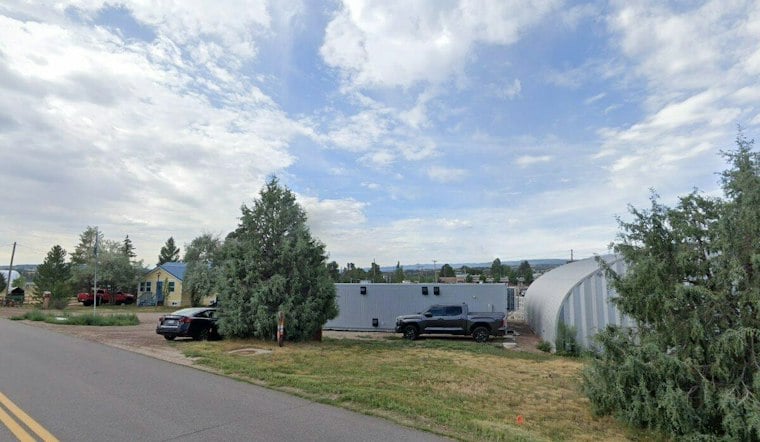
A separate dispute involved FarmBox’s Sedalia headquarters. Landlord Brandon Schmidt alleged in a lawsuit that the company owed him $1.1 million for three undelivered boxes and other costs after he financed a proposed gourmet mushroom operation at the site. He also said $44,000 in rent was unpaid. The bankruptcy filing halted his case. Schmidt told BusinessDen the company had fired its employees in July and had a lease running through May.
FarmBox built hydroponic farms in repurposed shipping containers, growing produce without soil, according to BusinessDen. In 2024, the company announced a partnership with technology firm New A.G.E. to place farms at 450 locations worldwide over six years, with the partners projecting about 100 million servings for underserved communities, Denver7 reported.
Chapter 7 and another container-farm shutdown
Chapter 7 provides for the liquidation of a debtor’s nonexempt property and distribution of the proceeds to creditors, according to the United States Courts. In a separate case, Boston-based container-farming company Freight Farms said it ceased operations on April 30, 2025, the same day it filed for Chapter 7 bankruptcy, The Boston Globe reported. The FarmBox filing, by contrast, noted that six farming containers remained with manufacturers.





