

























































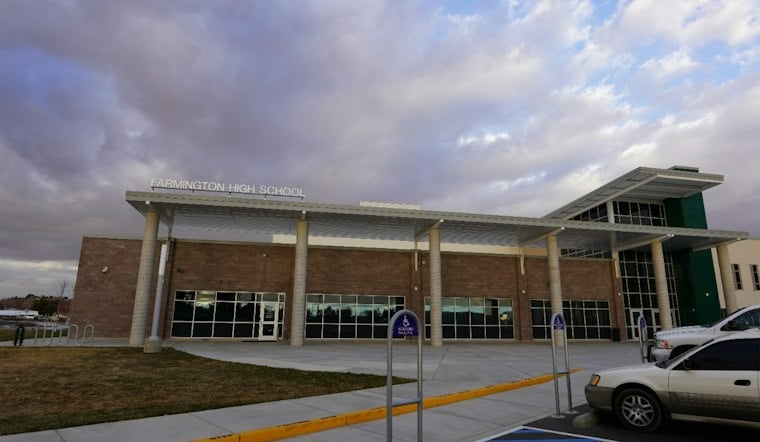
Genesis White Bull says she was blessed with an eagle plume, Lakota beadwork and a medicine wheel on her graduation cap when she walked across the stage at Farmington High School in May 2024 — and that school officials forced her to take it off before she could collect her diploma. Now the Hunkpapa Lakota graduate's lawsuit against Farmington Municipal Schools and its staff has a jury trial scheduled nearly three years after the ceremony that set off the case, though the parties may resolve it through mediation.
A Cap Swapped Out Mid-Ceremony
According to tricityrecordnm.com, a teacher at the May 13, 2024 ceremony warned White Bull that if she did not remove the decorated cap, she would be pulled from the line of students waiting to receive their diplomas. White Bull complied, handing over her cap and receiving a plain one to wear for the rest of the event, the outlet reported. Her cap, per the same account, carried an eagle plume and medicine wheel alongside the beadwork, items that hold deep meaning in Native culture.
What happened to that cap afterward is where the two sides diverge sharply. White Bull's family has said a school staffer cut the plume from the cap with scissors, and that she later found her decorated cap damaged, according to North Dakota Monitor. Farmington Municipal Schools has countered that the feather was returned intact to the family during the ceremony and that the beaded cap itself was returned after graduation, the outlet reported. White Bull's mother had demanded the cap's return, per facts attributed to KRQE.
Lawsuit Alleges Rights Violations, District Denies Wrongdoing
White Bull's lawsuit alleges her constitutional rights were violated, claiming violations of the New Mexico Civil Rights Act and the state's Religious Freedom Restoration Act, the tricityrecordnm.com report said. Farmington Municipal Schools has denied all the allegations and has argued that the New Mexico Civil Rights Act itself is unconstitutional, the outlet reported. At the time of the incident, the district said the regalia violated its dress code, according to KRQE.
KRQE reported that other students at the same ceremony wore adornments and decorations on their caps or stoles that were not confiscated. White Bull's attorneys at Rothstein Donatelli LLP have said no other student was treated the way she was, per the outlet. Roshanna Toya, one of the attorneys representing White Bull, described the incident as a desecration of something religious and sacred to the family, KRQE reported, while fellow attorney Carey Bhalla said the feather and its attachment string had been given life through ceremony. White Bull's regalia, including each piece worn that day, had been blessed through ceremony, according to the same report.
A Four-Day Trial — or a Settlement — Looms
A judge has scheduled a four-day jury trial to begin Oct. 5, 2027, tricityrecordnm.com reported. But the case may never reach that point: White Bull's attorney said recently that the parties could reach a potential resolution through mediation, according to the outlet. Bhalla has said the lawsuit should help prevent similar situations from happening to other students, per KRQE.
A New State Law Born From the Backlash
The Farmington incident helped push state lawmakers to pass legislation protecting students' rights to wear Native American regalia at public school events, KRQE reported. New Mexico's Senate Bill 163 prohibits school boards and charter schools from preventing Native American students from wearing culturally significant clothing, accessories and objects during graduation ceremonies, according to the Office of the Governor of New Mexico. The governor's office said the bill received unanimous support in both chambers of the state legislature and took effect immediately upon signing. With its passage, New Mexico became the 19th state to enact similar protections, joining 18 others, the governor's office said, noting that nearly 40,000 Native American students are enrolled in public schools statewide.
The stakes are especially visible in Farmington, where Indigenous students make up nearly 34% of the school district's population, according to North Dakota Monitor. Even with the new law on the books, some officials have said more specific language could be added to strengthen it, according to New Mexico PBS.
Echoes of a Similar Arizona Case
White Bull's case follows a similar dispute in Arizona, where school officials stopped Larissa Waln at the door of her 2019 graduation because she wore a beaded cap and a blessed eagle plume, according to the Native American Rights Fund. The Waln family sued the Dysart School District over alleged violations of her religious-exercise, free-speech and equal-protection rights, and the Ninth Circuit later reversed a dismissal of their complaint, finding it plausibly alleged selective enforcement and viewpoint-based treatment. Arizona responded in 2022 by enacting a law barring public and charter schools from preventing Native American students from wearing regalia at graduation, and the Waln family announced a settlement with the district in April 2023.





