

























































Two Central Methodist University football players are facing felony assault charges after investigators say they ran a locker-room punishment scheme that forced a teammate into a fight so brutal he was later checked for possible brain bleeding. Team captain and linebacker Michael Treyvion Hourel Jr., 22, and defensive back Kamarrion Ferguson were both charged with third-degree assault following the Oct. 9 incident at the NAIA school in Fayette, Missouri.
According to charging documents cited by STLtoday.com, the victim, a Central Methodist player, said the team had a rule that teammates who showed up late had to fight a teammate as punishment. The victim told investigators he was in the locker room that day to carry out the required fight and chose a teammate who did not want to participate and wanted to throw only body shots. Hourel reportedly objected to the ferocity of that fight, saying he did not think it would teach the victim a lesson, and jumped in himself — hitting the victim with open hands to the face, per the charging documents. Ferguson then joined in as well, also striking the victim, the documents state.
A Fayette police probable cause statement, reported by the Fayette Advertiser, says Hourel told investigators he started the fighting policy after calling a defensive players meeting because teammates were not being held accountable for arriving late to walkthroughs and practices. The victim went to an urgent care facility in Columbia the day after the fight and was referred to a concussion specialist over concerns about possible brain bleeding, according to STLtoday.com.
Players Kept Competing Before Police Got Involved
Despite the fight happening on a Friday morning, both Hourel and Ferguson played in Central Methodist's game the very next day, a 52-14 loss to Benedictine, before police were called two days later, according to KMMO. Fayette police officers were not dispatched to campus until 2:01 p.m. on Oct. 12, three days after the alleged assault, per the station's report. That gap between the locker-room altercation and formal law enforcement involvement means both charged players remained active on the field in the interim.
Six Central Methodist football players were suspended indefinitely following the incident, per a school release cited by STLtoday.com. The university said the behavior was unacceptable and inconsistent with its heritage and campus culture, and it described the arrangement as an informal accountability setup among a small group of players rather than an official team rule. Central Methodist said it is still investigating how the arrangement originated and who knew about it.
Bond Amounts Diverge Sharply Between the Two Players
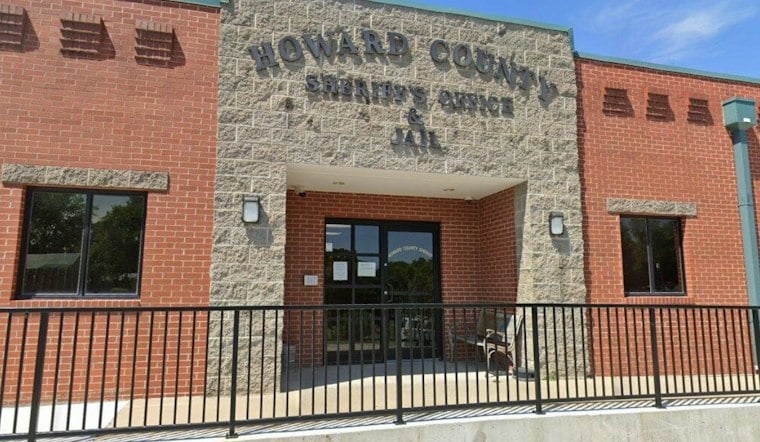
At an Oct. 14 arraignment in Howard County Circuit Court, Judge Mason Gebhardt reduced Ferguson's bond to $5,000, allowing him to post bail, the same account from KMMO notes. Hourel's bond, by contrast, remained set at $10,000 cash-only, and he faces a bond review hearing on Oct. 22. Ferguson posted bond Wednesday, October 14.
Ferguson is a native of Pine Bluff, Arkansas, while Hourel is from Andalusia, Alabama, according to STLtoday.com. As of October 14, the team had a 2-5 overall record and a 0-2 mark in the Heart South Division.
A Star Player With a Prior Legal Entanglement
Hourel was no obscure name on the Central Methodist roster. He was named an Associated Press NAIA Second Team All-American in December 2025 after leading the team with 114 tackles during his junior season, becoming the program's first All-American since 2022, according to Central Methodist University Athletics.
He was also already under court supervision when the Missouri incident occurred. In October 2024, Hourel entered a two-year diversion agreement in Lyon County, Kansas, stemming from charges of aggravated residential burglary, aggravated assault, battery, and criminal property damage while he was playing at Emporia State University, according to Cory Hogue Sports.
What the Charges Could Mean Legally
Under Missouri Revised Statutes § 565.054, third-degree assault is a Class E felony carrying potential penalties of up to four years in state prison and fines up to $10,000, according to Justia. Separately, Missouri's hazing statutes, under sections 578.360 through 578.365, classify hazing as a Class A misdemeanor — or a Class C felony if it creates a substantial risk to life — and state law explicitly bars a victim's voluntary participation from being used as a legal defense, per StopHazing. No hazing charges have been reported in this case to date.
Central Methodist is a private, Methodist-affiliated institution.





