

























































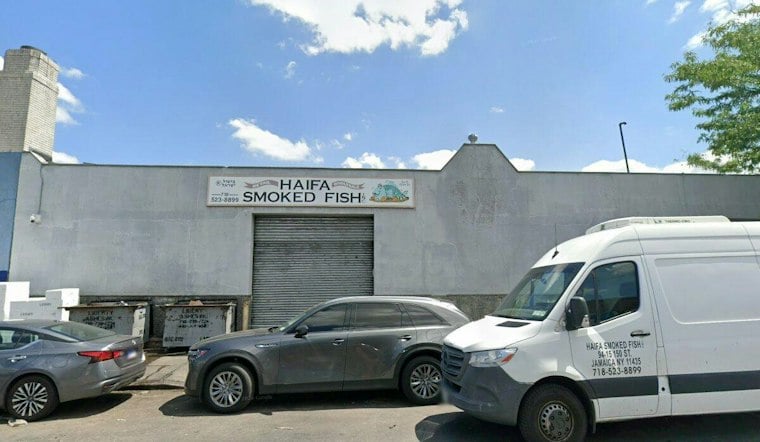
Federal health officials are telling consumers, restaurants and grocery stores across the Northeast to throw out any cold smoked sprats sold by D&M Smoked Fish Inc., doing business as Haifa Smoked Fish Inc., after the company refused to pull the product despite a warning that it was made without required safeguards against botulism. The company, based in Jamaica, New York, declined the FDA's recommendation to recall the item, prompting the agency to go public with its warning instead.
According to Food Safety News, an FDA inspection of the Jamaica facility found that controls were not in place to prevent Clostridium botulinum growth and toxin formation in the sprats. The FDA has recommended D&M Smoked Fish Inc. recall all cold smoked sprats currently on the market, but the firm has declined, the outlet reports. Per the same report, the FDA then issued a public warning about the product because the company refused to recall it.
The warning covers every lot of sprats the company has sold under the Haifa Smoked Fish name, not just a single batch, according to Food Poison Journal. Pictured boxes referenced in that reporting carry a shipping label reading Haifa Smoked Fish, 94-15 150 St., Jamaica, N.Y. 11435, with a product label marked C/Smoked Holland Sprats and showing lot number 261 — but the FDA warning applies to all lots, not just that one. Food Poison Journal reports the sprats were distributed to Connecticut, New Jersey, New York and Pennsylvania, and that the FDA said the product may have reached additional states beyond those four.
Sold Loose, Frozen for Months, Hard to Trace
Part of what makes this warning tricky for shoppers is how the product moves through the supply chain. The sprats are sold in bulk cardboard boxes and shipped refrigerated, and the FDA has said the product may be frozen for up to one year, according to the same FDA information cited by Food Safety News. That means a box sitting in a restaurant or grocery store freezer right now could have arrived long before this week's warning.
The product may also have been sold at restaurants and grocery store seafood counters with or without a label, per the FDA information. The FDA has advised that anyone who cannot identify whether their sprats came from Haifa Smoked Fish should not eat them, and should either discard the product or contact the place of purchase or supplier, Food Poison Journal reports. The agency has also advised cleaning and sanitizing any surfaces or containers that touched the product.
Why Botulism Is Especially Dangerous in This Case
Food contaminated with the spores that cause botulism poisoning does not look, smell or taste bad, Food Safety News notes — meaning there's no way to tell by sight or smell whether a box of sprats is safe. Cold smoking does not reach the temperatures needed to destroy Clostridium botulinum spores, and small whole fish like sprats are often processed with the guts still in, which is where those spores are most likely to be concentrated, according to Food Poison Journal. Federal rules require cold smoked fish processors to use specific controls to prevent those spores from growing and producing toxin in the first place — a requirement built into 21 CFR 123.16, which directs processors to address Clostridium botulinum toxin formation in their HACCP plans for the full shelf life of the product under normal and moderate abuse conditions, according to the eCFR. FDA guidance on fish and fishery products lists refrigerated, reduced-oxygen packaging and proper salt and nitrite concentrations as examples of how processors are supposed to control the hazard.
In foodborne botulism, symptoms generally begin 18 to 36 hours after eating contaminated food, though Food Poison Journal notes symptoms can also begin within a few hours or as late as 10 days afterward. Reported symptoms include nausea, vomiting, fatigue or weakness, blurred or double vision, difficulty speaking or a voice change, difficulty swallowing, dry mouth, constipation, respiratory distress and descending paralysis that begins in the face, per Food Poison Journal. Untreated, botulism can paralyze the muscles needed for breathing, resulting in sudden death, Food Safety News reports, and severe cases can be fatal without intensive care. Anyone who ate the sprats and develops these symptoms is advised to seek medical care immediately, since early antitoxin treatment is considered critical in severe cases.
No Illnesses Reported So Far
The FDA advisory has not reported any illnesses associated with the sprats, according to Food Poison Journal. Food Poison Journal also notes this is not the company's first brush with contamination concerns: it recalled cold smoked sprats and Haifa-brand schmaltz herring in March 2011 after New York State testing found the fish had not been properly eviscerated, posing a botulism risk, and in 2010 it recalled more than 20 Haifa Smoked Fish products, including cold smoked sprats, after an FDA sample tested positive for listeria.
A similar botulism concern surfaced earlier this year involving a different company. In a June 2026 safety warning about uneviscerated dried herring from Prime Food Processing LLC, the FDA said the sale of uneviscerated fish is prohibited under New York State Agriculture and Markets regulations because Clostridium botulinum spores are more likely to be concentrated in the viscera — the same underlying hazard now at issue with the Haifa sprats.
Food Poison Journal's report on the Haifa warning was authored by Bill Marler, who began representing victims of foodborne illness in 1993 and founded Food Safety News in 2009. Marler also represented Brianne Kiner, described as the most seriously injured survivor of the Jack in the Box E. coli O157:H7 outbreak, in a case that resulted in a $15.6 million settlement. His firm, Marler Clark, focuses exclusively on foodborne illness litigation and has represented thousands of victims of botulism and other foodborne illness outbreaks, recovering more than $900 million for clients, according to the firm's background as cited in the article. Marler also teaches food safety at the Harvard T.H. Chan School of Public Health.




