

























































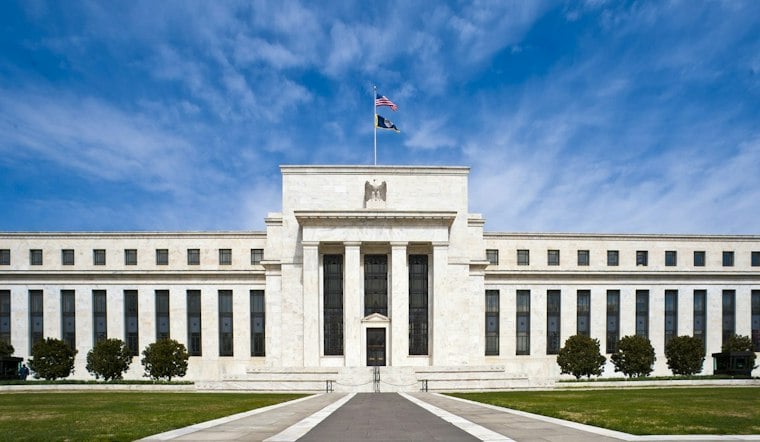
The Federal Reserve plans to reduce the number of scheduled rate-setting decisions beginning in 2027, even as inflation remains well above its 2% target. Fed Chair Kevin Warsh announced the change this week following the October Federal Open Market Committee meeting, where policymakers held the benchmark rate steady. The shift would alter a meeting schedule that has been in place for more than four decades.
The Fed will hold eight meetings in 2027 as usual, but only seven are expected to include a scheduled rate decision, according to The New York Times. The eighth meeting would focus on broad monetary-policy strategy instead. In 2028, the Fed expects to hold six rate-setting meetings and two longer-run strategy sessions, the Times reported.
The Fed has held eight regularly scheduled meetings a year since the early 1980s, generally spaced about six weeks apart, according to News 4 San Antonio. The proposed schedule could leave nearly three months between scheduled opportunities to adjust rates. Federal law requires the FOMC to meet at least four times a year, and Warsh said during his confirmation hearings that four meetings were not enough, the station reported.
Who takes part in FOMC policy discussions?
The Federal Reserve says the FOMC has 12 members: seven governors, the president of the New York Fed and four Reserve Bank presidents who serve on a rotating basis. Reserve Bank presidents without a vote still attend meetings, join discussions and contribute to assessments of the economy and policy options, according to the Federal Reserve. A meeting without a scheduled rate decision, then, is not necessarily a meeting without policy discussion.
Warsh's Case for Slower Decisions
Warsh says the longer intervals would give policymakers more time to assess whether economic changes are significant, rather than simply reacting to new data, according to the Times. News 4 San Antonio reported that he has also argued that officials need room for strategic deliberation as they gather information and weigh policy options.
The calendar change is part of a broader shift in how Warsh communicates about policy. He has rejected the practice of signaling his plans to markets before FOMC meetings, according to CNBC. The Times has described his approach as providing less information to investors and the public. News 4 San Antonio reports that Warsh has also shortened post-meeting statements, skipped the Fed's quarterly rate and economic projections, and avoided forward guidance—departures from recent chairs who generally used those tools to clarify policy and limit market volatility.
Fewer scheduled rate decisions would not prevent the Fed from calling emergency meetings if conditions change suddenly; the Times and News 4 San Antonio both note that the central bank did so at the onset of the coronavirus pandemic in 2020. The change could make decisions about when to convene such meetings more consequential. The chair does not make interest-rate decisions alone.
A Former Fed President Pushes Back
Thomas Hoenig, the former president and CEO of the Kansas City Fed and now a distinguished senior fellow at the Mercatus Center, has criticized the proposal. He told News 4 San Antonio that fewer meetings could mean fewer opportunities for officials to discuss economic conditions and consider whether action is needed.
Hoenig also argued to the station that fewer scheduled votes could give the chair more discretion over when to call additional meetings. In a separate interview with Yahoo Finance, he said the chair has influence through the office's bully pulpit and predicted the Fed's December meeting would test who is calling the shots.
The Inflation Backdrop
The timing has drawn scrutiny because inflation remains well above the Fed's 2% target, which Warsh has called a firm, fixed goal, according to CNBC. Consumer prices rose 3.7% year over year through September, while producer prices climbed 6.3%, the outlet reports — a far cry from the 9.1% inflation peak seen in 2022, but still elevated. At its October meeting, the Fed held its target rate steady in the 3.75% to 4% range, as reported by Yahoo Finance.
The Fed had previously considered trimming its meeting schedule but held off over concerns it would hamper the central bank's ability to respond quickly to shifting conditions, per News 4 San Antonio. Warsh has not identified which specific meeting will be the first to skip a rate decision, and he has said he does not anticipate issuing a policy statement at the strategy-focused sessions. He has also created internal task forces examining central bank communications, balance-sheet management, how the Fed gathers and interprets economic data, inflation analysis, and artificial intelligence's impact on the economy — all against the backdrop of a Fed balance sheet the station describes as massive.
Despite the overhaul to voting frequency, Federal Reserve officials will continue to meet at the same overall frequency; they will simply have fewer planned opportunities to actually change monetary policy. Whether that trade-off pays off in steadier decision-making or leaves the Fed flat-footed during fast-moving economic shifts is likely to be tested well before the new schedule fully takes hold in 2028.





