

























































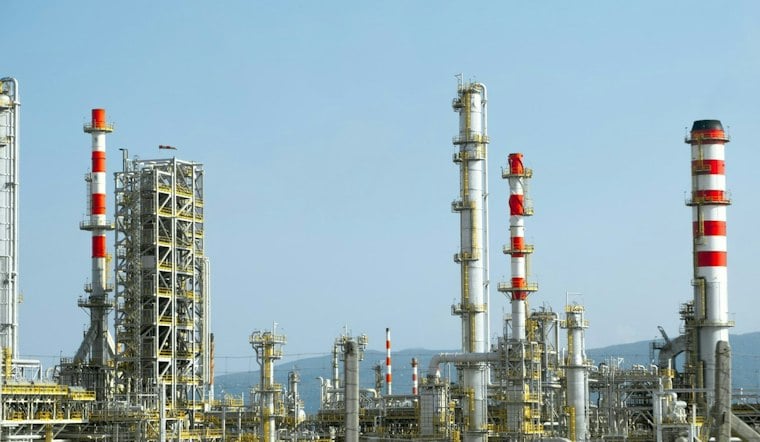
A federal regulator proposed new rules on Wednesday designed to speed up liquefied natural gas projects and expand the country's export capacity, as the Trump administration pushes to accelerate energy infrastructure development and bring down consumer costs. The proposal from the Pipeline and Hazardous Materials Safety Administration would update the safety framework governing LNG facilities, incorporating National Fire Protection Association standards covering siting, design, construction, operation and maintenance.
According to 933thedrive.com, the rule is intended to help LNG operators adopt new technologies to save costs and boost safety. Transportation Secretary Sean Duffy said leveraging those technologies will generate $100 million in savings annually, and that modernized rules can enable safe energy development, lower costs and generate millions of dollars in economic opportunity. The push comes as the Fort Worth Star-Telegram reports that President Trump ordered the resumption of LNG export approvals after the Biden administration had paused them, and began streamlining the environmental approval process for LNG projects more broadly.
Rules Have Not Changed Much Since 2004
The regulatory overhaul addresses a framework that has gone largely untouched for more than two decades. PHMSA's last significant amendments to its part 193 regulations governing LNG facilities date to 2004, according to a Federal Register notice, with current regulations relying heavily on the 2001 edition of the NFPA 59A standard. The research and engineering firm Exponent notes that U.S. LNG facilities are mostly built and designed to operate under those same 2004 regulations.
PHMSA is now considering updating facility siting requirements to the 2023 edition of NFPA 59A, per Exponent's reporting. That shift could permit performance-based LNG plant siting using quantitative risk analysis, rather than the current prescriptive approach — a change the firm says could reshape how new terminals are designed and approved. A separate 2025 notice from the Federal Register had already signaled that a forthcoming rulemaking would propose amendments to LNG facility safety standards covering siting, design, installation, construction, inspection, testing, operation and maintenance.
Export Capacity Set to Surge
The United States is already the world's largest LNG exporter and is expected to add another 100 million metric tons of production by the end of the decade, per 933thedrive.com's report. North America's LNG export capacity is projected to more than double between 2024 and 2028, according to Exponent. Five U.S. export projects are currently under construction, the firm reports: Plaquemines Phases I and II, Corpus Christi Stage III, Golden Pass, Rio Grande Phase I and Port Arthur Phase I.
U.S. LNG projects have announced final investment decisions totaling more than 50 million metric tons per annum in the nearly two years since the Trump administration took office, the station's report notes. Cheniere and Venture Global LNG have both said they will move forward with permitting as much LNG capacity as they believe they can build, citing the administration's permitting certainty. Trump has championed LNG projects as a way to boost national security and trade with partners, the outlet reports.
Diversifying Buyers, Lingering Hurdles
Demand for U.S. LNG has also been shaped by global supply disruptions. LNG buyers worldwide have been seeking more diverse supply sourcing ever since the U.S.-Israeli war against Iran cut off Gulf shipments, per the same account. Even with federal rules easing, LNG project developers still must undergo Federal Energy Regulatory Commission permitting, obtain environmental approvals, and in some cases face ongoing legal challenges before breaking ground.
FERC itself has moved to streamline parts of that process. The commission proposed revising its regulations to establish procedures for authorizing certain activities at LNG plants without requiring a case-specific authorization order, according to a Federal Register filing published earlier in October. The proposal would sit alongside PHMSA's safety rulemaking as part of a broader federal effort to clear bottlenecks facing the industry's expansion.





