

























































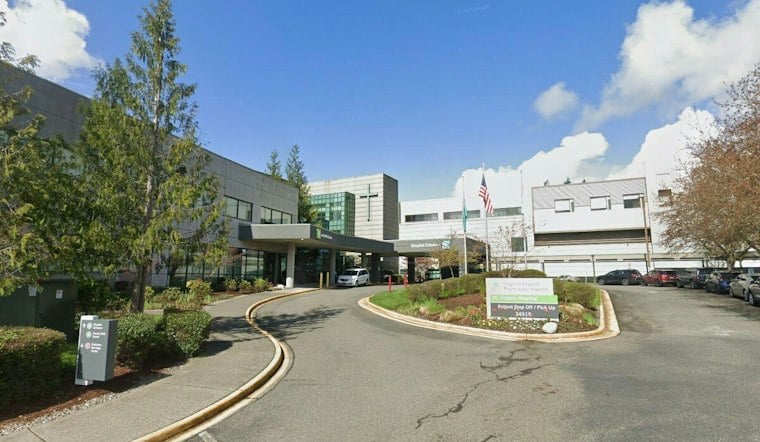
St. Francis Hospital in Federal Way has announced plans to offer a year-long postpartum support program for new mothers, extending a service that began as a pilot project in Seattle. The expansion is backed by a three-year grant of $781,799 and is set to add a Community Health Worker to help patients with transportation, communication, and other logistical barriers to care.
The Postpartum Wellness & Recovery Program, known as PWR, launched at Virginia Mason Medical Center in Seattle and was in a pilot phase; hypertension navigation began in 2023. A pilot began at St. Anne Hospital in Burien in September 2023. The program now includes VMFH women's health clinics in Burien. The funding renewal, provided through CommonSpirit's Mission and Ministry Fund, will extend that support to the Federal Way community at St. Francis Hospital, according to a Virginia Mason Franciscan Health news release.
The program has served 512 total postpartum patients so far, per Seattle Weekly's reporting. Lacey Parsadmehr, PWR's Perinatal Nurse Navigator, expects that number to climb now that the program covers Federal Way, which has a larger population than Burien, the outlet reports.
Why the Weeks After Birth Can Be More Dangerous Than Pregnancy
Jazman Dewitt, a patient who went through the program, said it saved her life and gave her life back, according to Seattle Weekly. Dewitt experienced dangerously high blood pressure after returning home following an uncomplicated delivery, the outlet reports, and by the end of the program she had stopped taking blood pressure and antidepressant medications, with stable blood pressure and mood.
Parsadmehr said the postpartum period is actually riskier than pregnancy itself, and that mothers need focused care during that window, per Seattle Weekly. That framing lines up with state-level data cited in the hospital system's release: approximately two-thirds of pregnancy-related deaths occur after delivery, and 38 percent happen between 43 days and one year postpartum, according to the Washington State Department of Health's 2025 Maternal Mortality Review Panel Report, as cited by Virginia Mason Franciscan Health.
The program currently focuses on hypertensive disorders of pregnancy and perinatal mood and anxiety disorders, serving patients with high blood pressure or a risk of it, along with postpartum depression or anxiety, Seattle Weekly reports. Gestational-diabetes support is planned for the future, according to the Catholic Health Association's reporting on the St. Anne pilot.
How the Program Follows Mothers Home
A nurse navigator refers eligible patients before they're discharged from the hospital, then makes contact within a couple of days after they go home, per Seattle Weekly's account. Every patient in the hypertension track receives a blood pressure cuff for remote monitoring, with weekly check-ins from the nurse navigator for the first six weeks postpartum, according to Virginia Mason Franciscan Health's release. Those check-ins include medication adjustments as needed, Seattle Weekly reports, along with customized care, referrals, and connections to community resources.
Patients also get a warm handoff to primary care and continued navigation support for up to a year after birth, according to the Catholic Health Association's reporting. The program offers referrals for cardiac risk assessment in addition to primary care, Virginia Mason Franciscan Health notes. All patients are screened for social needs, with 37 percent reporting issues like transportation gaps, financial strain, or language barriers, per the hospital system's release — the kind of need the new Community Health Worker position in Federal Way is designed to address.
Parsadmehr said her goal is to keep patients at home with their babies and out of the hospital, rather than facing a readmission, according to Seattle Weekly. Jennifer Fletcher, Community Health Integration RN at Virginia Mason Franciscan Health, said maternal health is essential to family health and that mothers are being lost, the outlet reports. The program's stated ambition, per Seattle Weekly, is to become a blueprint for broader changes in maternal healthcare.
A National Pattern of Postpartum Risk
Research beyond Washington state points to similar stakes. A study of 3,925 patients examined postpartum blood pressure, according to research published in the Journal of the American Heart Association.
A separate national analysis using CDC WONDER data found 1,851 deaths related to hypertensive disorders of pregnancy in the United States between 1999 and 2023, according to a study in Frontiers in Reproductive Health. Even though the overall age-adjusted mortality rate held at 0.10 deaths per 100,000 people, the researchers identified a significant upward trend, and found that non-Hispanic Black women had mortality rates four to five times higher than non-Hispanic White women.
Other health systems have built comparable postpartum safety nets. Heart Safe Motherhood, a text-based blood-pressure monitoring program developed at the University of Pennsylvania, found in a 2017 randomized trial that 92 percent of patients texted in their blood pressure readings compared with 44 percent who attended an office visit, according to the Penn Center for Health Care Innovation. At scale, postpartum hypertension readmission rates at the Hospital of the University of Pennsylvania dropped from 5 percent before the program to 1 percent after, the center reports, and the model is now standard obstetric care at several Pennsylvania health systems.





