

























































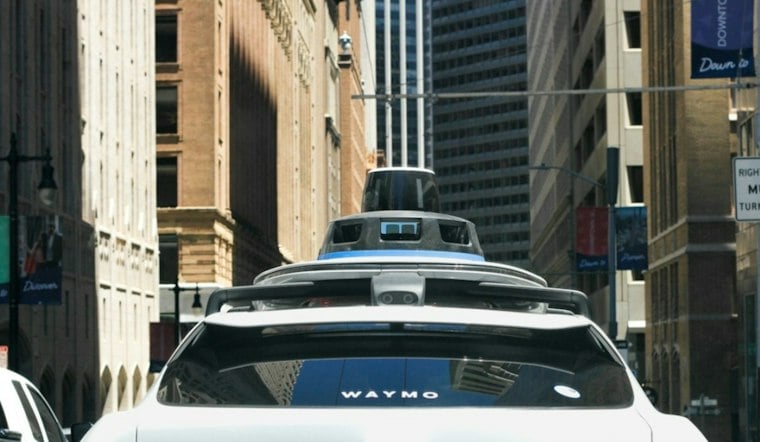
The federal government wants the nation's self-driving cars to glow a distinct blue-green hue, and it has a reason rooted in simple road safety: nobody can currently tell, just by looking, whether a car is driving itself. The National Highway Traffic Safety Administration has proposed new rules that would let automakers install cyan marker lamps on automated vehicles, a visual signal meant to cut through the confusion as robotaxis spread to more American streets.
A New Federal Proposal Takes Shape
The U.S. Department of Transportation's NHTSA announced new proposed federal requirements for automated vehicles, with the centerpiece being standardized cyan marker lamps for automated driving systems, according to the Las Vegas Sun. The agency is proposing updates to Federal Motor Vehicle Safety Standard No. 108 to modernize lighting requirements for automated driving systems, introducing design flexibility alongside the marker lamps, per a statement from NHTSA. The goal, the agency says, is to clearly and consistently signal to law enforcement and other road users when an automated driving system is operating the vehicle, as reported by The Verge.
Jonathan Morrison, NHTSA's administrator, said the proposal establishes performance standards for automated vehicle marker lamps, and that it paves the way for safe innovation and clear rules of the road for automated vehicles, according to the Las Vegas Sun. Under the proposed rule, the lights would not be mandatory. The station's report notes that cyan marker lights would be optional for manufacturers, while federal standards would set their color, brightness and location.
Why Cyan, Specifically
According to Bloomberg, one or two of the green-blue lights would be placed on the front, sides and rear of vehicles equipped with automated driving systems, mounted at least 15 inches above the ground. NHTSA said cyan was chosen in part because it is not used for anything else on the road and already has industry backing, the Las Vegas Sun reports. The agency also said the proposed cyan specifications differ sufficiently from the blue lights some states reserve for law enforcement or towing vehicles, per the same report.
The pick traces back to SAE International, the engineering standards body that recommended cyan for automated vehicles after selecting blue-green following consultations with manufacturers, suppliers, research organizations and other experts about potential lamp colors, the Las Vegas Sun reports. SAE said a unique color would carry a clear meaning that amber, red or white could not, since those colors are already tied up with existing vehicle lighting. The Verge frames the choice similarly, noting that existing vehicle lighting already uses red, amber, white and flashing blue or red, leaving cyan to potentially fill the visual gap without confusing road users.
Mercedes-Benz Already Tried This in Nevada
This isn't the first time a blue-green glow has shown up on American roads. Mercedes-Benz introduced turquoise lights on its EQS sedan and S-Class in 2023, which California and Nevada permitted that same year, according to the Las Vegas Sun. The automaker used the lights to indicate when a vehicle was set to Drive Pilot mode, its Level 3 driver-assistance system, and said tests showed teal was clearly distinguishable from traffic and emergency lighting.
Mercedes-Benz said it consulted engineers, compliance managers, data protection officers and ethics experts when selecting the color, and suggested public education before and during market launch so drivers and pedestrians would understand what the glow signified, per the Las Vegas Sun. The Verge notes that Mercedes-Benz ultimately got state-level approval for turquoise lights on its Level 3 Drive Pilot cars before abandoning the approach in favor of a Level 2++ system instead.
The NHTSA proposal is open to a 30-day public comment period, according to the Las Vegas Sun, giving automakers, safety advocates and the public a formal window to weigh in before any final rule takes shape. For now, the cyan glow remains a proposal rather than a requirement, one more piece of a broader national conversation about how driverless cars should announce themselves to everyone else sharing the road.





