

























































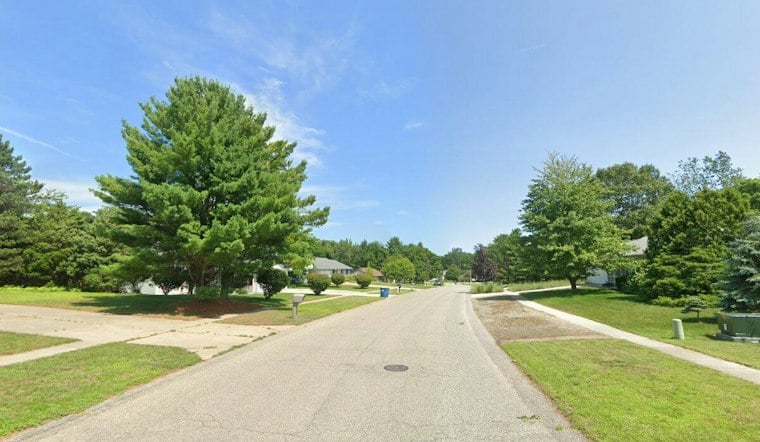
Ferrysburg residents head to the polls Nov. 3 to decide whether the city keeps collecting a dedicated street tax for another five years, a renewal that would push the average homeowner's bill up by less than $20 a year while keeping road crews funded through 2031. The ballot measure would set the street millage at 1.5 mills from 2027 through 2031, subject to the state-mandated rollbacks that have already trimmed the current rate.
The proposal would renew Ferrysburg's street millage at that 1.5-mill rate, pending the required Headlee rollbacks, according to MLive. Voters first approved the 1.5-mill levy in November 2021, and the outlet reports it has since collected roughly $1.5 million for street repairs citywide. That money has already gone to work: current construction on Pine Street was funded by the millage voters passed in 2021, according to the Grand Haven Tribune.
Why the Rate Keeps Slipping
Even though voters approved 1.5 mills five years ago, the city hasn't actually been collecting that full amount. Michigan's Headlee Amendment has pared the current street millage down to 1.4076 mills, according to City Clerk and Treasurer Amber Schaner, cited by the same MLive report. That's because Headlee requires local governments to reduce millage rates when growth on existing property outpaces inflation, per guidance from the Michigan Municipal League. The same dynamic will apply to the renewed rate if voters approve it, meaning the full 1.5 mills is a ceiling rather than a guarantee.
If approved and levied at the full rate, the millage is projected to generate about $435,000 in its first year, the MLive report notes. City officials plan to put that funding toward repairs on Cherokee Drive, Cherokee Court, Yuma Court, Mohawk Drive and Navaho Drive, the same report states, continuing the street-by-street approach that funded the Pine Street project.
What It Means for Your Tax Bill
For a home with $200,000 in taxable value, the math breaks down like this: that property currently pays $281.52 a year under the existing millage, but would pay $300 annually if the renewal passes at the full 1.5-mill rate, per MLive's reporting. That works out to an $18.48 annual increase, or roughly $1.54 more each month, according to figures attributed to Schaner.
Schaner cautioned that those numbers are illustrative rather than universal. “The actual amount for each property depends on its taxable value, which may differ from its assessed or market value,” she said. Taxable value, rather than a home's market price, is the figure the millage rate is actually applied against, so bills will vary household to household.
Two Charter Changes Also on the Ballot
Beyond the street funding question, Ferrysburg voters will also weigh in on two charter amendments designed to make it easier for residents to run for local office, the Grand Haven Tribune reports.
Residents who want to cast a ballot before Election Day have options. Early voting runs from Oct. 24 through Nov. 1, according to the Ferrysburg City Clerk's office. Early voting for Ferrysburg and other nearby jurisdictions will be held at the Spring Lake Community Center, the city clerk's office notes.
Ferrysburg's street millage isn't the city's only dedicated local tax. Voters there previously renewed a separate 0.5-mill levy to fund public works vehicles, a measure the Grand Haven Tribune reported was expected to cost about $50 a year for a home with $100,000 in taxable value. That equipment millage illustrates how Ferrysburg has leaned on narrowly targeted, voter-approved taxes to pay for specific infrastructure needs rather than folding the costs into its general budget.



