

























































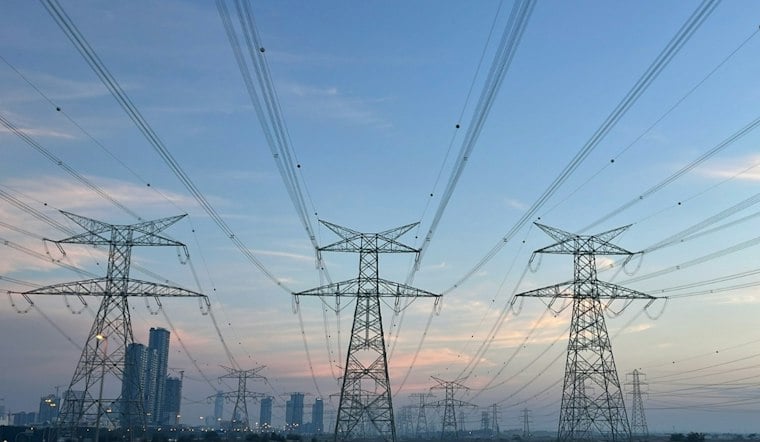
FirstEnergy plans to spend $28 million installing new technology on power lines across Northeast Ohio to find out whether the existing grid can carry more electricity without building a single new line. The utility expects work to begin in early 2027 and take several years to complete, with the goal of helping the region handle rising demand from data centers and other large power users.
The $28 million price tag will be split evenly, with $14 million coming from federal funding and the remaining $14 million from FirstEnergy itself, according to cleveland.com. The utility has not yet chosen the exact spots where the equipment will go, but the project could end up benefiting customers in Cuyahoga, Lake and Ashtabula counties. Importantly, the upgrades will not generate a single new watt of electricity — they're designed purely to help move more of the power that already exists through the lines that already exist.
What the Technology Actually Does
At the center of the plan is something called dynamic line rating, a method that determines how much electricity a power line can safely carry at any given moment based on real-time weather and power-line conditions, rather than relying on conservative, fixed assumptions. The Federal Energy Regulatory Commission has found that traditional line ratings, built around worst-case, long-term temperature assumptions, can lead utilities to underuse the grid they already have. Per FERC, a line's true safe carrying capacity can actually exceed its conventional rating under favorable weather and fall below it when conditions turn unfavorable.
The broader concept also involves power-flow controllers, which can shift electricity away from congested sections of the grid toward lines that have more room to spare. FirstEnergy said the project could improve reliability, though the company did not estimate what, if anything, customers might save on their bills as a result.
Pennsylvania's Experience Shows the Upside
Evidence from neighboring Pennsylvania offers a glimpse of what dynamic line rating can accomplish when it works well. PPL Electric Utilities deployed the technology across 31 miles of transmission lines and, according to PJM Inside Lines, the deployment avoided a proposed $12 million wire-replacement project while reducing congestion costs by more than $64 million, figures reported by the Department of Energy. PJM has said the technology may lead to more accurate real-time ratings and reduce congestion overall.
Duquesne Light saw similar results closer to Pittsburgh, finding an average of 25% more available capacity on equipped lines, according to Utility Dive. The utility has since expanded its use of the sensor system to cover more of its transmission network. Still, grid-enhancing technologies cannot eliminate the need for new or rebuilt transmission lines in every case, Utility Dive reported, underscoring that this kind of upgrade works alongside — not instead of — traditional infrastructure investment.
An Ohio Pilot Showed Both Promise and Its Limits
A separate Ohio case study illustrates just how uneven the gains can be. A joint AES and LineVision study identified a roughly half-mile bottleneck on a 69-kilovolt transmission line in Ohio and found that detailed measurements sometimes showed the line could safely carry less electricity than its conventional rating suggested — the opposite of what boosters of the technology might hope to find. Even so, the project projected it could increase average carrying capacity by more than 10%.
The economics in that Ohio study came with a steep contrast: targeted wire replacement paired with dynamic line ratings was projected to cost about $390,000, versus $1.63 million for a full 5.1-mile wire replacement. That analysis included 20 years of software costs, and the study's authors noted the figures were projections rather than final results.
A Much Larger Federal Push Is Underway
FirstEnergy's project is one piece of a much larger federal effort. The U.S. Department of Energy selected 31 grid projects across 26 states in late September, planning to provide $1.9 billion toward them while recipients are expected to contribute $3.35 billion more, for a total investment of $5.25 billion, according to cleveland.com. The selected SPARK projects are expected to deploy grid-enhancing technologies across nearly 21,000 miles of transmission lines, with the Daily Energy Insider reporting the program projects more than 23 gigawatts of additional capacity nationwide.
Ohio's slice of that broader push is harder to pin down because two outlets have reported very different figures. WYSU reported the federal government would invest $130 million in Ohio transmission upgrades, matched by an equal amount of private investment, while The Columbus Dispatch reported Ohio is receiving a $273 million grant through the SPARK initiative. It's not clear whether the two figures describe different funding scopes within the same program. Separately, the Daily Energy Insider reported Ohio is set to receive a $216 million grant to help AEP upgrade sections of the 345-kilovolt Kammer-Muskingum Corridor and the Beatty-Cole line using advanced, higher-capacity conductors meant to increase capacity and alleviate bottlenecks.
What Remains Unknown
FirstEnergy has not identified which specific lines will receive the new equipment, nor has it estimated how much additional electricity those lines might ultimately be able to carry safely. The company has said the picture will become clearer once installation sites are chosen and the equipment begins actually measuring conditions on the lines. For now, FirstEnergy customers in Northeast Ohio are left waiting to see whether the investment translates into a steadier, more resilient grid — or simply a useful but limited tool in a much bigger infrastructure challenge.


