

























































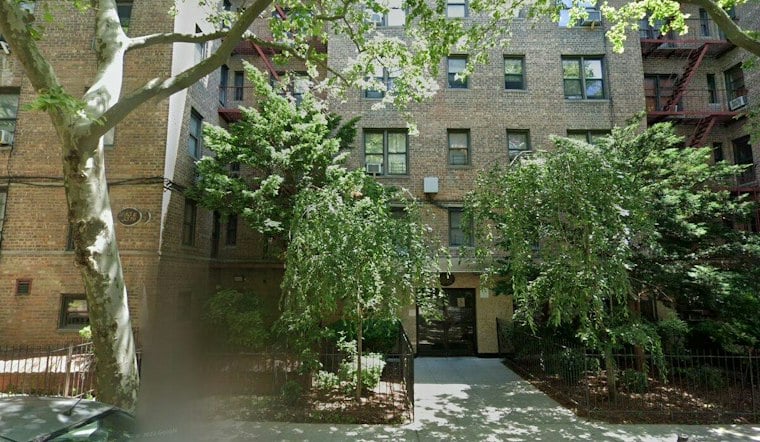
Diana Wright opened a Con Edison bill and found a number that made no sense: $31,000, tied to a home in the Bronx she says she has never set foot inside. The Flatbush resident has lived in her Brooklyn home since 2011 and paid that utility bill every single month, yet the charges kept climbing until Con Edison abruptly shut off power at her real house.
A Bill From a Borough Away
“It said $31,000,” Wright said, describing the shock of seeing the figure attached to her name, according to ABC7 New York. The charges were tied to a first-floor unit in a multifamily house in the Bronx, roughly 20 miles from her Flatbush home, an address she said she was completely unfamiliar with. As the outlet reported, the bill represented eight years of unpaid energy charges racked up at that Bronx property.
Wright, who works as an administrative assistant and a paralegal, said she had never lived at the Bronx address and had no connection to it. Despite that, Con Edison shut off her account in May 2025 after she missed a payment by one day, and she says the utility forced her to pay $650 just to restore power at her actual home. “They shut off my account in May of 2025 because I missed it by one day. They forced me to pay $650,” she said, per the same outlet's report.
Interest Piled Up While She Fought Back
The disputed balance didn't stay at $31,000. Wright said the amount climbed past $41,000 as interest accumulated on the disputed charges, telling the station, “I owe over $41,000 now because it's accumulating interest.” To clear her name, Con Edison's verification process required her to produce an employer letter, a Federal Trade Commission report and a police report before the utility would even begin untangling the mess.
Beyond those documents, Wright had to prove she had never lived at the Bronx address by handing over years of pay stubs, current and former leases, utility bills and tax returns. The station's report notes she eventually turned to ABC7's 7 On Your Side consumer team, which investigated her disputed Con Edison bill. The New York City Department of Environmental Protection, checking its own records, said it found no record of a Diane Wright associated with the Bronx property in question.
Charges Removed, but Questions Remain
Con Edison ultimately removed the disputed $31,000 in charges from Wright's account, wiped out roughly $10,000 in interest that had piled up, and refunded the $650 payment she made to restore her own power. “We removed the disputed charges from her account last winter and refunded the $650 payment,” the utility said, according to the same report. Con Edison has said broadly that it reviews documentation and works to resolve billing issues, while also warning that scams and identity theft victimize consumers across many industries.
Wright's ordeal lands amid a broader run-up in utility costs across the region. Gas and electric rates have been spiking and are increasingly difficult for many households to afford, the same report notes. That pressure is playing out on a large scale: in July 2026, more than 376,000 Con Edison residential accounts were over 60 days behind on payments, owing a combined $876.7 million, according to The New York Times. That same month, Con Edison cut power to 7,702 residential customers over overdue bills, accounting for about 17 percent of shut-offs statewide, with the average delinquent balance running $2,327 — some $560 above the statewide average.
A Wider Pattern of Utility Fraud
Wright's case also surfaces amid growing scrutiny of identity fraud tied to utility accounts. In 2024, the Federal Trade Commission's Consumer Sentinel Network logged about 28,000 reports of stolen identities used to open new utility accounts, plus another 2,000 tied to existing accounts, according to Utility Dive. The outlet notes that compared with banks, many utilities still rely on limited identity verification, making them an attractive target for fraudsters who can open accounts using stolen or synthetic identities and leave someone else holding the balance.
Utility Dive also describes this kind of fraud as a potential gateway crime, one that can help criminals simulate legitimate behavior or build credit histories using someone else's name. Meanwhile, New York's own consumer protection officials have separately flagged scam callers posing as utility companies who threaten immediate shut-offs to pressure people into handing over account information or payment, according to the New York State Division of Consumer Protection.
Rising Bills for Everyone Else, Too
Even customers with no billing dispute at all are watching their Con Edison bills climb. The New York Public Service Commission approved a three-year rate increase that took effect in January 2026, pushing typical New York City electric bills up roughly 4 percent and gas bills up 2.4 percent, per E&E News, which also notes Con Edison serves more than 3.4 million electric customers and 1.1 million gas customers across New York City and Westchester County. Separate reporting from Gothamist indicated New Yorkers were expected to owe Con Edison retroactive back pay in 2026 once the rate increases were finalized, with electricity delivery charges projected to rise 3.5 percent in 2026 and gas rates by 4.4 percent that same year.
Under New York's Public Service Law, utilities are generally barred from adjusting a residential customer's bill more than 12 months after service was provided, unless specific exceptions apply — including cases involving culpable customer conduct or circumstances the utility didn't cause, according to the New York State Senate. Separate statutory language allows service to be terminated when a residential customer fails to pay for service rendered in the preceding 12 months, subject to its own set of exceptions.





