

























































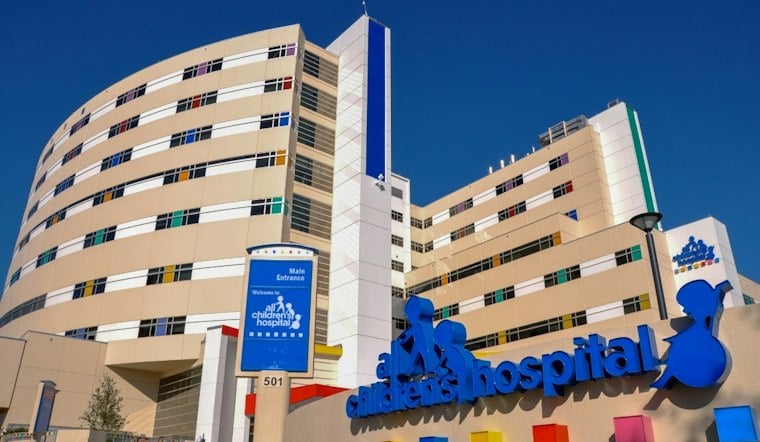
A Manatee County boy named Cooper has completed his last chemotherapy treatment after battling cancer, according to a Facebook post from county government simply titled “This is what it’s all about.” The post said the difficult stretch began in January.
Cooper, who is Megan’s son, received radiation and chemotherapy at Johns Hopkins All Children’s Hospital, according to Manatee County, Florida Government. The county’s post traces the gesture back to Savannah, who reached out to the county on Facebook asking for a saved pumpkin and a breast cancer awareness manatee for her best friend, Megan, after Megan was unable to attend an event described as the hunt for a manatee.
The saved manatee and pumpkin references tie back to a recurring county tradition; the agency has previously held a Breast Cancer Awareness Pumpkin Decorating Contest, documented in a Flickr album from 2023.
Pediatric Cancer Care Across Florida
A study published by pmc.ncbi.nlm.nih.gov found that Florida’s number of pediatric cancer diagnoses increased 326% between 1981 and 2020. Separately, the rate rose from 13.63 to 23.71 cases per 100,000 population, while the share of patients treated at Florida Association of Pediatric Tumor Programs centers rose from 30% to 57% over the same period.
Nationally, roughly 15,000 children and adolescents younger than 20, along with more than 21,000 young adults between 20 and 30, are diagnosed with cancer every year in the United States, according to the CDC. The National Cancer Institute’s NCCR*Explorer tool tracks incidence and survival statistics for cancers in patients ages 0 to 39, offering researchers and families a window into how these numbers shift over time.
None of those broader figures are specific to Cooper’s diagnosis or prognosis, and the county’s post does not share his age or the type of cancer he faced. What is clear, per the county’s account, is that a community effort, from Savannah’s initial request to Cortez’s delivery, turned the end of a grueling treatment into a celebration worth sharing publicly.


