

























































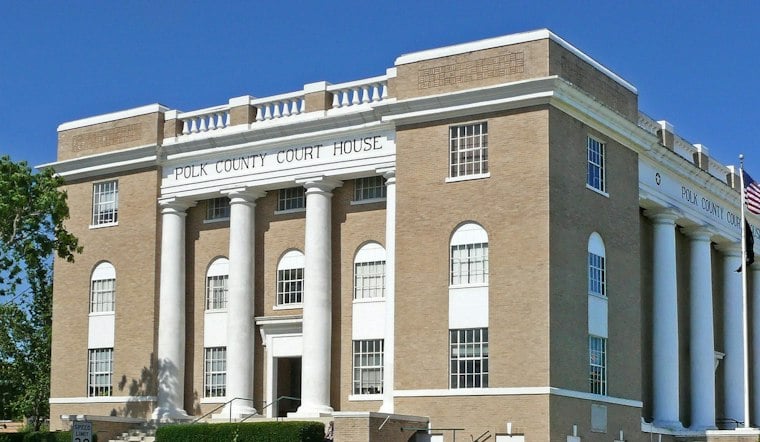
Florida is suing a company that puts numeric climate-risk scores on homes across the state, accusing it of scaring away buyers with flood and fire ratings that frequently contradict federal assessments. Attorney General James Uthmeier's office filed the case against First Street Technology Inc. in state trial court in Polk County, alleging the firm's risk assessments are deceptive, diverge from federal flood-insurance evaluations and are depressing home sales.
First Street runs computer models to estimate current and future threats from flooding, wildfire, extreme heat, wind and other hazards at individual addresses, according to Insurance Journal. It converts those estimates into scores of 1 to 10 and distributes them widely through real-estate websites. Uthmeier's office alleges that in some cases First Street rates a property as a major flood risk while FEMA classifies the same home as a minimal flood hazard, a discrepancy at the center of two counts the state has filed under the Florida Deceptive and Unfair Trade Practices Act, as Florida Phoenix reports.
Those alleged violations carry civil penalties of $10,000 per violation, or $15,000 when a senior citizen or person with a disability was victimized or targeted, the Florida Phoenix report notes. First Street's risk assessments cover flooding, fires, wind, air quality and heat, and the company has said its models rely on validated, proven methodologies grounded in the physics of how such events would actually unfold.
Inland Homes Flagged for Coastal Flooding
The complaint zeroes in on specific examples the state says expose the gap between First Street's scores and reality. One involves a Pinellas County property that First Street allegedly described as affected by countywide flooding even though, per the complaint, the home itself sits roughly three miles inland and did not flood in 2024, when the region was hit by back-to-back hurricanes. The state also alleges First Street's data flags Orlando for coastal flooding risk despite the city sitting an estimated 45 to 60 miles from the nearest coastline, and that it places Lake City at risk for poor air quality even though the American Lung Association recognized the city in May for its low ozone and particle pollution.
As Creative Loafing Tampa reports on the filing, Florida's complaint characterizes First Street's business model as advocacy dressed up as data, alleging the firm markets fear to advance a climate activism agenda while profiting from the risk information it sells. The same reporting notes homeowners can pay First Street for what it calls better data for their own use, but cannot change the scores that prospective buyers, lenders and insurers ultimately see.
Sales Numbers Cited as Evidence
To back up the claim that the scores are hurting sellers, the state's complaint leans on a Zillow study showing only 52% of homes given a high flood-risk assessment eventually sold, compared with 71% of homes rated low risk, according to Florida Phoenix. The complaint also cites a 1.5% slowdown in sales of high-flood-risk homes over the year ending in August. First Street says its approach of translating climate threats into individualized financial stakes is simply a more effective way to communicate risk at the scale of a single property, per the same account.
First Street was recently acquired by MSCI Inc., which did not respond to a request for comment, Insurance Journal reports. The company has not yet issued its own public response to Florida's specific allegations.
A Pattern Beyond Florida
Florida's case is not the first of its kind. Nebraska filed a similar lawsuit against First Street in August, per Insurance Journal's reporting. In California, the real estate industry has pushed back hard against the company's influence over listings; the state's Regional Multiple Listing Service has asked Realtor.com, Redfin and Homes.com to remove First Street's predictive numbers and flood-layer maps, according to KESQ. That outlet also reports a stark gap after the Eaton Fire: California's own analysis placed 21% of the same homes in a very high fire-hazard zone, while First Street identified more than 90% as severe or extreme risk.
Zillow, Redfin and Realtor.com began integrating First Street's scores after the company released its first major report in 2020, per Insurance Journal. Zillow has since stopped displaying the scores directly after California real estate agents complained they deterred purchases, though its listings still link out to First Street's climate-risk information, Florida Phoenix notes. A 2024 Bloomberg comparison of First Street's granular Los Angeles flood estimates against an academic team's results found the two overlapped only a quarter of the time, the Insurance Journal report adds, while a separate 2024 study by CarbonPlan researcher Oriana Chegwidden, cited by KESQ, found that climate-risk modeling can vary substantially at the individual-property level.
Backdrop of Soaring Insurance Costs
The dispute lands as Florida homeowners already face the nation's steepest insurance bills. The state's average annual home-insurance cost hit $8,292 in 2025, an 18% jump from the year before, and rates are projected to climb another 2% by the end of 2026, according to Insurify. Florida has recorded at least 34 billion-dollar weather events since 2020, and insurers fielded roughly 300,000 claims after Hurricanes Helene and Milton in 2024 alone, Insurify reports.
Under Florida's Deceptive and Unfair Trade Practices Act, the state's attorney general can pursue disgorgement of ill-gotten gains, civil penalties and attorney fees, provisions laid out in Florida Statutes Chapter 501, Part II. Whether the case against First Street results in those penalties will now play out in Polk County's trial court.





