

























































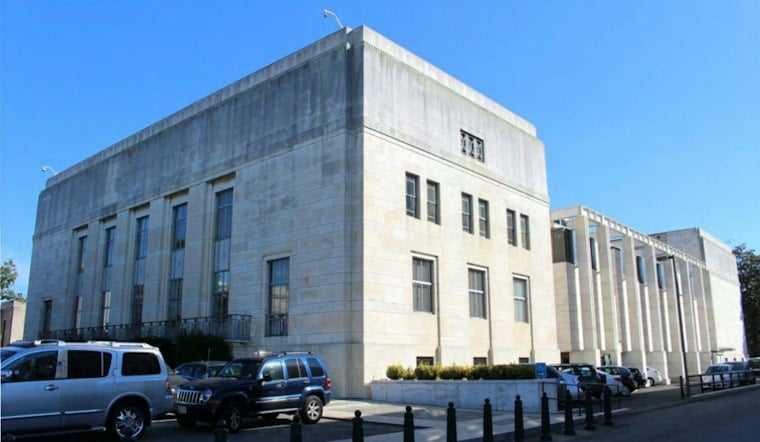
Nearly 100 rare objects spanning four centuries go on public display Friday at the Folger Shakespeare Library in Washington, D.C., tracing how Black women have shaped, performed and challenged William Shakespeare's legacy from early modern Europe to the present day. The exhibition, titled To Hear Her Speak: Black Women and Shakespeare, opens October 16 and runs through May 2, 2027.
The show was curated by Dr. Patricia Akhimie, director of the Folger Institute, who discussed the project on Good Morning Washington. According to the segment, Akhimie hopes visitors leave with a deeper appreciation for Black women's role in shaping literary and theatrical history, and the exhibition highlights figures including Maya Angelou, Toni Morrison, Rosa Parks and Ida B. Wells. Per the Folger's own description of the show, the objects on view include photographs, playbills, posters, books, diaries, illustrations and costumes, and they document the stories of Angelou, Morrison, Lorraine Hansberry, Mae Turner, Esther Rolle and Phillis Wheatley, as detailed on the library's event page.
The exhibition's title borrows from Shakespeare's Sonnet 130, the Folger notes, and British actor Adjoa Andoh MBE chairs the show and narrated its audio guide. One of the oldest objects on view is a 1645 etching by Wenceslaus Hollar depicting a Black woman in a lace kerchief hat, a glimpse of how Black women were represented in early modern European art well before the rise of Shakespearean performance as we know it today.
Four Centuries, Organized Gallery by Gallery
The show is arranged in four sections inside the Folger's Stuart and Mimi Rose Rare Book and Manuscript Exhibition Hall, according to Washingtonian.
Washingtonian also reports that a rare display of Phillis Wheatley's handwritten copybook invites visitors into a conversation about slavery, situating the pioneering poet's work within the broader story the exhibition tells. In the same vein, the Folger's companion blog post observes that blackness signified far more than color difference in early modern Europe, encapsulating contradictory ideas about beauty, rank, morality, desirability and humanity — a framework the curators use to connect centuries-old artwork to later Black women's engagement with Shakespeare's texts.
From Hansberry to the Royal Shakespeare Company
Later sections jump forward in time. Video clips feature Lorraine Hansberry and others discussing Shakespeare. Nearby, visitors can see Morrison's own handwritten notes on her play Desdemona alongside a playbill from Angelou's production of Macbeth at Wake Forest University, according to The Zebra.
Contemporary performance gets its own showcase too: a metallic gold-winged Afrofuturist costume designed by Melissa Simon-Hartman, worn in a Royal Shakespeare Company production of Much Ado About Nothing, anchors a section on how Black women continue to reinterpret Shakespeare on modern stages. The Zebra's reporting notes that the exhibition traces how Black women have engaged with Shakespeare on and off the stage for more than four centuries, and calls it the Folger's largest and most ambitious temporary exhibition since the institution opened its new galleries in 2024.
A Forgotten 1821 New York Stage
The exhibition's history section reaches back further still, drawing on research into William Brown's African Theatre, which staged a production of Richard III in New York in 1821 sandwiched between songs, recitations, a pantomime and a ballet, according to a chapter published on ASU Pressbooks. A surviving advertisement for that performance lists a performer identified only as Miss S. Welsh, who danced the role of Columbine in the pantomime and played the Prince of Wales in the Shakespeare production — one of the earliest documented records of a Black actress performing Shakespeare on an American stage.
The Folger's new installation includes Wheatley's copybook, Morrison's marginalia and a Royal Shakespeare Company costume, exploring Black women's engagement with Shakespeare. The exhibition opens to the public Friday at the Folger Shakespeare Library in Washington, D.C., and is scheduled to remain on view through next spring.





