

























































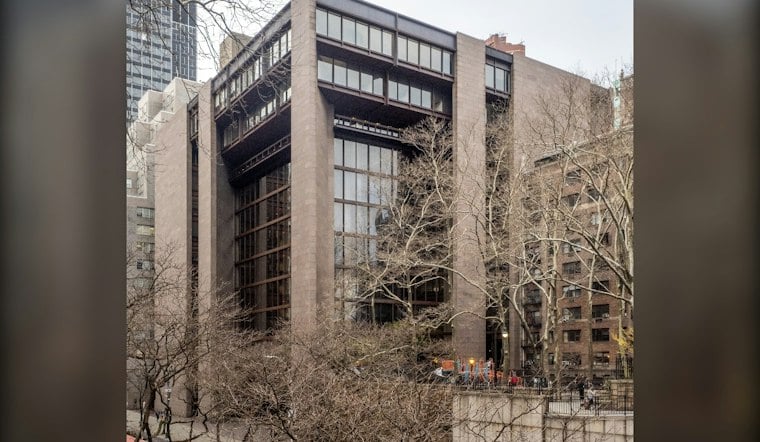
The Ford Foundation, one of the largest philanthropic grantmakers in the world, is putting new money and a new organizational structure behind an effort to shore up democracy both in the United States and abroad. The foundation announced an additional $60 million in grants to nonpartisan nonprofit organizations working to protect democracy and the rule of law in the United States, part of a broader strategic shift that will reshape how the $18 billion endowment spends its money for years to come.
The new money will support efforts ranging from increasing civic participation to protecting the fundamental right to vote and strengthening election administration across all 50 states, according to the Ford Foundation. The foundation says its Civic Engagement and Government program has already provided more than $1 billion in grants to U.S. nonpartisan organizations over the past decade. The announcement comes as the foundation unveils a worldwide strategic plan aimed at protecting and strengthening democratic values, fundamental freedoms and inclusive economies, with the organization describing its own work as an overhaul of spending meant to counter what its new leadership views as the mutually reinforcing rise of autocracy and inequality.
A New President, A New Direction
Heather Gerken joined the Ford Foundation as president in November 2025 and quickly committed the organization to substantial funding for nonpartisan democracy organizations, according to the foundation. As reported by The Seattle Times, Gerken has said the foundation should not be buffeted by political events, and in a trustee report she framed the new direction as a response to an emboldened strain of 21st-century authoritarianism. Gerken has also said that protecting marginalized communities and their basic rights remains central to the foundation's work, even as democracy moves to the fore.
Per the Seattle Times report, Gerken has said flexibly funded grantees have proven the most resilient, and the foundation has vowed to deliver larger-sized, multiyear general operating support even as it discontinued a separate program that had offered flexible general-operating funding to nonprofits. Nick Turner, the foundation's executive vice president for programs, said the concept of building institutions and networks is being incorporated into the DNA of all Ford Foundation grantmaking, the Times reported.
Staff Reorganization Set for January
Starting in January 2027, the foundation will divide its grantmaking staff into three functional units as part of a broader reorganization during what it is calling a transition year, according to the Ford Foundation. Philanthropy.com reports that the new strategy is expected to be fully operational by January 2028, with the foundation aiming to have all new areas of work running by the beginning of that year. The foundation says it will detail its new areas of work throughout 2027.
The Seattle Times reports that the foundation estimates it will move $700 million in grants for 2027, a figure that could grow depending on new needs and endowment growth, though the foundation has more than 2,300 current grantees and officials have declined to identify which ones might eventually lose funding. Turner told the Times it is too early to say which grantees will be affected, while pledging that the foundation would exit any fields responsibly, with respect, grace, care and support. This marks the foundation's first major strategic refresh since 2015, when then-president Darren Walker prioritized inequality, according to the Times.
A Broader Shift Among Major Foundations
The Ford Foundation is not alone in redirecting money toward democracy. The MacArthur Foundation announced a $100 million grant commitment to protect democracy in the United States, according to the MacArthur Foundation, with initial grants supporting nonpartisan organizations and coalitions defending fair elections, voting rights, civic freedoms, civil and human rights and the rule of law. Open Society Foundations separately pledged $300 million for democracy-related work over the next five years, per Candid's analysis of foundation giving.
Those commitments arrive against a backdrop of volatile funding trends. Foundation funding for U.S. democracy tripled between 2016 and 2020 and nearly doubled between 2019 and 2020 alone, according to Candid. But funding fell by nearly a third in 2021 before climbing only slightly through the Biden administration, and 2020 ultimately saw more foundation funding for democracy-related causes than 2024 — $1.5 billion compared with $1.3 billion. Candid's research also found that democracy-related giving still represents just an estimated 1.3% of overall foundation grantmaking as of 2024, even though the number of foundations awarding at least one U.S. democracy grant climbed from 3,701 in 2016 to 5,161 in 2024.
The Political Backdrop
The Ford Foundation's pivot comes amid a 2026 midterm election cycle that has underscored strains on American democracy, including unusually heavy partisan redistricting efforts by Republicans and a U.S. Supreme Court ruling that weakened the landmark Voting Rights Act. An AP-NORC Center for Public Affairs Research survey conducted in April found fewer U.S. adults considered democracy central to the country's identity, the Times reported, while international monitors have separately warned that political rights and civil liberties were deteriorating worldwide.
The foundation has also faced political pressure directly. JD Vance, then a U.S. Senate candidate in 2021, described the Ford Foundation and similar organizations as cancers on American society, according to the Times report. The Trump administration has sought to influence nonprofits through withheld funding or threatened investigations, the Times noted, and Trump named George Soros and Reid Hoffman in 2025 while also ordering a crackdown on what he called left-wing terrorism that year. The Ford Foundation describes its own work as nonpartisan, pointing to a history that includes defending free speech during the McCarthy era and supporting civil rights litigation in the 1960s.
Election Safeguards and Other Funders
Among its 2026 commitments, the Ford Foundation allocated $80 million to nonprofits safeguarding election results, according to the Times report. One initiative, Pillars of the Community, seeks to build public confidence in voting systems and is co-chaired by election lawyers Ben Ginsberg and Bob Bauer. Gerken also used her presidential discretionary funds to double the foundation's immigration budget in 2026, the Times reported, while saying the foundation will continue supporting LGBTQ causes, racial justice and work for marginalized communities.
Other philanthropic players in the democracy space include the Democracy Fund, established by Pierre Omidyar, which has led efforts to support U.S. groups knocking on doors, operating hotlines and challenging voting restrictions ahead of Election Day, according to the Times. Sanjiv Rao, affiliated with that effort, has said pro-democracy nonprofits need sustained, generalized funding that is less subject to election-year boom-and-bust cycles, and that groups galvanizing communities around shared concerns should be considered pro-democracy groups regardless of their specific issue focus. By some counts, the Times reports, the Ford Foundation is already the nation's leading democracy grantor — a title it now appears determined to make the centerpiece of its next era.





