

























































Fort Collins is poised to reverse more than two decades of opposition to a Northern Colorado reservoir project, with city staff recommending the city pursue a one-year interim agreement to join the Northern Integrated Supply Project rather than continue trying to expand its own Halligan Reservoir. The City Council gave that recommendation initial approval, with a follow-up vote scheduled for Nov. 3.
The shift would replace the city's long-standing approach of expanding Halligan Reservoir, according to BizWest. City staff determined that participating in the Northern Integrated Supply Project, known as NISP, now offers Fort Collins Utilities greater permit certainty and significant cost savings compared with the Halligan route. Nicole Poncelet-Johnson, Fort Collins' One Water executive director, put it bluntly to CBS Colorado: joining NISP offered a more practical path to expanding the city's water storage capacity than continuing to chase Halligan.
Why Halligan Stalled
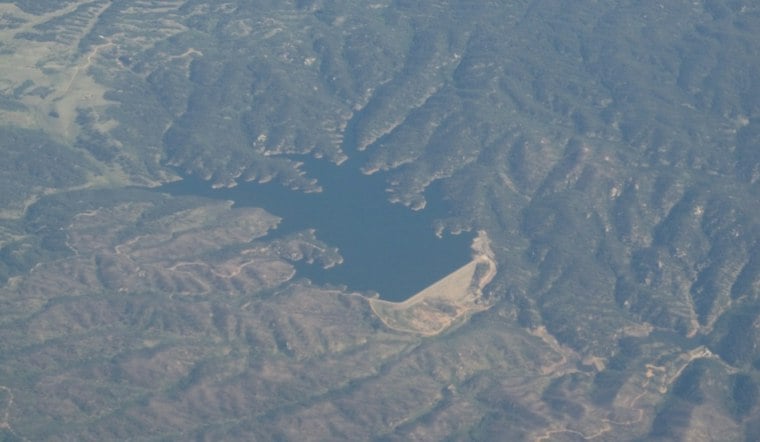
Fort Collins had previously planned to expand Halligan Reservoir, enlarging it primarily by replacing Halligan Dam and related infrastructure on the North Fork of the Cache la Poudre River, according to a Fort Collins City Council work-session document. That project carried an estimated total budget of $308 million as of July 2024 and was designed to store about 8,200 acre-feet of additional water to meet customer demand through 2065, the same document shows.
But the expansion ran into significant regulatory hurdles. Poncelet-Johnson told CBS Colorado that Halligan was not going to get permitted and that the U.S. Army Corps of Engineers made that clear. The project required a Clean Water Act Section 404 permit from the Army Corps and a 1041 permit from Larimer County, per the city's work-session document, and the City of Fort Collins notes that working through the federal NEPA process for water-supply projects often takes 10 years or more. The Army Corps released its final Environmental Impact Statement on the Halligan project in October 2023, according to that same city document.
What NISP Would Offer Instead
NISP centers on two new reservoirs: Glade Reservoir northwest of Fort Collins and Galeton Reservoir northeast of Greeley, along with infrastructure to move water from the Poudre River, per BizWest's reporting. Northern Water says Glade Reservoir is planned to hold 170,000 acre-feet of capacity, and building it would require relocating roughly seven miles of U.S. Highway 287 to the east. CBS Colorado reports the highway would need to shift east of the ridgeline to maintain traffic between Fort Collins and Laramie, Wyoming, since construction could submerge a portion of the existing route.
Fort Collins is targeting 5.8% participation in NISP's Glade component, which BizWest reports could provide up to 9,860 acre-feet of storage for the city. CBS Colorado separately reports the city's share works out to about 6% of Glade's future capacity. The arrangement would let Fort Collins store its own senior water rights in Glade Reservoir, the same water rights that CBS Colorado notes are important for maintaining a reliable supply, and city officials say that storage access is the basis for its projected savings.
A Reversal Decades in the Making
According to CBS Colorado, Fort Collins had opposed the NISP project for more than 20 years before shifting course, and the city says it reconsidered its position after changes were added to protect the Poudre River's long-term viability. Those protections appear tied to a broader settlement Northern Water has touted: participants will contribute $100 million over two decades toward additional investments benefiting the river, and the project requires conveying 30% of NISP water downstream, according to Northern Water. Northern Water frames storage projects like NISP as a necessary piece of the Colorado Water Plan's long-term strategy.
Poncelet-Johnson told CBS Colorado that NISP enables the city to store senior water rights held east of the Continental Divide to prepare for future uncertainty, and that additional storage could help Fort Collins prepare for changing water conditions, climate change effects and diminishing water resources. CBS Colorado reports the city believes joining NISP is the right decision for its water utility, ratepayers and future generations. BizWest notes that Fort Collins' conservation program has reduced how much storage the city needs, but the city maintains conservation alone does not provide the same drought resilience that additional storage would.
The Price Tag Remains Murky
Cost estimates for the overall NISP project vary depending on the source. BizWest reports the project's price has climbed from an initial $350 million estimate in 2003 to $2.7 billion today, while Northern Water's own figures put the full-buildout cost at $2 billion, with an annual yield of up to 40,000 acre-feet. CBS Colorado reports Fort Collins' specific NISP investment is expected to run about $300 million over 40 years, compared with the roughly $500 million the city had expected to spend expanding Halligan. The Colorado Sun has reported that Northern Water commissioned engineering studies aimed at trimming Glade Reservoir's construction costs by $100 million.
Fort Collins would not be the only community involved. Northern Water lists 15 participants in NISP, including Fort Collins-Loveland Water District, Erie and Windsor, though The Colorado Sun reports the coalition has also lost several communities over the years, including Eaton, Evans, Morgan County Quality Water District, Severance and Firestone. BizWest adds that the Fort Collins-Loveland Water District sought to sell its 20% stake in NISP in August 2025.
If the City Council's recommendation clears its Nov. 3 vote, Fort Collins would still need to negotiate further before locking in its participation. BizWest reports that, if approved, the city would not sign a final contract to officially become a NISP participant until late 2027.





