

























































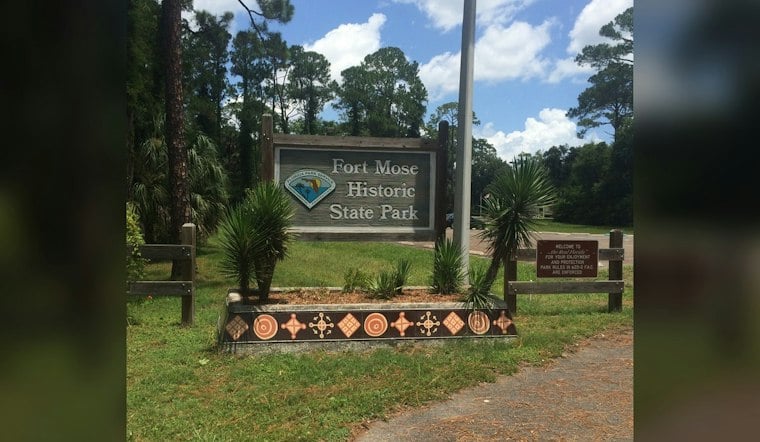
At Fort Mose Historic State Park on November 7, period-dressed reenactors, cooking demonstrations and a farmers market will recreate the autumn of 1738, the first season formerly enslaved settlers harvested crops they grew themselves at Gracia Real de Santa Teresa de Mose. The daylong First Harvest event includes hands-on activities for children, food samples, and presentations exploring the Spanish, Native American and African influences that shaped the settlement's cuisine.
A Festival Rooted In America's First Free Black Settlement
The gathering was announced in a post titled “Harvest Like It's 1738” shared by St. Augustine, Florida on Facebook, crediting the event photography to the Fort Mose Historical Society. According to the Fort Mose Historical Society, the scheduled agenda includes a militia muster, a priest's blessing, speeches portraying Governor Montiano and Captain Francisco Menéndez, and a Women of Mose presentation. The festival commemorates a pivotal moment in American history, when the first legally sanctioned free Black town in what is now the United States gathered its first self-grown harvest.
The Fort Mose Historical Society, founded in 1996, serves as the park's citizen support organization.
A Royal Edict That Created An Early Emancipation Policy
Fort Mose's story traces back to Spanish policies offering freedom to enslaved people who fled English plantations and reached Spanish Florida, with Catholic conversion and militia service among the conditions associated with the broader policy, according to Florida State Parks. The first recorded group of freedom seekers to reach Spanish St. Augustine arrived in 1687, consisting of eight men, two women, and a nursing child who traveled by boat, per Florida's Historic Coast. Fort Mose is also described as part of North America's original Underground Railroad, a route that ran south.
The settlement's residents didn't just farm and worship; they fought. During the War of Jenkins' Ear in 1740, English forces attacked Fort Mose, captured it and drove its inhabitants to flee to St. Augustine.
Swallowed By Marsh, Then Rediscovered
The settlement didn't survive Spain's colonial reshuffling. When Spain ceded La Florida to Great Britain under the Treaty of Paris in 1763, Fort Mose's residents evacuated to Spanish Cuba to escape re-enslavement, choosing exile over living under British rule, according to the Florida Museum of Natural History. The settlement gradually fell into ruin, and archaeological evidence was eventually buried.
A team headed by archaeologist Dr. Kathleen Deagan investigated and excavated the site from 1986 to 1988, with research by Dr. Jane Landers informing the work.
A New Fort Gives The Festival A Physical Centerpiece
A reconstructed fort now gives visitors a physical centerpiece at the park. The 2025 festival was the first autumn harvest festival held with the reconstructed fort present; this year's event is the second.
Fort Mose reflected a blend of African, Spanish and Native American beliefs and traditions, with defense and daily necessities shaping life at the settlement nearly three centuries ago.




